Best custom gift box styles for corporate gifting 2026
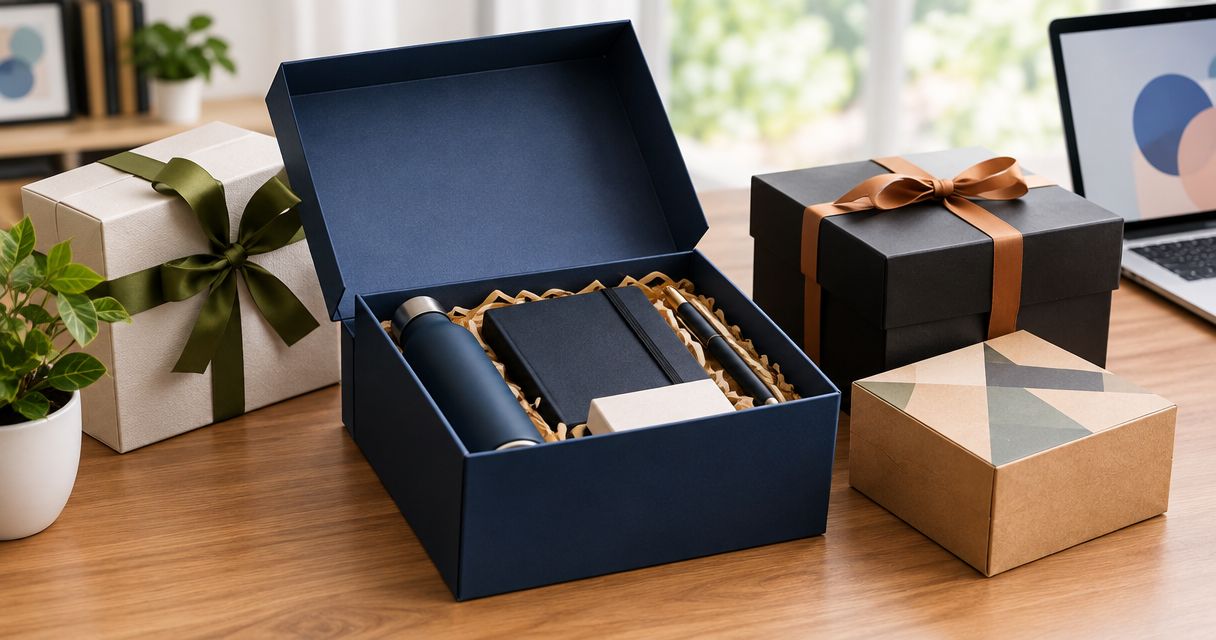
Best overall for shipped kits: a corrugated mailer. Best for executive presentation: a magnetic-closure rigid box. Best budget-planning starting point: a folding carton. The best custom gift box styles for corporate gifting in 2026 depend on how the gift travels, what holds the contents, and how recipients open it.
- The best custom gift box styles for corporate gifting match the shipping route before the presentation finish.
- Corrugated mailers are the default for shipped corporate gift kits; use inserts to control movement.
- Magnetic-closure rigid boxes suit executive gifting, but the presentation box still needs a shipping plan.
- Hale Path Packaging serves businesses sourcing custom corrugated boxes and offset-printed packaging.
For Hale Path Packaging, the useful starting point is a packaging specification: contents, internal dimensions, packing method, and delivery route. Choose the construction before approving the artwork.
Why this matters
A gift box and a shipping container solve different problems. A presentation lid can look appropriate at an event yet separate during parcel handling; an attractive insert can hold a bottle upright without protecting it against impact.
For your 2026 corporate gifting program, separate those jobs before comparing quotes. Decide whether one box must handle both shipping and presentation, or whether a presentation box will travel inside an outer shipper. That decision changes the materials, assembly work, and packing space you need.
Hale Path Packaging is a fit for corporate gifting buyers sourcing custom corrugated and offset-printed packaging. Select the box style against your operational requirements rather than assuming a decorative closure provides transit protection.
What makes the best corporate gift box
Use these criteria to evaluate the complete pack, not just an empty sample:
- Delivery route: Distinguish individual parcel shipments from gifts handed out at a venue.
- Content restraint: Check how inserts, partitions, or wraps prevent each item from moving.
- Usable dimensions: Specify internal clearance around the actual contents, including caps, handles, and protective materials.
- Packing work: Review erection, loading, closing, and any ribbon or sleeve application.
- Opening method: Match the closure to how the recipient removes the gift without damaging it.
- Storage footprint: Compare assembled storage with flat-packed components and separate inserts.
Corporate gift box styles at a glance
These are construction choices, not interchangeable grades of protection. A finished sample must establish whether the selected construction works with your contents.
| Rank and style | Best for | Standout feature | Key limitation |
|---|---|---|---|
| 1. Corrugated mailer | Distributed employee and client kits | Hinged lid with corrugated structure | Closure and insert still need shipment evaluation |
| 2. Magnetic-closure rigid box | Executive gifts presented in person | Hinged presentation lid | Magnet closure is not a shipping seal |
| 3. Lift-off-lid rigid box | Coordinated keepsake sets | Separate lid exposes the contents | Loose lid needs restraint in transit |
| 4. Drawer box | Compact recognition gifts | Sliding tray controls the reveal | Fit depends on sleeve and tray clearance |
| 5. Folding carton | Lightweight, repeatable gift programs | Flat-packed construction | Limited structure without added support |
| 6. Gable box | Hand-carried event gifts | Carry handle integrated into the form | Handle and top closure constrain the contents |
1. Corrugated mailer: best gift box for shipped corporate kits
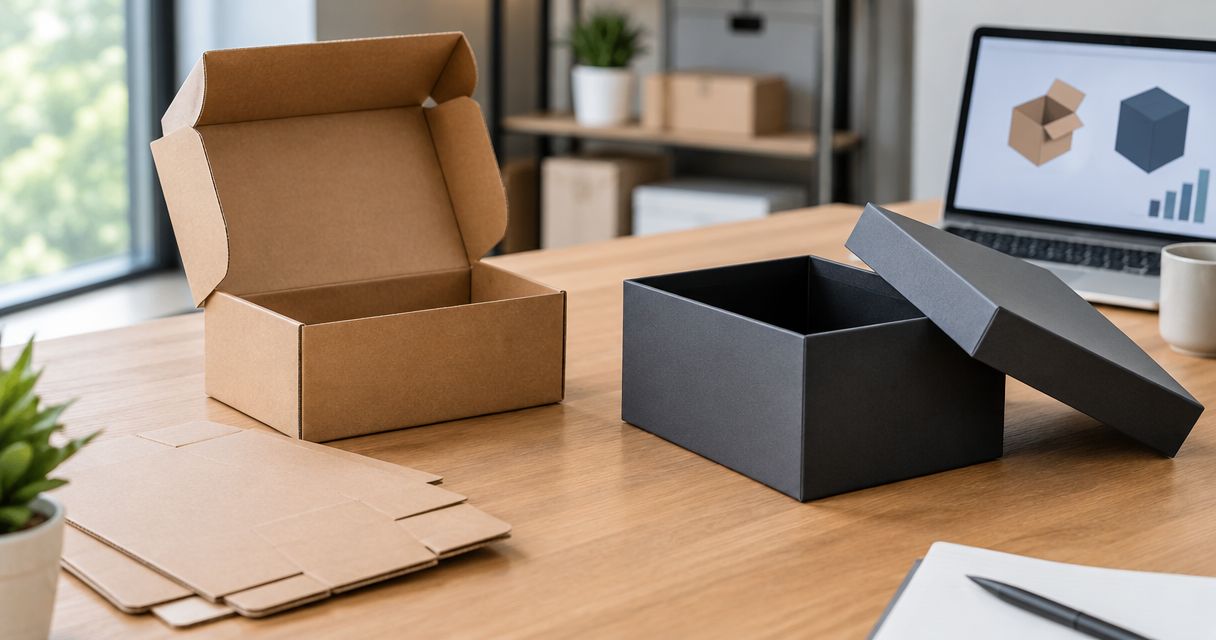
A corrugated mailer combines a hinged opening with corrugated board construction. It is the default starting point when your corporate gift must travel directly to a recipient rather than arrive through an event team.
The insert matters as much as the box. A mug, notebook, and loose accessory need separate restraint; filling the remaining cavity does not automatically secure each item.
Corrugated mailer pros:
- Hinged lid keeps the opening sequence straightforward.
- Corrugated partitions can separate mixed contents.
- A single outer structure can serve shipping and presentation when validated.
Corrugated mailer cons:
- Tabs alone do not establish a secure shipping closure.
- Excess internal space leaves contents room to move.
Best for: Employee welcome kits and client gifts sent through parcel networks.
Ask for a loaded sample with the intended insert and closure. Buy: Choose a corrugated mailer as the default for shipped kits, subject to evaluation of the complete packed box.
2. Magnetic-closure rigid box: best gift box for executive presentation
A magnetic-closure rigid box uses a hinged lid held closed by concealed magnets. The construction suits a deliberate opening experience when the recipient receives the box directly or removes it from a separate shipping container.
Specify whether the proposed construction arrives assembled or folds down for storage. Magnetic closure describes the closing method, not the storage format.
Magnetic-closure rigid box pros:
- Hinged lid remains attached during opening.
- Closure avoids a separate removable lid.
- Interior fitments can organize a coordinated gift set.
Magnetic-closure rigid box cons:
- Magnets do not replace a transit closure or outer shipper.
- Assembled constructions occupy storage space before packing.
Best for: Executive gifts, recognition presentations, and gifts handed over at meetings.
Approve the opening action with the actual insert installed. Buy: Choose magnetic closure for presentation; skip it as an untested standalone parcel shipper.
3. Lift-off-lid rigid box: best gift box for coordinated keepsake sets
A lift-off-lid rigid box has a separate lid and base. Removing the lid exposes the arrangement without a hinged panel beside the contents, which suits sets designed to be viewed together.
Lid depth and fit need explicit approval. A lid that releases too easily complicates handling; an overly tight fit makes opening awkward.
Lift-off-lid rigid box pros:
- Separate lid leaves the contents accessible from above.
- Base supports an organized insert layout.
- Lid and base can carry distinct printed information.
Lift-off-lid rigid box cons:
- Lid needs restraint during distribution.
- Separate components add handling during packing and opening.
Best for: Coordinated stationery, apparel, or other keepsake gift sets with a planned arrangement.
Check the fit after wrapping materials and inserts are included. Buy: Choose a lift-off lid when the full arrangement matters more than keeping the lid attached.
4. Drawer box: best gift box for compact recognition gifts
A drawer box uses an inner tray that slides through an outer sleeve. It suits compact items when you want the recipient to uncover the contents gradually rather than lift away a lid.
The critical specification is the relationship between the tray, sleeve, and loaded contents. A satisfactory empty sample does not establish that the filled drawer will slide properly.
Drawer box pros:
- Tray keeps the contents grouped during opening.
- Sleeve provides a separate surface for identification or messaging.
- Sliding action suits a compact, fitted presentation.
Drawer box cons:
- Poor clearance causes binding or unintended tray movement.
- Recipient needs room to extend the tray.
Best for: Compact recognition gifts and small accessories held in fitted inserts.
Review the loaded sample in its intended opening direction. Buy: Choose a drawer box for compact contents; skip it when protruding components interfere with sliding.
5. Folding carton: best gift box for lightweight repeat programs
A folding carton starts as a cut-and-creased blank that is erected for packing. It is the budget-planning starting point for lightweight gifts because you can assess a flat-packed format before adding a rigid presentation structure.
Do not treat folding carton as a strength specification. Board selection, panel size, closure geometry, and contents determine whether the proposed carton is suitable.
Folding carton pros:
- Flat blanks reduce the space occupied before erection.
- Printed panels accommodate gift messaging and identification.
- Closure styles can be selected around the loading process.
Folding carton cons:
- Unsupported panels can deform under concentrated loads.
- Fragile gifts require additional protection and restraint.
Best for: Lightweight gifts with consistent dimensions and repeatable packing instructions.
Compare the full pack, including assembly and any separate shipper. Buy: Start with a folding carton for lightweight programs; skip an unsupported carton for heavy contents.
6. Gable box: best gift box for hand-carried event giveaways
A gable box combines a peaked top with an integrated carrying handle. It gives event staff a package recipients can carry without first placing it in a separate bag.
The handle must work with the loaded contents. Tall items can interfere with the top closure, while a poorly balanced arrangement makes carrying awkward.
Gable box pros:
- Integrated handle supports direct handoff.
- Top-opening format suits loading from above.
- Distinct shape helps separate event gifts from ordinary cartons.
Gable box cons:
- Handle area and closure limit usable space near the top.
- Peaked construction needs a separate parcel-shipping plan.
Best for: Conference gifts and event takeaways carried from the venue.
Evaluate the loaded handle and closure together. Buy: Choose a gable box for hand delivery; skip it as the default for individually mailed gifts.
Turn the preferred style into a quote-ready specification
A useful 2026 packaging brief distinguishes requirements from preferences. Hale Path Packaging corporate gifting inquiries should identify the contents and distribution method before requesting decorative details.
Record dimensions consistently
List each item's length, width, height, and weight, then identify its intended orientation. State whether box dimensions are internal or external; they answer different questions.
Use one primary measurement system throughout the drawing. 1 inch equals exactly 25.4 millimeters, so mixed-unit files need controlled conversion rather than rounded dimensions copied between documents.
Separate restraint from protection
An insert that makes the contents look organized is not automatically protective. Identify what stops movement, what separates hard surfaces, and what absorbs contact during handling.
For liquids, consider leakage separately from breakage. For food gifts, request documentation appropriate to the intended contact conditions; a gift-box description alone does not establish food-contact suitability.
Evaluate the complete shipping pack
The International Safe Transit Association's ISTA 3A procedure addresses packaged products in parcel-delivery systems. ASTM D4169, published by ASTM International, provides a practice for performance testing shipping containers and systems.
These are authoritative references for developing a distribution-testing discussion, not evidence that a particular gift box has passed. Ask the packaging supplier or test laboratory to identify the applicable procedure, conditions, and acceptance criteria for your loaded pack.
Confirm the production assumptions
For applicable orders, Hale Path Packaging identifies a 100-unit standard minimum and a 7–12-day lead time. Confirm applicability in the written quote; do not interpret that lead time as guaranteed arrival at each recipient's address.
Include artwork approval, sample approval, packing, and outbound distribution in your project schedule. A box-production lead time is not the complete gifting timeline.
How the styles are ranked
This 2026 ranking prioritizes distribution route, content restraint, usable dimensions, packing work, opening method, and storage footprint. Corrugated mailers rank first because the default scenario is a gift sent to an individual recipient.
The order changes for in-person presentation: magnetic-closure rigid boxes become the stronger starting point. This is a construction-based buying guide, not a report of firsthand tests or supplier performance comparisons.
Which corporate gift box should you choose?
Choose a corrugated mailer when the gift must travel through a parcel network. Choose a magnetic-closure rigid box when presentation leads and a separate shipping solution handles transit.
For your 2026 shortlist, retain only styles that match the delivery route. Then compare loaded samples using identical contents, insert requirements, and packing instructions. A closure you prefer visually should not override a distribution requirement.
FAQ
What’s the best custom gift box style for corporate gifts shipped to employees?
A corrugated mailer is the best starting point for corporate gifts shipped to employees. Evaluate it with the actual contents, insert, and shipping closure rather than approving an empty box.
Is a magnetic gift box better than a corrugated mailer?
A magnetic gift box is better suited to presentation, while a corrugated mailer is the stronger starting point for parcel distribution. A magnetic presentation box still needs an appropriate shipping arrangement.
Can I ship a rigid gift box without an outer carton?
Do not assume a rigid gift box can ship without an outer carton. Establish suitability through evaluation of the complete pack, including its closure, contents, and distribution route.
What’s the best gift box for a corporate event?
A gable box suits hand-carried event giveaways because its handle is integrated into the structure. Check the loaded handle, balance, and top closure before approving production.
What dimensions should I provide for custom corporate gift boxes?
Provide the dimensions and weight of every item, its orientation, and the proposed insert arrangement. Identify internal box dimensions separately from external dimensions so fit and shipping requirements remain clear.
What minimum quantity and lead time should I confirm?
For applicable orders, Hale Path Packaging identifies a 100-unit standard minimum and a 7–12-day lead time. Confirm both in the written quote and schedule recipient distribution separately.
One last thing
Specify how the recipient removes the gift, not just how the packer loads it. A fitted item that cannot be grasped creates an opening problem even when it stays perfectly positioned. Add removal clearance or an appropriate lifting feature to the sample review before approving the insert.
Related guides
- Best custom mailer box styles for e-commerce brands
- Best rigid box styles for luxury retail brands
- Candle packaging for small brands: complete guide