When is a rigid box more cost-effective than a folding carton?
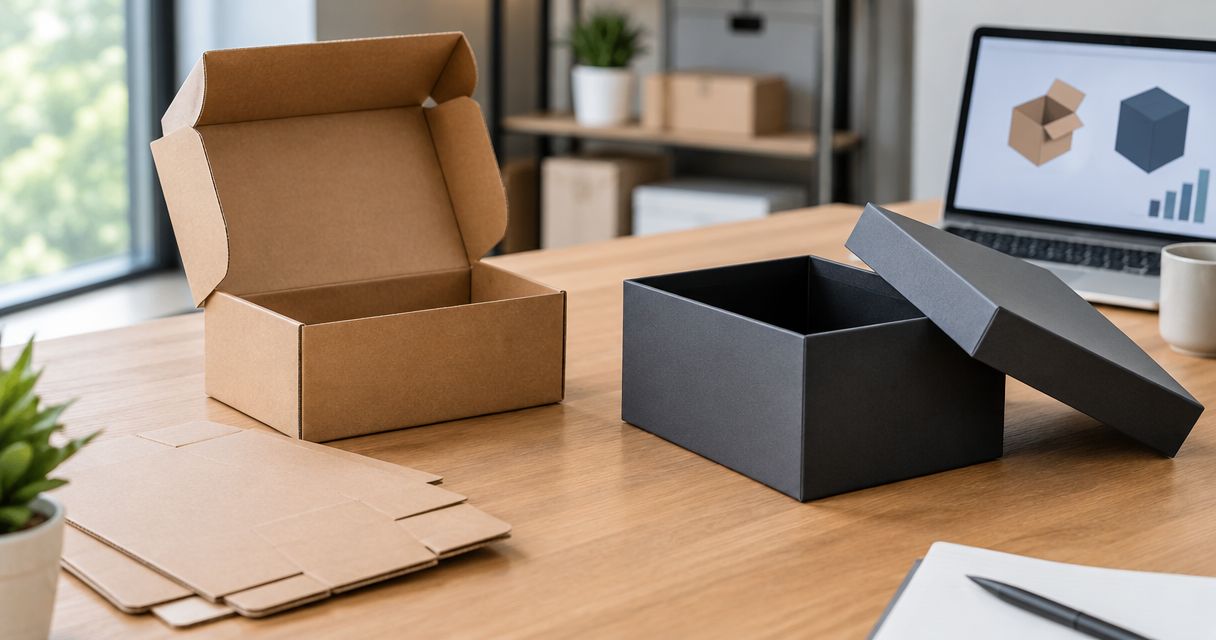
A rigid box is more cost-effective than a folding carton when its added packaging, freight, storage, and handling costs are outweighed by measurable savings in packing labor, damage, replacement shipments, or separate presentation materials. Choose it on total cost per successfully delivered order—not appearance alone—and keep the folding carton when those savings do not cover the difference.
- When is a rigid box more cost-effective than a folding carton? When verified operational savings exceed its added total cost.
- Rigid boxes suit presentation-led packaging; folding cartons suit applications where flat storage and packing efficiency matter more.
- Hale Path Packaging buyers should compare identical contents, delivery conditions, inserts, and acceptance criteria before choosing either format.
- A rigid presentation box still needs a shipping specification; appearance does not establish transit protection.
Why this matters
A packaging quote is not an order-fulfillment cost. Your warehouse also receives, stores, assembles, fills, closes, and ships the package. Comparing only the finished box leaves those operations outside the decision.
For a 2026 packaging review, ask Hale Path Packaging for a quote against a written specification covering the contents, box construction, insert, finish, and delivery configuration. Compare the same requirements across both formats before treating a lower quote as a lower-cost solution.
When is a rigid box more cost-effective than a folding carton?
A rigid box wins when the value of the work it removes exceeds the additional cost it introduces. That work must be identifiable: assembling a separate gift package, placing several protective components, repacking damaged goods, or handling another documented task.
A folding carton wins when it meets the same functional requirements with a lower total cost. Do not assign a financial benefit to presentation unless your own sales or merchandising evidence supports it.
| Decision point | Rigid box | Folding carton |
|---|---|---|
| Best for | Presentation-led packs where a formed structure serves a defined purpose | Packs where flat delivery, storage efficiency, and suitable assembly methods matter |
| Storage tradeoff | A conventional non-collapsible box occupies its formed volume | An unerected carton can be stored flat |
| Packing tradeoff | A supplied, formed box removes carton erection at the packing station | Erection and closure become part of the packing process |
| Protection | Requires a suitable construction, insert, and shipping system | Requires a suitable construction, insert, and shipping system |
| Presentation | Can provide a separate lid, fitted interior, or retained presentation structure | Can provide printed presentation with an appropriate carton structure |
| Cost risk | Paying for bulk and presentation without a measured operational benefit | Underestimating assembly, reinforcement, or separate presentation components |
Neither format earns a damage-reduction credit merely because of its name. Compare complete packs containing the actual product, not empty samples.
Calculate the break-even point
Build the comparison around this relationship:
Rigid-box premium across purchasing, inbound freight, storage, and outbound shipping must be less than the labor, materials, and failure costs it eliminates.
Use the same order quantity and delivery basis for both quotes. Include tooling and setup consistently, and spread those costs across the quantity actually purchased—not an unapproved future order.
Keep confirmed costs separate from assumptions. A measured packing-time difference belongs in the calculation; an expected increase in repeat purchases does not belong there until your own evidence establishes it.
Rigid boxes: best for replacing a separate presentation operation
A rigid box has a credible economic case when it replaces packaging work rather than simply adding another layer. Consider a product that otherwise needs a carton, a separate presentation sleeve, loose decorative fill, and additional packing steps. Compare the complete existing pack with the proposed rigid-box pack.
The advantage is process consolidation. A formed box with an appropriate interior can bring presentation and product positioning into the same packing operation. The limitation is that the box and interior still need receiving space, storage space, and a documented packing method.
Ask the supplier to identify exactly what arrives assembled. A supplied box, a separate insert, and an unattached decorative component do not represent the same workload as a completed pack ready for filling.
Choose a rigid box only when the replacement workflow removes enough documented work to justify the full delivered-pack cost. If the existing presentation materials remain, the proposal is an addition, not a substitution.
Folding cartons: best for efficient storage and repeatable assembly
A folding carton is the stronger starting point when your operation benefits from flat blanks and has a suitable erection and closing process. Its economic case depends on the carton working reliably with the product, packing method, and distribution route.
The advantage is the ability to store unerected cartons flat. The limitation is that someone—or suitable equipment—must form and close them. Insert placement and closure checks also remain part of the workflow.
Do not assume manual assembly is expensive or automated assembly is economical without examining your operation. Record the required motions, stoppages, rejected packs, and changeovers. Compare the actual process, not an idealized demonstration.
For your 2026 specification, identify whether the carton is delivered flat, pre-glued, or otherwise prepared for assembly. Those details affect the work left for your packing team and belong in the quote comparison.
Why rigid-box cost-effectiveness varies
The result changes with the packaging system and the way your business handles it. These factors determine whether a rigid box removes cost or merely relocates it:
- Delivery configuration: Formed boxes and flat cartons use receiving and storage space differently. Compare the supplier's actual shipping configuration.
- Packing sequence: Erection, insert placement, filling, closure, and inspection all contribute labor. Identify which steps disappear and which remain.
- Product restraint: The interior must hold the actual contents appropriately. A different outer box does not automatically remove the need for an insert.
- Outer shipping pack: A retail presentation box and a parcel shipping container have different jobs. Include any necessary outer protection in both alternatives.
- Purchase quantity: Setup, tooling, and inventory exposure affect the economics of the order you authorize. Do not assume later purchases will absorb today's costs.
- Failure costs: Record damaged contents, unusable packaging, repacking, and replacement shipment expenses using consistent definitions across both formats.
How do you compare both formats before ordering?
Define the same finished-pack requirement
Start with the product dimensions, weight, orientation, and acceptable movement inside the package. Identify delicate surfaces, protruding parts, and components that need separation. Describe the pack's destination: a retail shelf, a gift presentation, a parcel network, or another defined route.
Then state the acceptance criteria. An intact product and an unmarked presentation box are separate requirements. If both matter, both need to appear in the specification.
Request comparable constructions
Ask each quote to identify the proposed material, construction, finished dimensions, interior components, print, finish, and delivery configuration. Specify whether dimensions describe usable internal space or external size.
Keep the scope consistent. Comparing a rigid box with a fitted insert against an empty folding carton produces a misleading result, even when both quotes carry the same finished dimensions.
Measure the packing process
Use the intended contents and a representative packing station. Record the work from taking the packaging components to producing a completed pack ready for the next operation.
Include awkward steps. Separating nested components, correcting a misfold, adding protection, and checking closure are part of the process—not exceptions to remove from the comparison. Document the method so another operator can repeat it.
Evaluate the complete shipping system
Test the product, interior, presentation pack, outer container, and closure together where shipping performance matters. Record the configuration so a later material or insert change does not silently invalidate the comparison.
Technical references for a 2026 evaluation include ASTM International's ASTM D4169, Standard Practice for Performance Testing of Shipping Containers and Systems, and the International Safe Transit Association's ISTA 3A procedure for packaged products in parcel delivery systems. These provide distribution-testing frameworks; neither establishes that a box is suitable simply because it is rigid or folding.
Select the procedure that fits the intended distribution environment. Define product-damage and package-appearance acceptance criteria before testing, rather than deciding what is acceptable after seeing the results.
Approve the economics and the specification together
Combine supplier quotations, measured packing work, storage requirements, and documented shipping results. Retain the assumptions alongside the decision so purchasing does not approve a cheaper construction that removes an essential feature.
Hale Path Packaging is best suited to business buyers sourcing custom packaging against a written specification. Use that specification to make supplier responses comparable, rather than asking for an undefined premium box.
Does a rigid box automatically reduce shipping damage?
A rigid box does not automatically reduce shipping damage. Protection depends on the complete package, including product restraint, cushioning where needed, closures, and the outer shipping container.
A stiff presentation structure can still leave the contents free to move. Likewise, a folding carton can form part of a protective shipping system when the remaining components suit the product and distribution conditions. Establish performance through the specified evaluation, not the format label.
Can a folding carton still support premium presentation?
A folding carton can support premium presentation without becoming a rigid box. Structure, print, finish, opening sequence, and interior arrangement all contribute to how the pack presents the product.
The tradeoff is functional rather than a universal quality ranking. If the folding carton satisfies the presentation brief and packing requirements, a rigid box needs a separate, measurable reason to justify its additional cost.
Should you use both formats for the same product?
Use both formats only when each serves a defined order type or presentation requirement. A separate gift configuration can be evaluated independently from the standard replenishment pack.
That choice also creates another packaging specification and inventory item to manage. For a 2026 launch plan, assign each format a clear use case and ordering rule so the warehouse does not choose between them informally.
FAQ
When is a rigid box more cost-effective than a folding carton?
A rigid box is more cost-effective when measured savings in packing labor, separate materials, or packaging-related failures exceed its additional purchasing, freight, storage, and shipping costs. Compare complete packs under the same operating conditions.
Is a rigid box always better for fragile products?
A rigid box is not automatically better for fragile products. Product restraint, cushioning, the outer shipping container, and the intended distribution environment determine whether the complete pack provides suitable protection.
What costs should I include besides the box quote?
Include setup, tooling, inbound freight, storage, packing labor, inserts, closure materials, outer shipping packaging, and documented failure costs. Apply the same cost categories and order quantity to both formats.
Can a folding carton look suitable for a premium product?
A folding carton can meet a premium presentation brief through its structure, print, finish, and interior arrangement. Approve a physical sample against the required appearance and handling criteria rather than choosing by format name alone.
Should I test the rigid box without an outer shipping carton?
Evaluate the package in the exact configuration you intend to ship. If an outer carton is part of that configuration, removing it changes the system being assessed.
What should I send Hale Path Packaging for a comparable quote?
Send Hale Path Packaging the contents, dimensions, weight, quantity, proposed structure, interior requirements, printing, finishing, and delivery configuration. State the packing method and acceptance criteria so custom packaging quotes cover the same job.
Which packaging test should I request?
Request a test procedure suited to the product and distribution route. ASTM D4169 and ISTA 3A are relevant references for distribution and parcel-packaging evaluations, but the appropriate procedure depends on the actual shipping system.
One last thing
A box that arrives undamaged can still fail the presentation brief. Scuffed wrapping, a displaced insert, or contents facing the wrong direction can make an intact pack unacceptable under your own specification.
For the final 2026 approval, keep product protection and presentation acceptance separate. The economical choice is the complete pack that meets both requirements at the lower documented total cost—not the empty box that looks strongest on a sample table.
Related guides
- Rigid box styles for luxury retail brands
- Custom mailer box styles for e-commerce brands
- Candle packaging for small brands