Grease-Resistant Cardboard Coatings Explained: PFAS-Free Alternatives Small Food Brands Should Know About
Grease-Resistant Cardboard Coatings Explained: PFAS-Free Alternatives Small Food Brands Should Know About
PFAS-free cardboard coatings aren’t a future compliance question – they’re already the required standard. The FDA completed a voluntary market phase-out of PFAS grease-proofing agents in February 2024, formally revoked the related food contact notifications in January 2025, and set a compliance deadline of June 30, 2025 for exhausting any remaining PFAS-treated stock. Six PFAS-free alternatives are already in commercial production, ranging from cheap water-based coatings to higher-performance silicone and moulded-fiber options, and most small food brands can switch without a major cost jump once the right alternative is matched to the product’s grease level.
You’ve probably seen “forever chemicals” in a headline or two by now. That’s PFAS – per- and polyfluoroalkyl substances if you want the full name – and honestly, the nickname says it all: these things just don’t break down once they’re out there. For about fifty years, they were basically the go-to for grease-resistant cardboard coatings and food packaging in general, and it’s not hard to see why; nothing else kept grease and moisture out quite as well.
Here’s the problem, though: PFAS doesn’t break down, not ever, really. It keeps accumulating in the environment and in the human body, and some types have real health concerns attached to them at this point. The more the science advances, the more scrutiny follows, and the regulations are catching up right along with it.
This guide covers what PFAS is, how it ended up in so much packaging to begin with, where U.S. regulation currently stands, and the steps small food brands should be taking now to manage that risk, whether the product’s going into a Die-Cut Cardboard Boxes USA or a plain kraft carton.
Is Your Current Packaging Already PFAS-Free? Here’s How to Check
Most brands can’t actually answer this until someone else makes them try. A quick self-check beats guessing.
- Pull up your supplier agreement or spec sheet. If PFAS-free status isn’t explicitly stated somewhere in writing, don’t assume it’s covered just because nobody’s raised it before.
- See if there’s any grease-resistant treatment on the board at all. If it’s a plain, uncoated board that’s never dealt with anything oily, PFAS may never have been part of the equation to begin with.
- Track down a certificate of analysis or compliance from your supplier. A real one should state PFAS status outright, not hide behind a vague “food-safe” label.
- Ask when your current packaging spec was last updated. A spec that hasn’t changed in five or more years is worth a second look, since PFAS-free options weren’t nearly as viable back then.
- Weigh your product’s risk category. Greasy, oily, fried items need grease-resistant coating more often, so a PFAS-based one there carries higher stakes.
Uncertain about any of these? That uncertainty is itself worth acting on – it’s better to have this conversation with your supplier directly than to have a retailer or regulator start it for you.
Why PFAS Got Phased Out in the First Place
When did the FDA phase out PFAS in food packaging, and what’s the compliance deadline? The FDA announced a voluntary market phase-out of PFAS-based grease-proofing agents in February 2024, following commitments manufacturers made back in 2020 after an FDA safety review. In January 2025, the FDA formally revoked the 35 food contact notifications (FCNs) tied to those PFAS substances, and set a compliance deadline of June 30, 2025 for exhausting any packaging stock produced before January 6, 2025 using the old formulation. Source: FDA’s own PFAS in food Q&A page and FDA’s market phase-out notice.
About a dozen states have separately written intentionally-added PFAS out of food packaging law. Several major paper mills got there on their own, phasing PFAS out of their food-contact lines back in 2022 and 2023, well before any of this became a federal requirement.
None of this happened because PFAS quit working. It handled grease, oil, and moisture better than most alternatives, and food packaging leaned on that for years. What actually changed was persistence, not performance: these chemicals just don’t break down in the environment, and eventually the health concerns won out over the convenience.
PFAS-Free Alternatives Actually Worth Considering
A handful of PFAS-free alternatives have moved past the lab and into real commercial production. Six options currently cover most use cases:
- Water-based coatings: Cheap, easy to source, fine for everyday grease. Not up to the job for genuinely oily products.
- Bio-based coatings: Cellulose, starch, or chitosan. Excels on paper and moulded fiber, and adds a real plant-derived angle to a brand’s sustainability story.
- Wax-based coatings: An older approach that still gets the job done against grease. Certain wax types can make recycling trickier, so it’s worth checking exactly which one a supplier is using.
- Silicone-based coatings: Strong performance on both water and grease resistance, the kind of barrier we also spec into our Retail Cardboard Boxes USA food gifting brands use. They cost more than the water-based option, but the performance often justifies it for higher-grease products.
- Clay and mineral coatings: A moderate barrier, generally reserved for products where extreme grease resistance isn’t really the priority.
- Moulded fiber alternatives: Made from bagasse (a sugarcane byproduct) or wheat straw, this sustainable fiber packaging is naturally oil-resistant on its own and can still get a bio-based coating on top instead of anything fluorinated.
The Four Tests Worth Knowing Before You Compare Options
What tests should I ask a supplier about when comparing grease-resistant coatings? Comparing coatings side by side only works once “performs well” means the same thing to everyone involved. Suppliers and mills lean on four main tests:
- KIT test (grease resistance): Castor oil, heptane, toluene, scored 1 to 12. QSR wrappers and clamshells need 10 or above.
- WVTR (water vapor transmission rate): Grams of moisture per square meter per day. Lower is better; critical for cold or frozen packaging.
- Heat sealability: A coating running on a fast packaging line has to melt and bond cleanly at sealing temperature – no peeling, no sticking where it shouldn’t, no leftover residue. Plenty of bio-based coatings need reformulation before they clear this bar.
- Repulpability: A measure of food-contact packaging compliance tied to recycling – coated board needs to actually break down cleanly in a standard recycling pulping process, without leaving behind residue that contaminates the recycled fiber. More mills and brands are now asking for third-party repulpability certification rather than taking a supplier’s word for it.
Asking about all four, not just grease resistance, is what separates a coating that looks good on a spec sheet from one that actually performs once it’s running on your packaging line and going through a real recycling stream.
How to Know If a Coating Actually Works
The industry uses the KIT test to measure grease resistance, applying a series of increasingly aggressive oil-based solutions to a coated surface and scoring the result from 1 to 12. A higher number means better resistance. It’s a useful number to ask your supplier for, since “grease-resistant” on its own doesn’t tell you much without a benchmark behind it.
It’s also worth remembering that not every alternative performs the same across every product. A coating that holds up fine on a dry baked good might fail completely under something greasier, like fried snacks or a saucy product. Testing with your actual highest-grease item, not just a generic sample, is the only way to know a coating will actually do its job once it’s on the shelf.
A Pattern Worth Recognizing: A Bakery Brand’s Coating Switch
This is a common pattern showing up across the bakery sector, not one specific verified case: a small bakery brand packing pastries into what’s essentially a repurposed carton style has been using a standard PFAS-treated box for its buttery pastries for years without giving it much thought, until a regional grocery chain updates its packaging requirements and asks for written confirmation the boxes are PFAS-free. Plenty of brands haven’t realized PFAS was in their current packaging at all, since the supplier never mentioned it either way.
This same scramble is playing out across the industry as more regional grocers update their own supplier requirements ahead of state-level PFAS restrictions taking full effect.
What to Ask Your Packaging Supplier Right Now
- Is our current board PFAS-free, and can you confirm that in writing? Plenty of brands assume they’re already covered without ever actually checking.
- What’s the KIT test score for this coating? A number gives you something to compare, rather than taking “grease-resistant” at face value.
- Has this coating been tested against our specific product? A generic grease test isn’t the same as testing with your actual highest-grease item.
- Does this coating affect recyclability? Some wax-based options can complicate recycling, the same recyclability question we get on every Christmas Boxes USA order too.
- What’s the lead time if we need to switch? PFAS-free coating capacity has been getting absorbed quickly industry-wide, and some suppliers are already reporting longer lead times into the back half of 2026.
What Switching Actually Costs, and What Happens If You Don’t
Cost tends to be the first question once a brand accepts that PFAS-free isn’t optional anymore, and the honest answer really depends on which alternative fits the product. Water-based coatings sit closest to what PFAS-treated boards used to run, mostly because they’re the most widely produced option and mills have already scaled up capacity. Bio-based and silicone options usually cost a bit more, somewhere between a few cents and a dime or two per unit depending on volume, though that premium keeps shrinking as more manufacturers enter the space.
What’s the real cost of waiting to switch to a PFAS-free coating? There’s a cost people tend to miss entirely: waiting. Push testing off until a retailer or a new rule forces the issue, and the bill usually comes due in more than one place. Lost negotiating leverage – a supplier scrambling to meet a hard deadline has far less room to offer favorable pricing than one working through a planned transition. Shrinking lead time windows – PFAS-free coating capacity has been getting absorbed quickly across the industry, and some suppliers are already reporting longer lead times heading into the back half of 2026. Less room to test properly – a rushed switch means less time to validate a coating against your actual highest-grease product before it’s already on the shelf. A brand that starts testing now, even without an immediate deadline, avoids getting stuck at the back of that queue later.
Reading a Supplier’s PFAS-Free Claim Properly
A “PFAS-free” claim isn’t worth much on its own; what matters is what’s actually standing behind it before anyone takes it at face value.
- A written certificate of compliance is the baseline for real supplier due diligence, but third-party lab results carry more weight than either. No certificate is a red flag; a certificate with independent lab backing is what actually holds up if a retailer or regulator asks for proof.
- One good sample doesn’t guarantee every batch. Ask whether testing happens per batch or only once at qualification.
- “PFAS-free” isn’t “fluorine-free,” and mixing the two up costs you clarity. Push for a direct answer on intentionally added PFAS. A label that just sounds green tells you nothing.
- Documented once, this doesn’t need re-proving every time someone asks.
Getting Ahead of This Before a Retailer Asks
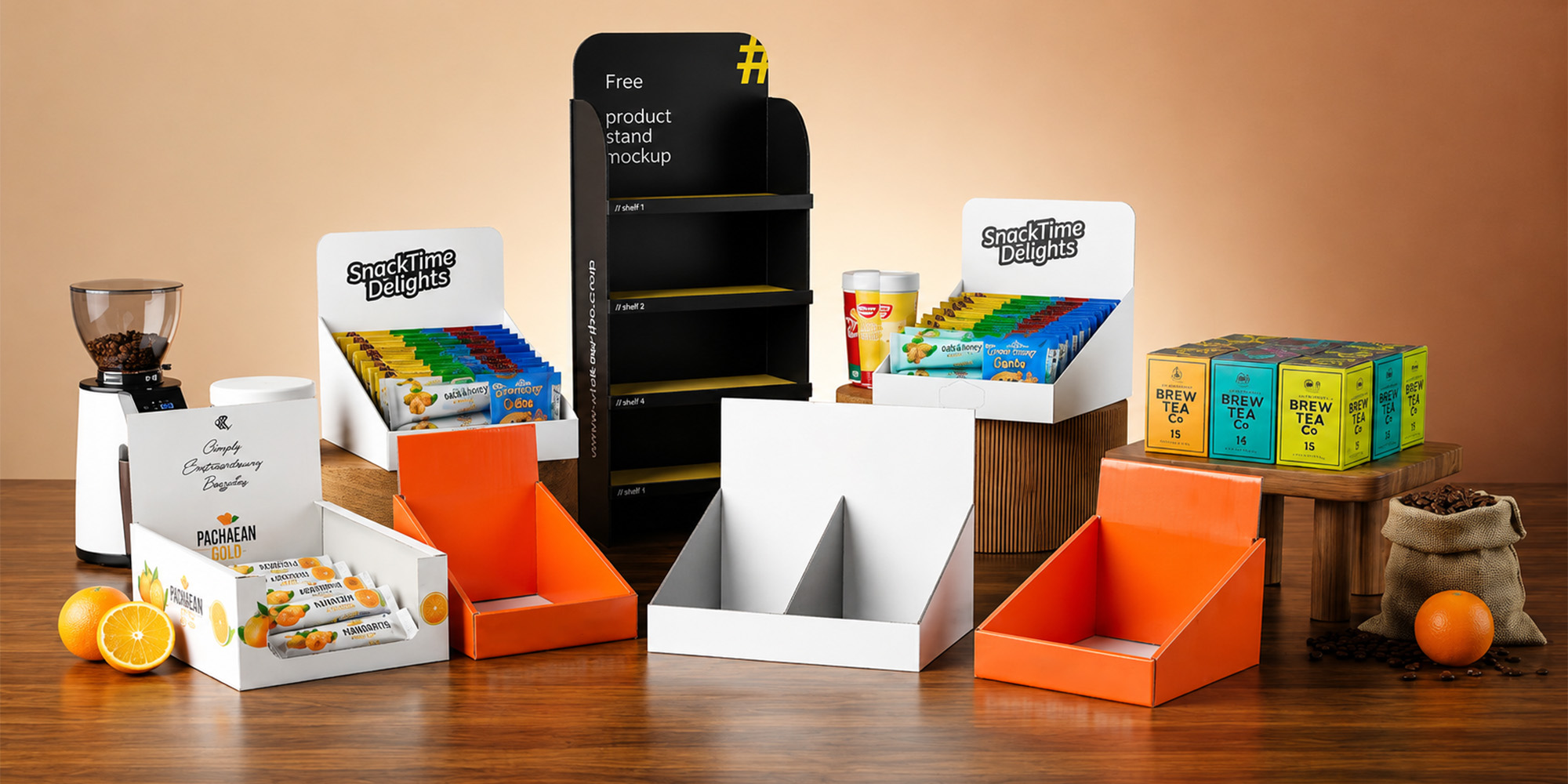
At Hale Path Packaging, our Cardboard Counter Display Boxes USA and food-grade cartons come with grease-resistant cardboard coatings specified upfront, so brands aren’t left scrambling the way many bakery brands have been when a retailer’s requirements suddenly changed.
A Note for Small-Batch Brands Specifically
None of this requires a national brand’s budget to get right. Most suppliers will run a small test batch before a full production commitment, and that’s the cheapest way to confirm a coating actually works against your product. Volume too small for a supplier’s standard minimum? Ask about shared production runs, or existing PFAS-free stock boards already qualified for common uses like bakery, snack, or grab-and-go packaging. Getting this sorted at small scale now means the switch won’t need repeating later once volume grows and a retailer starts asking questions.
The Bottom Line
PFAS-free grease-resistant coatings aren’t some future problem to worry about later – the alternatives are already commercially available, and more states and retailers are asking for proof of compliance every quarter. Small food brands that get ahead of this now, testing options against their actual products and asking suppliers the right questions, avoid the kind of last-minute scramble that costs both time and a retail relationship. The technology’s caught up. The only real risk left is not asking the question until someone else asks it for you.
Written by the Hale Path Packaging team, packaging specialists with over a decade of experience supplying food-grade, grease-resistant, and compliance-ready cardboard packaging to small and growing food brands across the U.S.