Sustainable Packaging on a Small Business Budget: What’s Actually Worth the Extra Cost in 2026
Sustainable packaging cost 2026 is no longer a simple “yes, it costs more” answer. In 2026, it’s a math problem, and the math changed without most small businesses noticing. Tariffs now hit imported materials unevenly; some “eco” options that used to carry the biggest price premium are becoming more competitive with conventional plastic, while others are getting more expensive fast. Our sourcing team has been re-running landed-cost comparisons for clients all year as the tariff landscape shifted, and the pattern is consistent: recycled paper and domestically sourced fiber packaging are now often cheaper and safer than the imported “eco” alternatives everyone assumed were the premium choice. Imported compostable resin is the one getting squeezed hardest – not because it’s a worse material, but because of exactly where most of it is currently manufactured.
The 2026 verdict, up front:
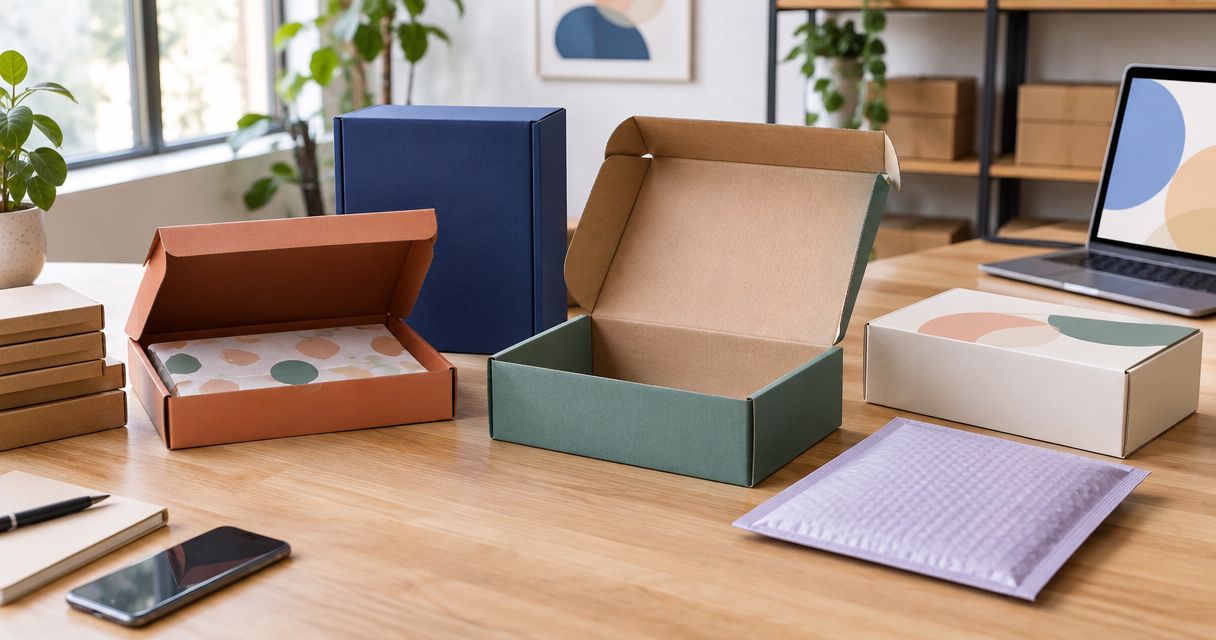
- Worth the extra cost: recycled corrugated, FSC-certified kraft paper, and domestically sourced recycled paper mailers at volume.
- Skip for now: imported PLA and bioplastic compostables, particularly from countries currently carrying additional Section 301 duties.
- Watch and wait: virgin plastic under 30% recycled content, which is exposed to both tariff costs and a growing list of state-level recycling fees.
Why “Sustainable” and “Tariff-Proof” Are Not the Same Question Anymore
Most advice on eco-packaging still treats cost as a single number: sustainable materials cost more, full stop, and you decide whether the brand story is worth it. That framing made sense a couple of years ago. It doesn’t fully hold up anymore, because tariffs don’t hit all packaging materials evenly. Imported bioplastics and specialty compostable films are absorbing tariff costs on top of their existing material premium. Domestically sourced recycled paper and fiber, by contrast, mostly sidestep tariff exposure entirely, because the raw material never crosses a border. We check the country of origin on every material spec we quote now, precisely because that single detail changes the real cost more than the material category itself does. The question in 2026 isn’t “sustainable or not”; it’s “sourced from where.”
Is imported “eco” packaging always more expensive than domestic packaging now? Not always, but the direction of the gap has shifted. Specialty compostable films and bioplastics manufactured in countries currently subject to Section 301 duties (see below) are the ones absorbing the highest added cost. Fiber-based materials – kraft paper, recycled corrugated – are largely unaffected regardless of origin, since paper and pulp mostly fall outside the tariff categories currently in effect.
What the 2026 Tariff Landscape Actually Changed
This is the section worth reading carefully, because the tariff structure has moved twice already this year, and most packaging advice hasn’t caught up.
On February 20, 2026, the Supreme Court struck down the prior IEEPA-based tariffs. The administration responded the same day with a new tariff under Section 122 of the Trade Act of 1974: a flat global surcharge that started at 10% and was raised to 15% before taking effect on February 24. By statute, Section 122 tariffs can only run for a maximum of 150 days, and they expired on schedule on July 24, 2026.
They weren’t simply removed. On July 24, 2026, the U.S. Trade Representative replaced Section 122 with new Section 301 duties of 10% or 12.5%, applied to imports from 60 economies that USTR determined had failed to impose or effectively enforce prohibitions on forced-labor-produced goods; a determination confirmed directly on USTR.gov. This is a replacement, not an additional layer stacked on top of the expired surcharge – treating both as simultaneously active, as some packaging guidance still does, overstates current tariff exposure.
Are Section 122 and Section 301 tariffs stacking on top of each other right now? No. Section 122 expired on July 24, 2026, and Section 301 duties on the 60 flagged economies took effect the same day as its replacement, not an addition. If you’re comparing quotes and someone is pricing in both, ask them to re-run the number; as of today, only Section 301 (plus Section 232, where applicable) is current.
Separately, Section 232 tariffs: up to 50% on steel, aluminum, copper, and lumber. remain a standing, indefinite policy, unrelated to the 150-day Section 122/301 timeline. This mostly matters for metal packaging components: tins, closures, aluminum cans. For the fiber-versus-bioplastic comparison, most small brands are actually weighing. Section 232 isn’t the relevant exposure; Section 301 is, since a meaningful share of specialty compostable film and bioplastic resin manufacturing sits inside the 60 economies currently covered.
The practical takeaway: before assuming an imported “eco” material carries a tariff, confirm your supplier’s country of manufacture against the current Section 301 list; not against last year’s tariff schedule, and not against a “10% flat surcharge” figure that no longer applies.
Does Sustainable Packaging Honestly Cost More Right Now?
Understanding real sustainable packaging cost in 2026 means separating the material premium from the tariff exposure; they used to move together, and now they don’t. The gap is real, but it’s uneven, and it depends heavily on which material you’re actually comparing.
At low order volumes, sustainable packaging generally runs 20 to 40% above conventional plastic, narrowing to 10–15% above at 5,000+ units, and to within 5% for some certified recycled plastics at high volume. Recycled paperboard mailers, FSC-certified kraft boxes, and recycled corrugated sit at the affordable end of that range; FSC kraft typically costs only around 10% more than standard kraft, and recycled corrugated is frequently at price parity with virgin. Compostable PLA sits at the expensive end, adding roughly 25–30% over conventional cost before tariff exposure is even counted.
The myth worth killing: “sustainable packaging always costs 20–50% more.” It doesn’t; that range is carried almost entirely by imported bioplastics and specialty compostable films. Recycled fiber and domestically sourced paperboard are frequently within a few percentage points of conventional pricing, sometimes cheaper once import weight and state recycling-fee exposure are factored in.
Where the Extra Cost Is Actually Worth Paying
Recycled corrugated is close to a no-brainer at this point; it’s at or near price parity with virgin corrugated, domestically available at scale, and carries none of the current Section 301 exposure that imported alternatives do.
FSC-certified kraft paper is the next easiest yes: a roughly 10% premium buys a certification most retail partners and marketplaces are increasingly asking for, on pulp that’s largely sourced without crossing current tariff lines. Hale Path Packaging’s recycled stock is built to support that claim honestly, at low order minimums.
Recycled paper mailers, once you’re ordering above roughly 5,000 units, land close enough to conventional plastic pricing that the sustainability positioning is close to a free upgrade.
If I can only upgrade one material this year, which one? Recycled corrugated or FSC kraft, in that order. Both carry the smallest cost gap, the least tariff exposure, and the fewest labeling-compliance questions of any material on this list.
What makes these three low-risk in practice: the raw fiber is grown, pulped, and processed domestically or regionally in most supply chains, so it isn’t crossing a Section 301 line; FSC chain-of-custody certification costs (roughly $1,000–$5,000/year for the manufacturer) are already built into unit pricing rather than being a surprise add-on; and none of them carries the compostable-labeling risk currently unsettled in states like California.
Where It’s Not Worth It Yet
Imported PLA and bioplastic compostables are the clearest case for waiting. They already carry a 25–30% material premium, and a meaningful share of that manufacturing capacity sits in economies now subject to the Section 301 duties described above. When we run a total-landed-cost comparison for clients rather than just unit price, imported compostables rarely win right now; the material premium, the tariff exposure, and the labeling risk all stack on the same line item.
Virgin plastic with under 30% recycled content is the other one to watch rather than reflexively switch away from; it isn’t cheaper anymore once recycling-fee penalties from state Extended Producer Responsibility (EPR) programs are counted alongside current tariff exposure on imported resin. Unlike the UK’s national plastic packaging tax, the US doesn’t have a single federal equivalent; instead, seven states have already passed their own EPR packaging fee laws (Oregon, Colorado, California, Maine, and Minnesota among the first), each with its own fee structure for low-recycled-content packaging. Check the specific states you ship into rather than assuming one national rule applies.
Watch this one closely: California’s compostable-labeling law, AB 1201, adds a real complication for anything marketed as “compostable” in that state. In January 2026, the USDA’s National Organic Standards Board voted against allowing synthetic compostables like PLA to qualify as an allowable organic input, the specific test AB 1201 requires, pushing the compliance deadline for any brand using that label in California to June 30, 2027. If your compostable material is PLA-based and you sell into California, that’s a real deadline, not a distant one.
Does the compostable-labeling issue only affect brands selling in California? Directly, yes, AB 1201 is a California law. Indirectly, it’s worth watching everywhere, since California’s packaging law has historically set the pattern other states follow within a year or two.
Hold off on new imported-compostable commitments until the material premium and the tariff exposure stop being simultaneously moving targets – reassess quarterly, not annually.
Cost snapshot, for reference: recycled corrugated roughly at parity with virgin corrugated; FSC kraft paper around 10% above standard kraft; recycled paper mailers at 5,000+ units within 5–15% of conventional plastic; compostable PLA 25–30% above conventional before current Section 301 exposure; post-consumer recycled resin roughly 33% above virgin polymer at the commodity level.
These are general 2026 US market ranges based on our own sourcing work, not a quote for your specific spec – confirm exact numbers against your actual materials and volumes.
A Small Business Working Through This Decision
A skincare brand we work with was set on switching its shipping mailers to a compostable bioplastic film, largely because a competitor had made the switch and it photographed well in unboxing videos. Pricing it out mid-2026, our team ran the landed cost for both options: the compostable film came in over 40% above their current mailer once the Section 301 duty on the film’s country of manufacture was added to the existing material premium – a number their previous supplier hadn’t broken out until asked directly. Switching the spec to a domestically produced recycled paper mailer instead brought the premium down to under 10%, with no current tariff exposure and no risk of running into a California labeling problem if they ever expand distribution there. The brand still got a genuine sustainability upgrade -just not the one that photographed quite as dramatically, which turned out not to matter once customers saw “100% recycled” printed on the mailer either way.
So does switching materials always mean picking the cheapest option? Not quite – it means checking where the material is actually made before assuming the “greener” option is also the pricier one. Sometimes it’s both greener and cheaper. Sometimes the imported option that looks more innovative is the one carrying the most hidden cost.
Where to Start This Quarter
Ask your current supplier, by SKU, which of your packaging materials are imported and from where. Most invoices don’t break this out, but most suppliers can tell you within a day if asked directly.
Get a landed-cost comparison for any imported “eco” material against a domestically sourced recycled or FSC-certified alternative – a real landed-cost number, current Section 301 exposure included, not material cost alone.
Hold off on any new compostable-labeled material commitment until you know whether it’s PLA-based and whether California’s AB 1201 timeline applies to your distribution.
Prioritize the recycled corrugated or FSC kraft switch first – it’s the lowest-cost, lowest-risk upgrade available right now, and it isn’t going to become less relevant if tariffs move again.
Revisit this list quarterly, not annually. Both the Section 301 country list and the state-level compostable rules are still moving.
Frequently Asked Questions
Does sustainable packaging cost more in 2026?
It depends on the material and its country of origin. Domestically sourced fiber (recycled corrugated, FSC kraft) is now close to price parity with conventional options; imported bioplastics and compostable films carry both a material premium and current Section 301 tariff exposure.
What tariffs currently apply to imported packaging materials?
As of today, the primary tariff exposure is Section 301 duties (10% or 12.5%) on imports from 60 economies USTR flagged for forced-labor enforcement failures, effective July 24, 2026. The prior Section 122 global surcharge expired the same day and was replaced, not stacked. Section 232 tariffs (up to 50%) apply separately to steel, aluminum, copper, and lumber.
Is compostable packaging still a good choice for a small brand?
It depends on where you sell. If you distribute into California, PLA-based compostable claims face a compliance deadline of June 30, 2027 under AB 1201, since federal organic-input rules for synthetic compostables haven’t been updated. Fiber-based compostable and recyclable materials aren’t affected by this issue.
What’s the single best sustainable packaging upgrade for a small business right now?
Recycled corrugated or FSC-certified kraft paper – both carry a minimal cost premium, little to no current tariff exposure, and no compostable-labeling risk.
Is there a US federal plastic packaging tax like the UK’s?
No – the US doesn’t have one national equivalent. Instead, seven states have passed their own Extended Producer Responsibility (EPR) packaging fee laws, each with different rules for low-recycled-content packaging. Check the specific states you ship to.
Conclusion
The mistake most small businesses are making right now isn’t choosing conventional over sustainable – it’s assuming every “eco” material carries the same cost and the same tariff exposure. It doesn’t. Fiber-based, domestically sourced options have quietly become the safer financial bet in 2026, while some of the imported materials that used to signal innovation are now carrying a real, current tariff cost on top of their material premium. The businesses getting ahead of this aren’t choosing between sustainability and cost – they’re checking where a material is actually made before deciding what it’s going to cost them, and building their packaging spec around that answer instead of last year’s assumptions.
If you’re weighing a switch this quarter, Hale Path’s Corrugated Packaging can run the landed-cost comparison for you before you commit to a spec – checking where a material actually comes from, what it costs once current tariffs are counted, and whether a domestically sourced recycled or FSC-certified alternative gets you the same sustainability story without the same risk.
Written by the Hale Path Packaging team, packaging specialists with over a decade of experience sourcing and quoting sustainable packaging materials for small brands across the USA. Tariff and regulatory information referenced above is drawn from the Office of the U.S. Trade Representative (USTR.gov) and the California Department of Resources Recycling and Recovery (CalRecycle). Tariff policy has changed multiple times in 2026 – confirm current rates for your specific materials before finalizing a spec.