Window Cardboard Boxes: Does the Cutout Weaken the Box, and Is the Film Recyclable?
Window Cardboard Boxes: Does the Cutout Weaken the Box, and Is the Film Recyclable?
A window on a box does one job extremely well: it lets the product sell itself before anyone opens anything. But cutting a hole into a structural piece of board raises two questions almost every brand eventually asks. Does the cutout honestly weaken the box, and what happens to that clear film once the box is thrown away? Both questions deserve real answers, not the vague comfort most suppliers deliver by default.
Why Brands Choose Window Cardboard Boxes in the First Place
Window cardboard boxes exist because a picture on a box, no matter how well printed, never sells quite as hard as the real product visible behind clear film. Bakery items, cosmetics, small electronics, pet treats, candles- all of these categories lean on window packaging because customers make faster purchase decisions when they can actually see texture, color, and quality before committing.
Custom Pet Treat Bags USA with a window showing the actual treats inside convert better on a shelf than a fully printed bag with no visibility, and the same logic holds for Window Cosmetic Boxes USA used for gift sets and premium retail items. The window isn’t decoration; it’s doing measurable sales work.
Does the Cutout Actually Weaken the Box?
Yes, cutting a window removes material, and removing material from any structural panel decreases that board’s inherent strength. The real question is not whether it weakens the box; it is whether the weakening counts for how the box honestly obtains use, and that relies entirely on where the cutout standards are and how the rest of the structure compensates for it.
Where the Window Sits Counts More Than the Window Itself
A window cut into a side panel of a box that’s supported on all four corners by strong vertical edges loses far less structural integrity than a window cut into a top panel that’s also expected to bear stacking weight. Box engineers generally avoid placing large windows on load-bearing surfaces for exactly this reason. A Flip Top Rigid Boxes USA style, for instance, typically keeps window cutouts on the front or side panel rather than the lid, since the lid on a flip-top structure often takes more handling stress during repeated opening.
Board Weight Compensates for Lost Material
A well-specced window box doesn’t use the same board weight it would if there were no window at all. Suppliers who actually engineer around window placement typically bump up the board weight or add reinforcement at the cut edges, effectively rebuilding some of the strength lost to the cutout. This is the difference between a window box that survives a full retail season and one that starts to sag or tear at the window edge within weeks.
The Film Itself Adds Some Rigidity
Contrary to what most people assume, the film glued over a window cutout isn’t purely cosmetic; it adds a small amount of tensile strength back to the panel, similar to how a taped seam resists tearing better than an unsealed cut edge. It’s not a substitute for proper board weight, but it’s nothing either. A window with poorly adhered film loses more of that benefit than one where the film is fully and evenly bonded to the board.
Testing Is the Only Way to Know for Sure
Any supplier claiming a window design “won’t affect strength” without having tested it is guessing. The honest answer is that a properly engineered window cardboard box, one where the window size, placement, board weight, and film adhesion have all been considered together, loses very little practical strength. A poorly designed one, an oversized window on a load-bearing panel with standard board weight and no reinforcement, can fail well before a non-windowed equivalent would.
Is the Film in a Window Box Recyclable?
This is where things get complicated, and where a lot of “sustainable” claims quietly fall apart. The honest answer is: it depends entirely on what the film is made of, and that’s a detail a lot of suppliers don’t volunteer unless asked directly.
PVC Film Is the Most Standard and the Least Recyclable
Traditional window film is constantly PVC polyvinyl chloride, selected because it is affordable, clear, and comfortable to work with in production. PVC is not accepted in standard paper recycling streams, and worse, if a PVC windowed box is tossed into a cardboard recycling bin without the film removed, it can pollute an entire batch of paper pulp at the recycling facility. PVC releases chlorine compounds when processed alongside paper fibre.
PET and PLA Film Are Better Alternatives
PET, the same material used in most plastic bottles, is accepted in recycling streams more than PVC, though it always requires being separated from the cardboard before either material goes into its respective recycling stream. PLA is a separate category; it is developed to break down in industrial composting facilities instead of being reclaimed at all, which counts for brands trying to construct an accurate sustainability claim instead of a vague one.
Renewable Claims Require Establishing What Is Honestly Renewable
A box that speaks of renewable packaging without explaining whether it contains window film is producing a true but misleading claim: the board is renewable, the film is not, unless it is specifically PET or PLA and the customer knows to separate it before disposal. Brands serious about an accurate environmental claim should specify this clearly on the box itself, something we cover in more depth in our guide on sustainable holiday packaging, where the same specificity problem shows up across ribbon, void fill, and ink claims, not just film.
Mono-Material Window Boxes Are Becoming More Standard
Some suppliers now offer windows made from the same base material as the box itself, essentially a die-cut opening with a thin, translucent layer of the same paper-based stock rather than a separate plastic film. These mono-material structures do recycle as a single stream, no separation required, though they do not achieve the same level of clarity as a true plastic film window. For brands where the sustainability claim matters, glass-clear product visibility — this is worth asking a supplier about instantly.
What This Means for Ordering a Window Box
If structural strength is the priority, ask precisely where the window sits relative to load-bearing panels, and ask whether the board weight has been adjusted to account for the cutout. A supplier who can not answer this with specifics probably has not engineered around it.
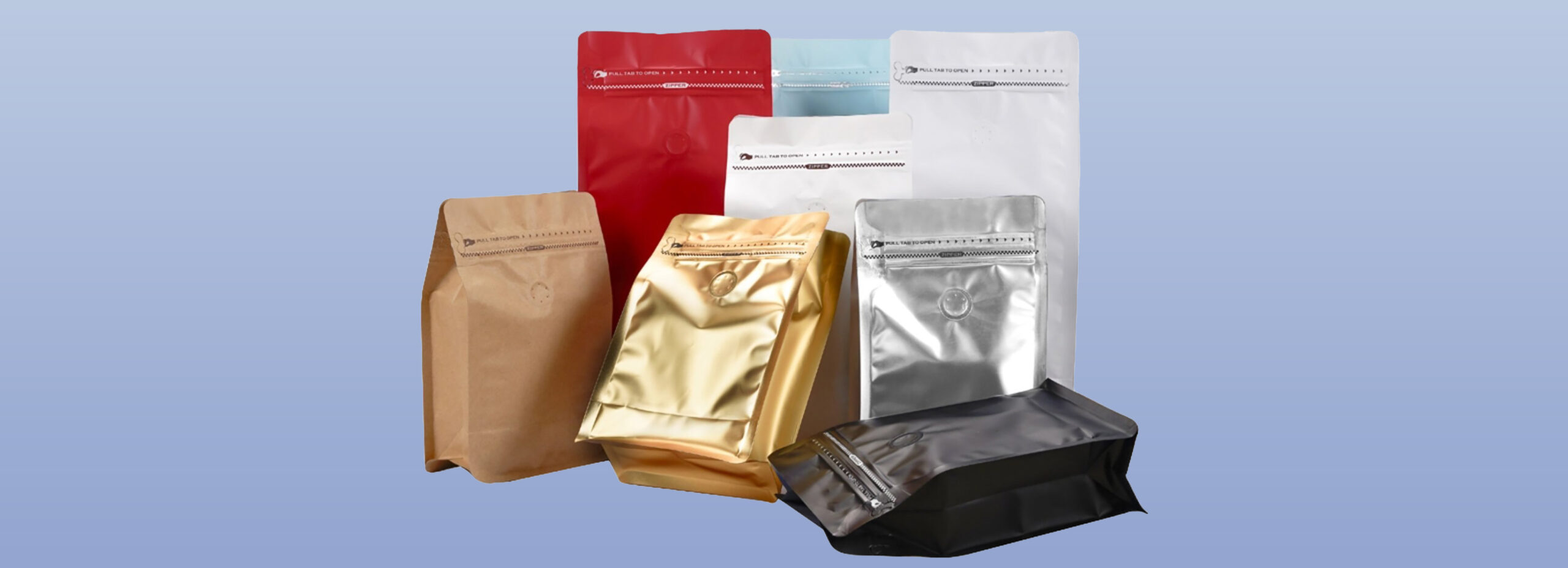
If recyclability matters to your brand’s positioning, ask what the film is made from before assuming PVC, PET, and PLA are interchangeable in a recycling context, because they are not. This applies whether you are packaging a Flat Bottom Coffee Bags USA product with a small window or a Small Rigid Box USA gift established with a larger display window.
If both matter equally, which is increasingly the case for brands trying to balance frame request with a real sustainability story, a mono-material window or a PET film with clear removal instructions printed on the box is the most defensible centre ground.
Common Window Box Applications and What to Watch For
Bakery and food packaging. Windows here need food-safe film regardless of recyclability considerations, and grease or moisture resistance often takes priority. A Popcorn Packaging Bags USA or Rice Packaging Bags USA style window needs film that won’t fog or discolour from product contact over time.
Candle and home fragrance packaging. Window placement needs to account for jar shape and any divider system inside; a window cut without considering what’s directly behind it can end up showing an unflattering angle of the product rather than its best side. A detail brand’s packaging into Candle Kit Boxes USA or Candle Shipping Boxes USA should check on a physical sample before committing to a full run.
Cosmetics and gift sets. These categories often use the largest windows relative to box size, since the visual appeal of the product is central to the purchase decision. This is exactly the scenario where board weight and reinforcement matter most; a large window on thin board is the fastest way to end up with a box that looks great on day one and sags by day ten.
Questions Worth Asking a Supplier Before Ordering
Has the window placement been checked against where the box carries load, whether that’s stacking, shipping, or repeated handling?
Has the board weight been adjusted to compensate for the material removed by the cutout?
What is the window film honestly constructed from: PVC, PET, PLA, or a mono-material paper-based option?
If the film is not recyclable in standard streams, does the box contain clear disposal instructions so customers are not left guessing?
Cost Differences Between Window and Non-Window Boxes
A window cardboard box typically costs more than an equivalent solid box, and the cost comes from more than one place. There’s the die-cutting tooling for the window itself, which adds a step to production that a solid box skips entirely. There’s the film application process, which requires precise, even adhesion around the cutout edge to avoid the kind of peeling or bubbling that makes a box look cheap almost immediately. And there’s the board weight adjustment discussed earlier, since a properly engineered window box often uses a heavier stock than its solid equivalent to compensate for the material removed.
For brands weighing whether a window is worth the added cost, the calculation usually comes down to how much the product benefits from visibility. A product with strong color, texture, or shape- freshly baked goods, colorful candles, richly textured fabric- tends to justify the added cost because the window is doing real selling work. A product that looks unremarkable via a window, plain-colored powders, uniform small items with no visual distinction- often doesn’t earn back the extra cost in the same way, and a printed box with strong photography might sell just as well for less money.
How Window Placement Affects Print Design Too
Beyond the structural question, window placement has a real effect on how a brand’s print design actually works. A large window cut into the centre of a front panel leaves less usable space for logo placement, product information, and branding elements, which means the design has to work around the cutout rather than the cutout being an afterthought layered onto a finished design.
This is where working with a supplier early in the design process pays off. A box designed with the window cutout considered from the start, rather than added to an existing solid-box template, tends to balance visibility and branding far better than one where the window gets carved out of a design that wasn’t built to accommodate it. The same principle applies whether it’s a small cosmetic pouch with a small viewing window or a large Custom Auto Bottom Boxes USA style with a full front-panel display window.
Do all window boxes use the same type of film? PVC, PET, and PLA are the three standard choices, and they vary in duration of transparency, cost, and recyclability. A supplier should be able to inform you just which one is being used on a delivered order, not just describe it as clear film.”
Can a window box be fully recyclable? It can, if the film is either a mono-material paper-based option or a PET film that is clearly labelled for separation before disposal. A box with unlabeled PVC film can not be called recyclable in good faith, even if the board itself is.
How big can a window be before it compromises the box? There’s no universal size limit, since it relies on board weight, panel placement, and reinforcement. As a general guideline, a window taking up more than half of a load-bearing panel requires a heavier board or added structural support to avoid noticeable weakness.
Does film application affect the box’s frame life? Poor film bonding can lead to skinning or bubbling over time, in humid conditions, which affects appearance more than structural integrity. Nicely applied film on a properly specced board holds up for the same frame life as the box itself.
Is a mono-material window box more expensive than a standard film window? It varies by supplier, but mono-material window choices are constantly priced comparably to standard film windows once ordered at similar volumes, since the production process is different but not necessarily more complex.
Conclusion
A window cardboard box is not weaker just because material has been removed, and it is not sustainable just because the box itself states renewable somewhere on the brand. Both questions come down to specifics: where the window seats are, how the board weight compensates for it, and what the film is honestly produced from. Brands that ask these questions before requesting end up with packaging that holds up structurally and constructs an environmental claim they can honestly stand behind, instead of discovering either problem after a few thousand units are printed.
Written by the Hale Path Packaging team, packaging specialists with over a decade of experience engineering window cardboard boxes for food, candle, cosmetics, and gifting brands across the United States, working directly with clients on structural testing and film material selection ahead of full production runs.