2026 Perfume Packaging Trends: Sustainable, Refillable & Minimalist Design
2026 Perfume Packaging Trends: Sustainable, Refillable & Minimalist Design
Three forces are reshaping custom perfume boxes this year – sustainable, PPWR-compliant materials; refillable structural systems; and minimalist, texture-led design replacing heavy foil and pattern. Together they’re changing how a perfume box is engineered, not just how it looks.
A perfume box used to get judged almost entirely on how it sat on a vanity. That’s no longer where the decision gets made. I’ve spent the last several years running structural design and material sourcing for fragrance clients at Hale Path Packaging, and the shift I’ve watched happen in the last 18 months isn’t cosmetic – it’s a genuine reset in what a custom perfume box is built to do. Three trends are driving it, and they’re converging faster than most brands’ packaging refresh cycles can keep up with.
Why Custom Perfume Boxes Are Changing Faster Than Usual
Three forces are converging at once, which is why this doesn’t feel like a normal design refresh cycle:
- A new EU regulation is now a hard deadline, not a talking point. Regulation (EU) 2025/40 – the Packaging and Packaging Waste Regulation, or PPWR – entered into force in February 2025 and started applying across all 27 EU member states on 12 August 2026, replacing the 30-year-old Packaging Directive. It requires harmonised material-composition labelling and sets recyclability and design-for-recycling requirements that phase in through 2030. For any brand shipping into the EU, this isn’t optional groundwork anymore – it’s a compliance date on the calendar.
- Refill adoption jumped fast, not gradually. Refillable perfume bottle adoption rose 31% between 2022 and 2023, and the global perfume and fragrances packaging market – valued at roughly $7.7 billion in 2026 – is projected to reach $11.4 billion by 2033, with PPWR cited directly as one of the drivers pushing brands toward refillable, lightweight formats. (Source: Persistence Market Research, Perfume and Fragrances Packaging Market Report; Scento Fragrance Market Statistics 2026.)
- Minimalist design is winning shelf tests it used to lose. With 62% of consumers now favoring sustainable packaging, restraint reads as premium in a way it didn’t five years ago – brands leaning into heavy foil and maximalist finishing are increasingly the ones that look dated, not distinctive. (Source: Scento Fragrance Market Statistics 2026.)
A custom perfume box that ignores these three shifts risks looking behind the curve within a year, not a full packaging cycle away.
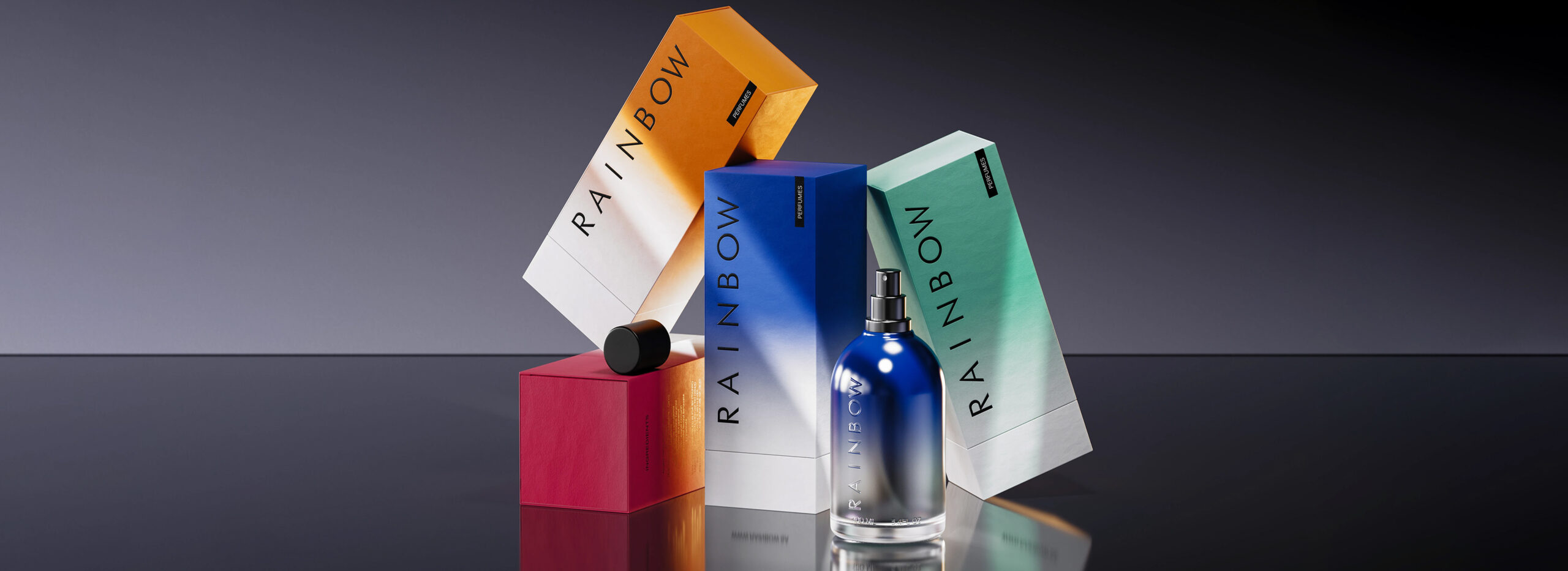
Sustainable Perfume Packaging Trends Has Moved From Niche to Default
Is sustainable perfume packaging more expensive in 2026? Not the way it used to be. FSC-certified boards typically carry a modest premium over uncertified stock – usually in the low single-digit percentage range at volume – and that gap has narrowed steadily as more mills carry certified stock as standard inventory rather than a special order. The bigger cost lever is actually structural: mono-material builds and right-sized boxes cut material use and shipping volume, which tends to offset most or all of the certification premium. The honest answer is that exact cost impact depends on your box dimensions, print complexity, and order volume – that’s a conversation for a real quote, not a blanket percentage.
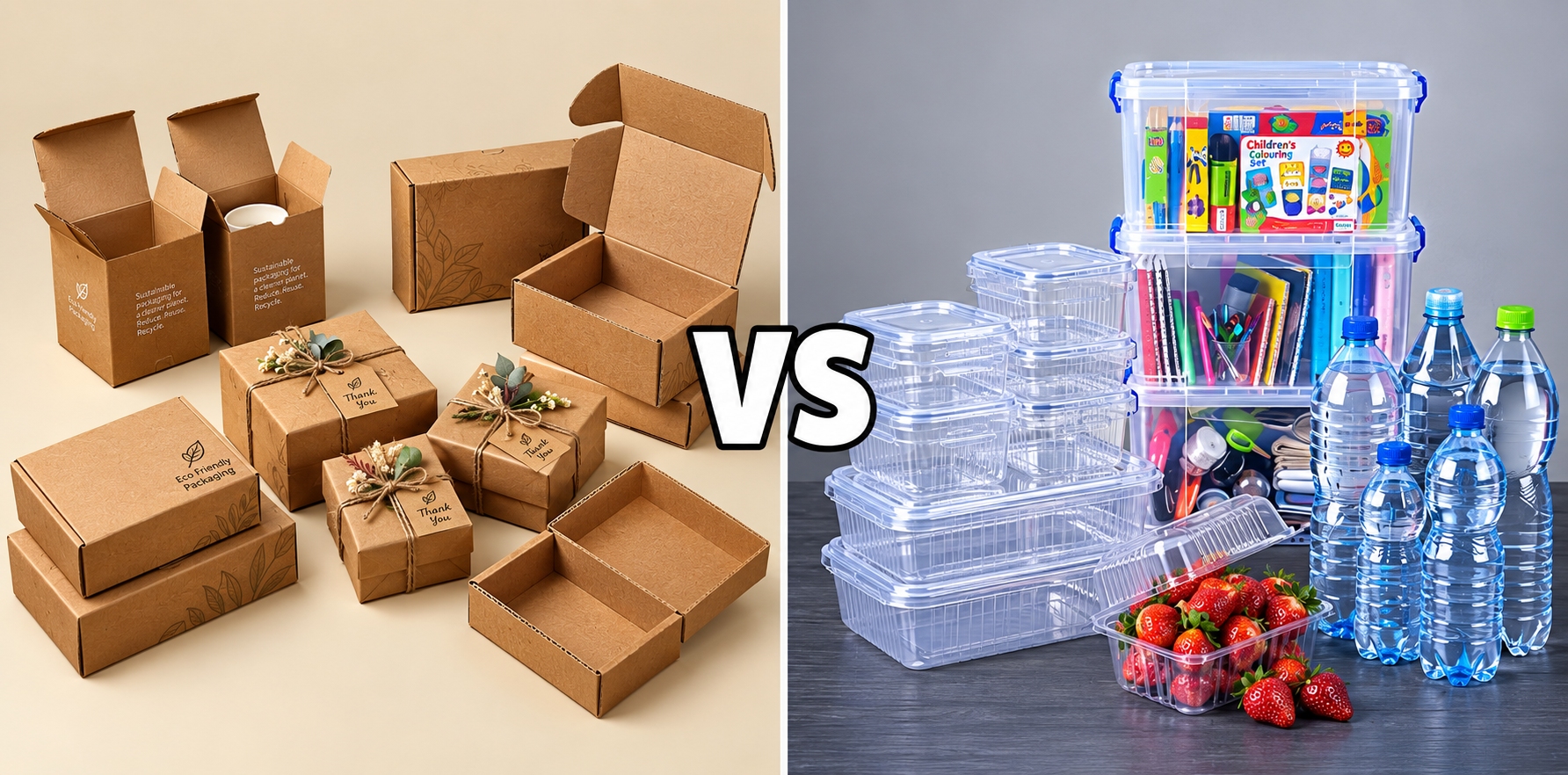
Here’s what “sustainable perfume & Cosmetic packaging” actually means in practice for a custom perfume box spec sheet right now:
FSC-certified and recycled board as the default, not the upgrade. FSC-certified stock has stopped being a premium line item on most quotes – it’s increasingly just what’s in stock. Under PPWR, brands will also need to document material composition and recyclability claims formally, so building on FSC-certified stock now means less retrofitting of paperwork later.
Fewer materials in the same box. Multi-layer boxes with plastic windows, foil laminate linings, and mixed-material inserts are the hardest structures to recycle cleanly – and under PPWR’s design-for-recycling criteria, they’re also the hardest to keep compliant past 2030. Mono-material builds, where the box, insert, and any window are all the same recyclable substrate, are replacing them.
Water-based inks and coatings closing the quality gap. Solvent-based finishes are being phased down across the industry – not banned, but increasingly harder to justify when water-based alternatives now deliver comparable depth of color and sheen.
Right-sized boxes, not oversized shelf theater. Boxes built mainly to look bigger on a shelf are shrinking closer to actual bottle dimensions. Less board, less void-fill, lower dimensional-weight shipping cost – and PPWR’s minimization requirements push in the same direction.
Structural thinking built for a future refill, even if you’re not launching one yet. Retrofitting a refill format into a box designed as single-use is a full re-tool. Brands that build the primary box with a refill-compatible insert cavity from day one avoid that cost entirely later.
If you’re speccing a first run of custom perfume boxes this year, ask your supplier for FSC-certified stock and a mono-material structure by default – not as an upsell.
Refillable Systems Are Forcing a Structural Redesign, Not a Cosmetic One
What is refillable perfume packaging, structurally? It’s a two-part system – a durable outer box or case designed to be kept and reused, and a lighter refill format (sleeve, pouch, or slim carton) designed to ship the replacement fragrance with minimal material. The box has to work for both the first purchase and every refill after it, which is a genuinely different design brief than packaging something meant to be opened once and discarded.
This is the biggest structural shift happening in fragrance packaging right now, and the market data backs up why: refillable systems can cut a brand’s packaging waste by more than 40%, according to Technavio’s fragrance market analysis, and PPWR’s minimization requirements make that reduction increasingly a compliance advantage, not just a marketing one.
In practice, this is showing up as:
- Two-tier packaging systems – a full presentation box for the first purchase, then a lighter, cheaper-to-ship sleeve or pouch for refills, so the cost of the “luxury moment” is paid once, not every reorder.
- Reusable outer cases built to survive multiple refill cycles, shifting the luxury feel away from a disposable box and onto something the customer keeps.
- QR-coded refill tracking, which does double duty – it satisfies PPWR’s move toward digital product information carriers and gives the brand a direct reorder channel instead of losing the customer to a competitor once the bottle runs dry.
- Modular insert systems, where one outer box accommodates a few different refill bottle shapes without a new die-line for every SKU.
For a brand building a refill program, the box stops being a single-use luxury object and starts functioning closer to reusable hardware – which changes material choice, structural rigidity requirements, and cost modeling all at once.
Minimalist Design Is Winning Attention, Not Losing It
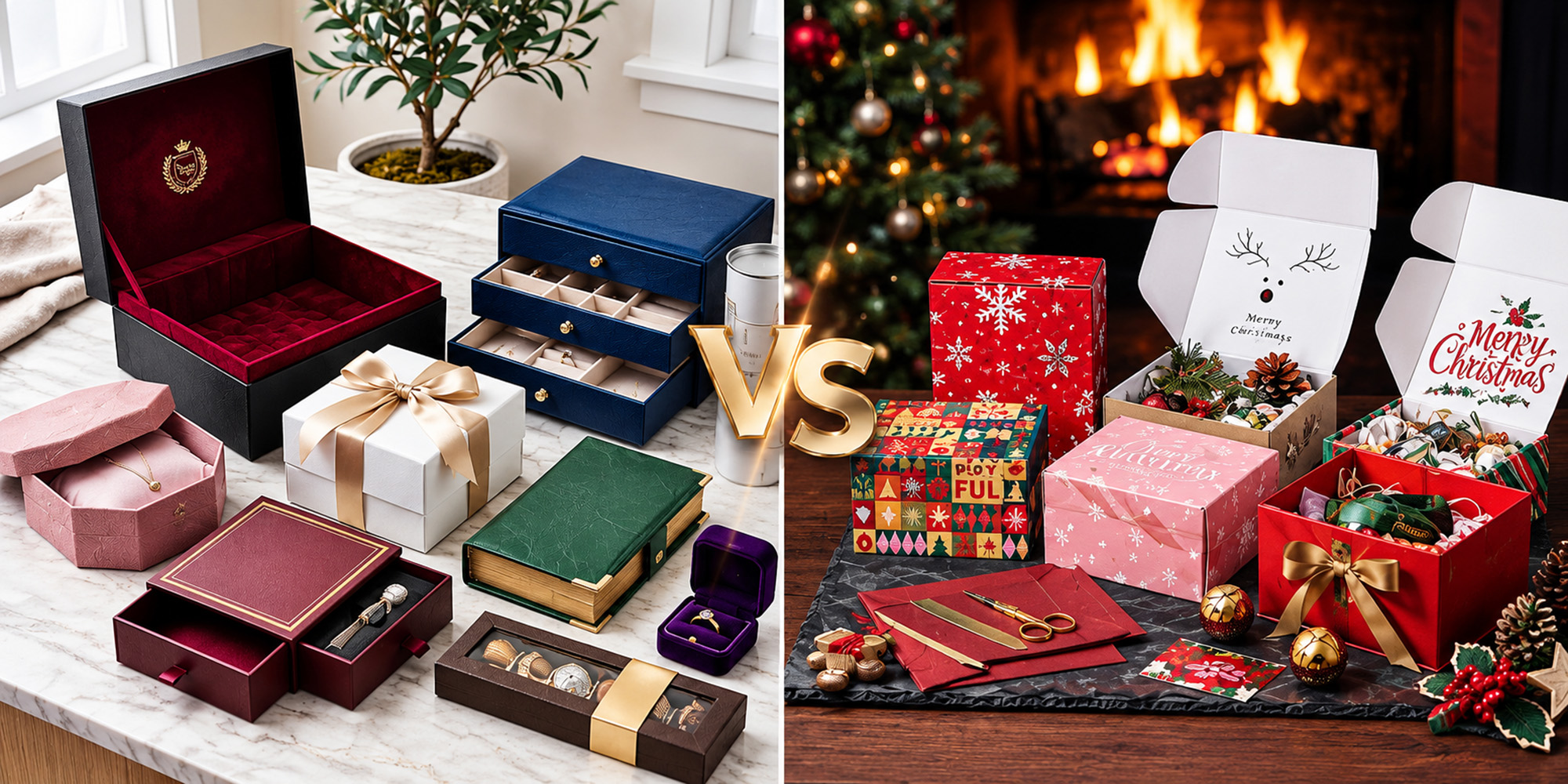
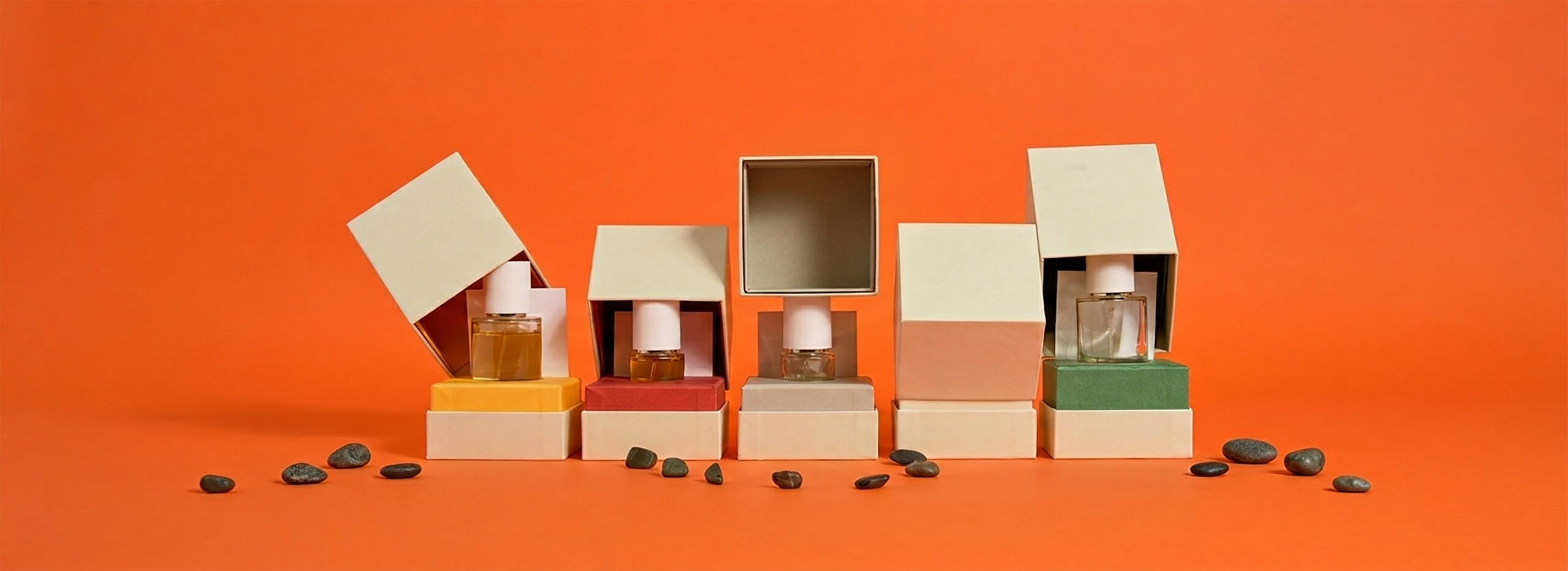
Quick answer: Does minimalist packaging still read as luxury for perfume? Yes – increasingly more so than heavy foil and maximalist finishing. A single strong typographic choice, a muted editorial color, and a well-executed texture now often reads as more premium than a box layered in pattern and metallic foil, because restraint itself has become a scarcer, more deliberate signal in a category that spent a decade doing the opposite.
The specific shifts worth speccing into a 2026 design brief:
- Typography carrying the design, rather than illustration or pattern – which also simplifies the print run and lowers cost.
- Embossing or debossing over heavy full-color print, giving tactile quality without elaborate artwork.
- Muted, editorial palettes – stone, sand, muted green – replacing gold and jewel-tone saturation.
- Confident use of negative space, trusting the brand name and minimal copy rather than filling every surface.
This shift also changes how the box performs online. A design built for a crowded physical shelf doesn’t always translate to a small product thumbnail – but a clean, editorial-style box tends to hold up in both contexts, which matters given how much fragrance discovery now happens through a feed rather than in-store.
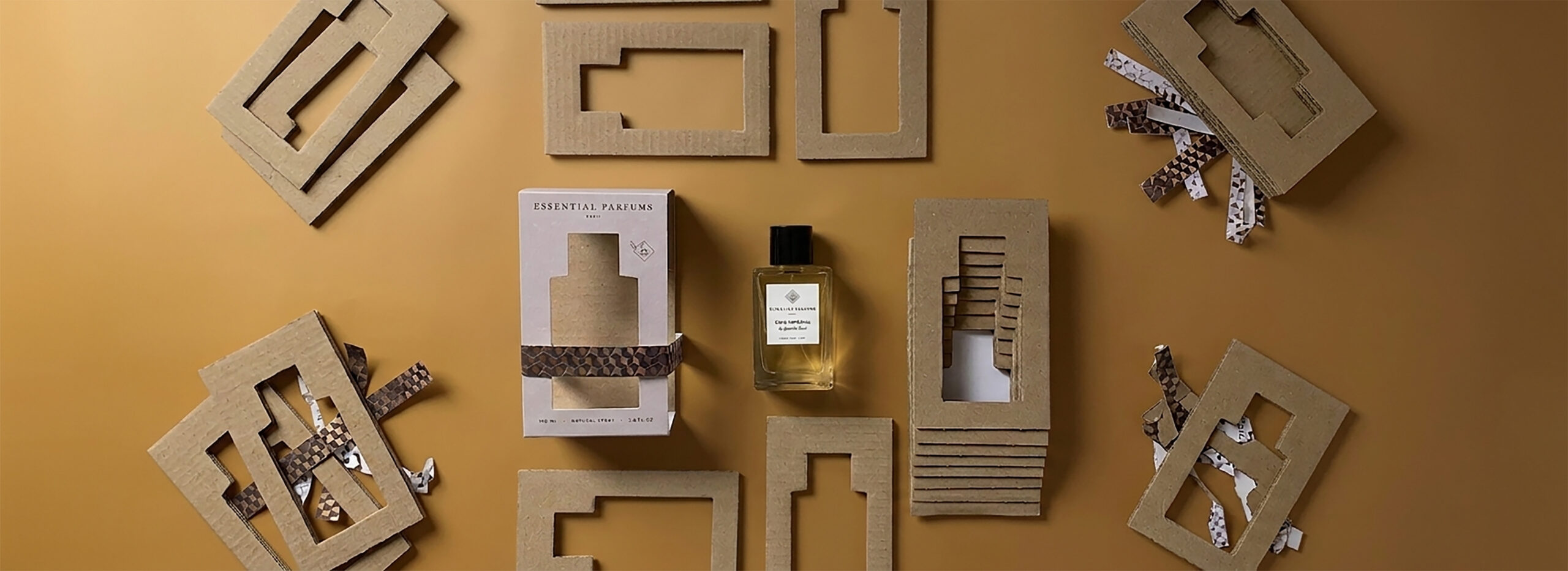
What to Ask a Perfume Box Manufacturer Before You Sign
How do I vet a perfume box manufacturer for 2026 requirements? Ask them to walk you through a real recent project that combined at least two of these three trends – sustainable material sourcing, refill-ready structure, and minimalist finishing – with actual specifics on materials and structural decisions, not a general sustainability pitch.
Not every perfume box manufacturer covers all three trends well. Sustainable sourcing, refill structural engineering, and clean minimalist finishing are genuinely three different skill sets, and a supplier strong in one doesn’t automatically deliver the other two. Before committing to a run of custom perfume boxes, it’s worth running through:
- Can they source FSC-certified or recycled boards without a hit to cost or turnaround?
- Have they actually engineered two-part or modular refill structures before – not just standard single-use boxes?
- Can their finishing (embossing, debossing, spot UV) deliver a premium feel without leaning on heavy foil?
- Do they track PPWR and related labelling requirements closely enough to flag a compliance issue at the design stage, rather than after tooling is already cut?
A supplier who can only speak confidently to one of these – sustainability, say, but not refill engineering – often leaves a brand stitching together two or three vendors to cover the full brief. At Hale Path Packaging, we’ve run exactly this kind of combined project recently: a fragrance brand’s move to a two-tier refill system, built on FSC-certified board, with a stripped-back typography-led design – handled end to end by one team.
For brands also packaging color cosmetics alongside fragrance, the same sourcing and finishing logic applies across the line – see our guide to custom lipstick and mascara box packaging for the beauty-side equivalent of this brief.
Where This Is Headed
These three trends aren’t really separate – they’re converging. A refillable format is inherently more material-efficient than single-use packaging, and a minimalist design typically requires fewer materials and simpler print processes than a maximalist one. Brands treating sustainability, refillability, and minimalist design as one integrated brief – rather than three boxes to check separately – tend to end up with packaging that’s both more marketable and genuinely cheaper to produce at scale.
Brands still working from 2020-era assumptions – oversized boxes, heavy foil, single-use everything – aren’t doing anything wrong, exactly. But between PPWR’s August 2026 compliance date and a shelf that’s visibly shifting toward restraint, a packaging refresh is coming sooner than a “next redesign cycle” timeline would suggest. Shoppers pick up on the difference even when they couldn’t articulate why one box reads as more current than another.
Explore our full range of sustainable, eco-friendly custom packaging options, or request a quote on custom perfume boxes built around FSC-certified stock and refill-ready structure from the start.