Coffee Bag Packaging Explained: Valve, Zipper, and Material Guide for Small Roasters
Coffee Bag Packaging Explained: Valve, Zipper, and Material Guide for Small Roasters
Coffee starts changing the moment it leaves the roaster. Roasted beans continue releasing carbon dioxide for days afterward, and according to the Specialty Coffee Association’s freshness research, that degassing happens fastest in the first 20 days post-roast before slowing down sharply. Without the right barrier, a bright, fresh batch can taste flat within two weeks. That single fact drives every real decision in coffee bag packaging: the valve, the reclosure, and the film structure aren’t style choices; they’re a race against off-gassing and oxidation.
Whole bean coffee almost always needs a one-way valve; this is the single most common question small roasters have about coffee bags with valve options, and ground coffee sold within a week often doesn’t. A resealable zipper is worth the extra cost the moment a customer is likely to reopen the bag more than once. And for most new roasters, metallized PET or a mono-material film is the more practical starting material; pure foil’s barrier advantage only pays off once you’re holding stock in a warehouse for months at a time.
This guide breaks down what each of those three decisions actually does, when you need it, and where small roasters most often get it wrong.
What a Coffee Bag Actually Has to Do
A coffee bag has one real job beyond holding beans: managing two chemical processes at the same time. Freshly roasted coffee keeps releasing carbon dioxide for days after roasting, and if that gas has nowhere to go, the bag swells and can split at the seal. At the same time, oxygen seeping in from outside starts breaking down the coffee’s oils and aromatics — the exact process that turns a bright, fresh roast into something flat and cardboard-tasting.
Every coffee bag packaging decision — valve, reclosure, and barrier film — exists to manage one of those two problems. Get the valve wrong, and bags swell or burst in transit. Get the film wrong, and the coffee tastes stale before it’s sold. Get the reclosure wrong, and it tastes stale after the customer opens it.
Why does timing matter more than most new roasters expect? A bag with no barrier protection at all can let coffee slide into noticeably stale territory within about two weeks. A properly built barrier structure stretches that window to eight months or more. That gap is the entire reason coffee packaging looks the way it does; it’s shelf-life math, not branding.
The One-Way Valve: What It Actually Does
A degassing valve is a small one-way membrane set into the bag that lets built-up CO2 escape while blocking oxygen from coming back in the other direction. Internal pressure from the off-gassing coffee lifts the membrane just enough to vent, then it reseals — a purely mechanical mechanism, not an electronic or adhesive one. The technology has been standard in specialty coffee since the Italian manufacturer Goglio patented the one-way degassing valve in 1968, developed to solve exactly this problem after coffee packers previously had to puncture a hole in the bag by hand to let gas escape — a fix that let oxygen back in right along with it.
Placement matters more than most brands realize. The valve sits center-front, in the upper third of the bag, above the coffee’s fill line; low enough to catch outgassing pressure, high enough to stay clear of the coffee itself and any moisture.
Whole bean coffee almost always needs a valve. It keeps releasing gas for days, and a sealed bag with nowhere for that gas to go will eventually swell or rupture, especially in transit.
Ground coffee off-gasses faster and in a smaller total volume, so some brands moving product within a week of roasting skip the valve entirely and rely on a tight heat seal instead.
Sample or single-serve packs meant to be used almost immediately after roasting usually don’t need one either; there’s no meaningful window for pressure to build.
Do I need a valve on every coffee bag? No. Only bags holding coffee that’s still meaningfully off-gassing genuinely need one. Whole bean bags almost always benefit from it; single-serve samples or coffee sold within a few days of roasting can skip it without issue.
Myth: more valve capacity means fresher coffee. It doesn’t. The valve manages pressure; it does nothing for oxidation once the bag is opened. A bag can have an excellent valve and still go stale in a week if the reclosure is weak or missing.
Zipper vs. Tin-Tie vs. Heat Seal: Choosing a Reclosure
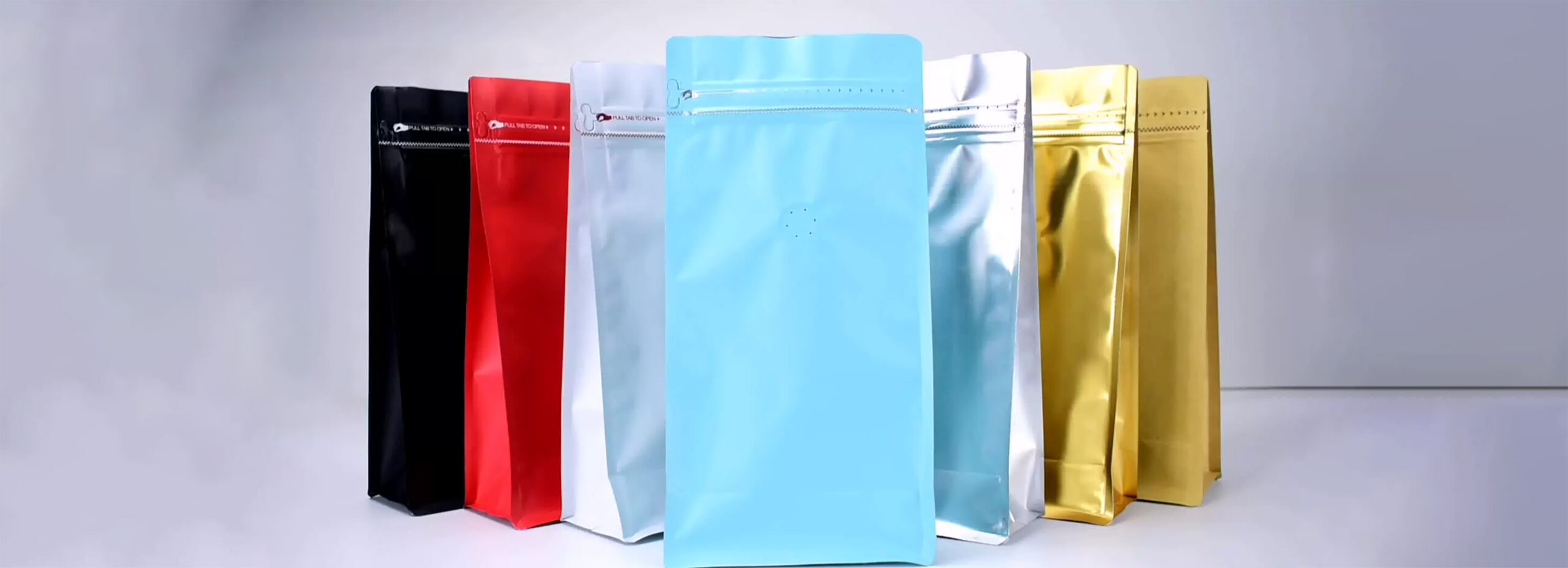
Once a customer opens the bag, the valve stops protecting the coffee; the reclosure takes over. Three formats dominate the category, and they trade convenience against cost and shelf presence differently.
What’s the real difference between a resealable zipper and a tin tie? A zipper is an interlocking plastic track that closes fully and consistently every time. A tin-tie is a wire-and-paper tab that folds over for a looser, non-airtight close = cheaper and more rustic-looking, but not a true barrier once the bag’s been opened.
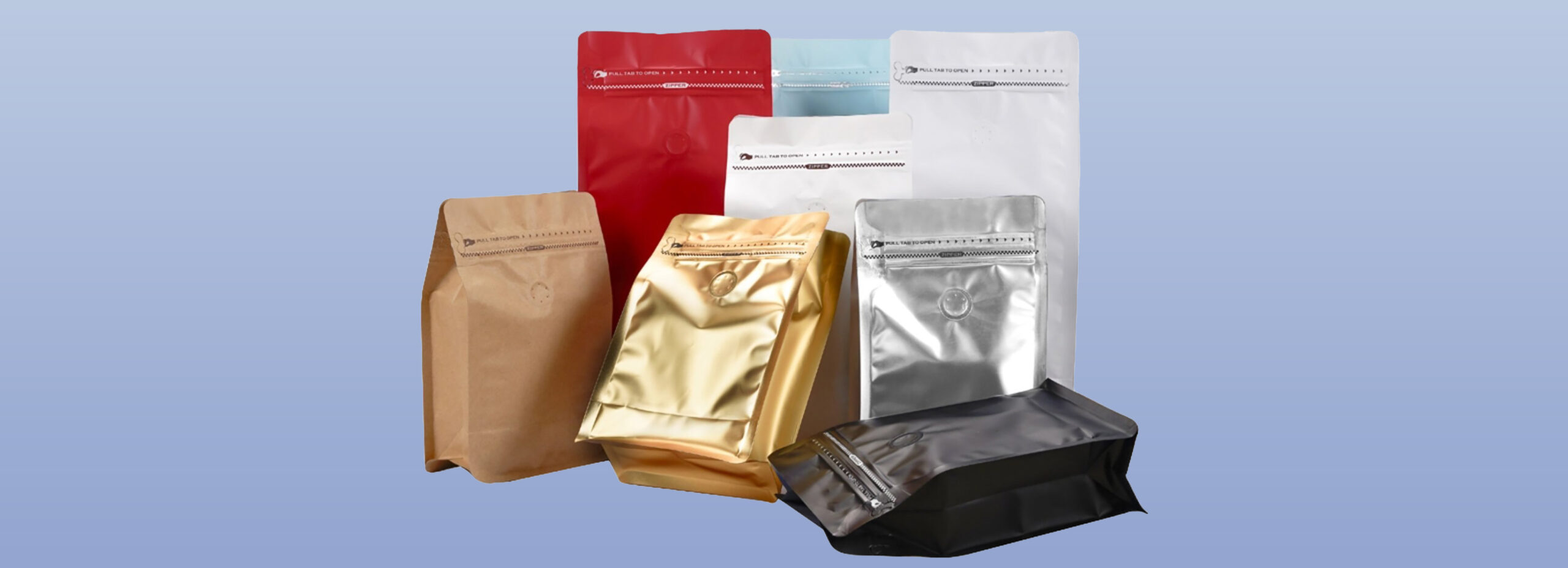
Resealable zippers. An interlocking plastic groove-and-ridge track pressed into the bag gives the most consistent reseal of the three, and it’s what customers now expect by default on premium bags. It costs more per unit than a tin-tie but needs no extra step from the customer beyond pressing it shut. Hale Path Packaging’s zipper pouch line is built around exactly this closure type.
Tin-ties. A thin wire strip laminated into a paper or fabric tab, folded over to close the bag. It’s cheap and gives a rustic, craft-brand look, but it loosens with repeated folding and isn’t a true air seal; more a “mostly closed” indicator than a barrier.
Heat seal only. Some single-use or sample-format bags skip a reclosure entirely and rely on a one-time heat seal, on the assumption that the whole bag gets used in one sitting. It’s the cheapest option by far, but it isn’t the right call for anything sold in a size meant to last more than a few days.
Material Breakdown: Foil, Metallized PET, and Mono-Material Film
Choosing between coffee packaging materials is where most of the real cost and performance trade-off in coffee bag packaging lives, and the part competitors tend to gloss over with “premium barrier” language instead of real numbers.
| Material | Oxygen barrier | Typical shelf life | Cost tier | Recyclability |
| Pure aluminum foil laminate | Near-total (oxygen transmission under 0.1 day) | ~250 days at room temp, 600+ days refrigerated | Highest | Poor — mixed metal/plastic layers |
| Metallized PET (VMPET) | Strong (oxygen transmission roughly 1–2 days) | Several months, general retail standard | Mid | Poor – same mixed-layer issue as foil |
| Mono-material film (PE/EVOH or PP/EVOH) | Strong (oxygen transmission under 1.5 days) | 8–12 months | Mid-to-high | Good – single-polymer stream |
Aluminum foil provides close to a near-total oxygen barrier, which is why it’s often called the gold standard for shelf-life protection. The trade-off: foil tends to pinhole; hairline breaks at sharp folds or from rough handling, which quietly opens a leak path even though the bag looks untouched. Metallized PET trades a small amount of barrier performance for lower cost and adequate resistance, which is why it’s the default on mid-tier retail bags. Mono-material film is the newer choice; it performs nearly as well as foil on oxygen barrier, and it’s recyclable through standard soft-plastic streams, which matters more every year as retailers and regulators push back on mixed laminates. Hale Path Packaging’s kraft paper pouch line pairs a kraft exterior with a genuine barrier laminate rather than kraft alone, since kraft paper on its own has no meaningful vapor or oxygen resistance.
Should a small roaster start with foil or mono-material film? For most new brands, metallized PET or a mono-material film is the more practical starting point. Foil’s barrier advantage only really pays off at longer shelf lives; think wholesale or subscription coffee sitting in a warehouse for months; and mono-material film gives a genuine recyclability story without a meaningful barrier trade-off for coffee sold within a few months of roasting. Hale Path’s aluminum foil Ziploc pouch line covers the maximum-barrier end of that range, while the compostable coffee bag line covers the sustainability-first end.
Are coffee bags recyclable? Standard foil and metallized laminates aren’t accepted in curbside recycling, since they combine several material layers that can’t be separated by standard equipment. Mono-material films, a single polymer like PE or PP throughout, can go through regular soft-plastic recycling streams instead.
How Bag Format Changes the Spec
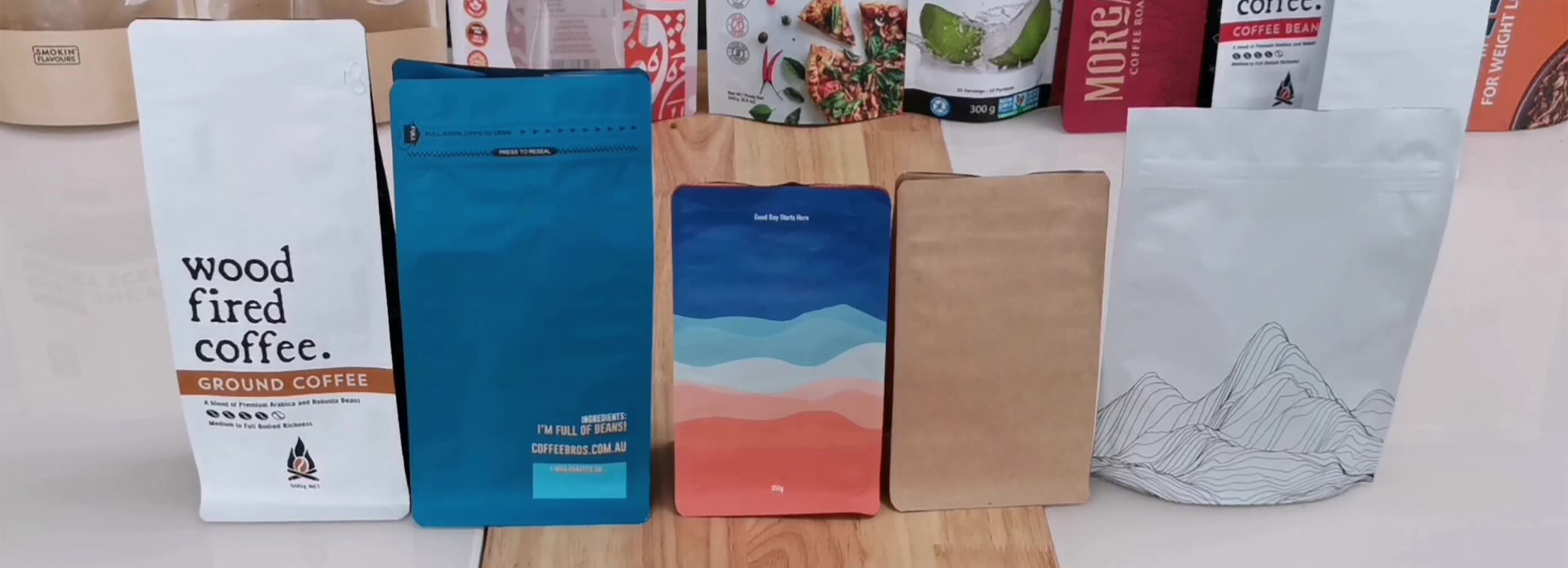
The valve, reclosure, and material choices above apply across formats, but the base shape changes a few practical details. A flat-bottom coffee bag uses a rectangular base panel, giving a wider, flatter stance that suits heavier retail bags and stronger shelf presence. A quad-seal or side-gusset bag forms its base from sealed corners instead, which is more compact for case-pack shipping but needs its own seal-strength consideration at those corner joins.
Getting Started: What Small Roasters Actually Order First
Most new roasters over-plan the packaging spec before they’ve sold a single bag. A more workable path: start with a stock or semi-custom pouch; metallized PET, standard valve, resealable zip, in one or two sizes; with a printed label instead of a fully custom-printed bag. That keeps upfront cost and minimum order size proportional to real sales volume while it’s still unproven.
When does it make sense to move to a fully custom-printed bag? Once a roaster has a consistent enough order volume to justify the plate or cylinder cost behind full custom printing, typically somewhere in the low hundreds of units per SKU per month, though this varies by printing method and supplier minimums. Below that, a stock pouch with a printed label keeps packaging spend proportional to actual sales instead of tied up in inventory.
One roaster we’ve worked with started on unprinted stock pouches with a basic front label, moving a few hundred bags a month through a farmers market and a small online store. Once volume was consistent enough to plan around, they moved to a custom-printed mono-material pouch with matched valve and zip placement; without changing bag size or format, so nothing about their existing case pack or shipping setup had to change either.
What size bag should a new roaster start with? Most new brands start with just one or two sizes; typically a standard retail size like 12oz plus a smaller sample bag, instead of a full range. That keeps inventory and packaging spend manageable before sales volume is proven out.
Frequently Asked Questions
Do all coffee bags need a one-way valve?
No. Whole bean coffee almost always needs one, since it keeps releasing CO2 for days after roasting. Ground coffee sold within a week and single-serve samples used almost immediately usually don’t need one.
What’s the difference between a zipper and a tin-tie closure?
A zipper is an interlocking plastic track that seals fully and consistently every time it’s closed. A tin-tie is a wire-and-paper tab that folds over for a looser, non-airtight close — cheaper, but not a true barrier once opened.
Is aluminum foil or mono-material film better for coffee packaging?
Foil offers the strongest oxygen barrier and longest shelf life, but isn’t curbside recyclable. Mono-material film performs nearly as well on barrier and is recyclable through standard soft-plastic streams – a better starting point for most small roasters selling coffee within a few months of roasting.
How long does coffee stay fresh in a properly sealed bag?
A bag with no barrier protection can let coffee go noticeably stale within about two weeks. A properly built barrier structure – the right film, valve, and reclosure together – extends that window to eight months or more.
What packaging should a new coffee roaster order first?
A stock or semi-custom pouch – metallized PET, standard valve, resealable zip – in one or two sizes with a printed label, rather than a fully custom-printed bag. This keeps packaging spend proportional to real sales until volume is proven.
Conclusion
None of this has to be complicated once it’s split into its three real jobs: something to let gas out, something to keep air out once the bag’s been opened, and a film that can honestly hold that promise for months instead of days. Get those three right, and everything else — color, label stock, logo placement — is just branding on top of a spec that already works.
For most small roasters, that shakes out to a fairly simple starting point: a one-way valve on any whole bean bag, a resealable zip if customers are likely to open and close it more than once, and metallized PET or a mono-material film unless the coffee needs to sit in storage for months before it sells. None of those choices is permanent — either the reclosure or the film is easy to upgrade later without touching artwork, bag size, or anything else already built around your current spec.
Before locking any of it in, it’s worth requesting a real sample filled with your own coffee and testing it for the length of your specific selling window. Barrier specs look uniform on paper, but how a specific roast profile off-gasses, or how a given fill weight actually behaves in a particular bag size, is something you catch by testing, not by reading a spec sheet. A five-minute conversation about your fill weight, roast schedule, and sales volume upfront saves a reorder-sized headache down the line.
Written by the Hale Path Packaging team, packaging specialists with over a decade of experience supplying coffee, food, and specialty beverage packaging to small roasters and brands across the USA. Coffee freshness and degassing research referenced above is drawn from the Specialty Coffee Association’s Coffee Decoded research series.