Perfume & Lipstick Box Packaging: A Buyer’s Guide to Protecting Fragile Cosmetics in Shipping (USA)

Perfume & Lipstick Box Packaging: A Buyer’s Guide to Protecting Fragile Cosmetics in Shipping (USA)
Most cosmetic returns aren’t caused by a bad product. They’re caused by perfume and lipstick packaging that was never tested against what actually happens between a warehouse and a doorstep. Perfume and lipstick sit at opposite ends of that problem: glass shatters on impact, while a metal or plastic tube dents and crushes under stacking weight instead; so one generic protective packaging spec rarely covers both well. The same issue shows up whenever these items travel together in a wider cosmetic gift set, where several fragile pieces end up sharing one outer carton.
The short answer: getting this right means treating the insert, the retail box, and the outer shipping carton as one connected system, not three separate decisions. Cut the insert to the bottle’s actual shape instead of its widest point, move lipstick into compression-rated corrugated once volume justifies it, and test the full assembly together before locking in a production run.
Three questions this guide answers directly:
- Why do glass perfume bottles break in transit, even when they’re wrapped?
- Why does lipstick come back crushed or dented, not cracked?
- How do you know if a packaging spec will hold up before you commit to a full production run?
Why Perfume and Lipstick Fail Differently in Shipping
Getting cosmetic shipping protection right starts with accepting that glass and metal tubes fail in different ways under the same transport conditions, which is exactly why a single generic protective packaging spec tends to under-protect one product and over-engineer the other. Our production team sees this most often on gift-set orders, where a rigid outer cover gets paired with a fragile insert that was never tested for the extra weight the rigid frame itself adds.
Perfume bottles are rigid and unforgiving _ glass cracks under impact rather than absorbing it, and the damage is catastrophic and visible.
Lipstick tubes are more forgiving on impact but vulnerable to sustained pressure; a case dents or a bullet snaps off-center from being compressed under stacked weight, not from being dropped.
Why does this matter more once a brand is shipping at real volume? Testing certification body UL Solutions states that ISTA transit testing can identify packaging risks and reduce product loss and breakage by up to 30%, a meaningful number once you’re shipping at scale rather than sending occasional PR boxes. The same logic applies to any small, high-value item that travels the same way; the fragile-contents-in-compact-packaging problem shows up just as clearly in custom jewelry boxes as it does here.
Common mistake: using one insert design and one outer-box spec across both SKUs just because they’re sold together in a gift set. Drop protection (perfume) and compression protection (lipstick) are two separate engineering problems, even inside the same box.
Where Glass Perfume Bottles Actually Break in Transit
A perfume bottle rarely breaks from one hard drop. It’s the small, repeated knocks against something rigid; with too much room to move, that do the damage.
Wall thickness and glass type matter more than most brands check. Bottle walls under approximately 1.5mm are the most break-prone; thicker-walled or borosilicate glass absorbs shock several times better, but most mass-market bottles don’t use it. The real risk sits at the shoulder-to-neck transition, where the glass is thinnest, and at any point where the bottle can move and strike the box wall, another bottle, or its own cap.
Insert options compared:
| Insert Type | Best For | Trade-Off |
| Molded pulp | Mid-volume, eco-positioned brands | Less precise fit than foam; needs accurate cavity tooling |
| Die-cut foam | High-value, irregular bottle shapes | Higher unit cost; not curbside recyclable |
| Corrugated divider | Multi-bottle sets, cost-sensitive runs | Less cushioning than foam; relies on a snug outer box |
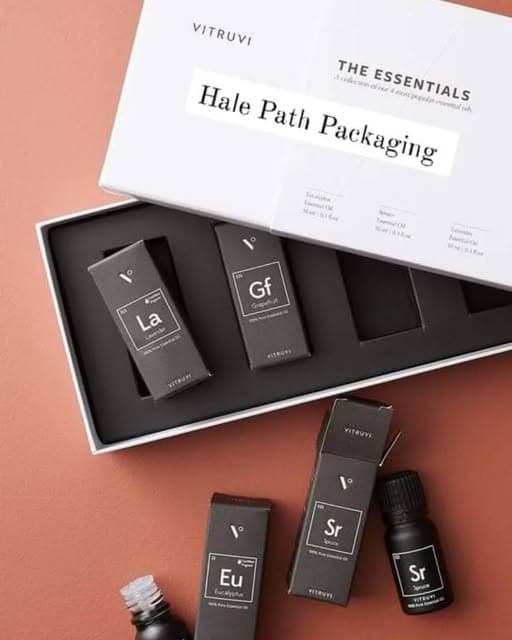
For gift-tier launches pairing a bottle with other accessories, a fitted insert inside a presentation-style rigid sleeve box can hold the product presentation intact while still leaving room for a protective outer mailer around it.
Does bubble wrap alone protect a glass perfume bottle during shipping? Not reliably. Bubble wrap absorbs some shock but doesn’t stop sideways movement inside a larger box, which is where most breakage actually starts. An insert cut to the bottle’s neck diameter, paired with a secure outer box, does the job bubble wrap alone can’t.
Why Lipstick Tubes Come Back Crushed, Not Cracked
Lipstick damage almost always shows up as a dented case, a loosened cap, or a broken bullet tip; rarely as a cracked shell, since most tubes are metal or hard plastic rather than glass. Slim formats sold in a slide-out sleeve style, like a soap-sleeve-style pack used for a different product category, face an added risk since the open edge can fray under repeated handling, on top of any compression damage.
The failure point is usually compression during palletized stacking, not drop impact, which means the packaging spec that protects a lipstick well is closer to a corrugated compression problem than a cushioning problem.
Signs a lipstick box spec is under-protecting:
- Cases arrive with visible corner dents even though the outer shipping box looks undamaged
- Bullets sit off-center or loose in the cap after transit, even when the tube itself isn’t cracked
- Complaints cluster around specific SKUs shipped in lightweight folding cartons rather than corrugated mailers
- Damage rates rise on orders that sat lower in a pallet stack or traveled longer distances
Double-wall or E-flute corrugated with reinforced corners resists edge crush far better than single-wall folding cartons, and that distinction shows up once boxes sit under real warehouse stacking loads for days instead of hours. A metallic finish like a silver foil accent adds visual impact but doesn’t add crush resistance on its own; the board spec underneath still has to do the protective work.
Does the Insert or the Outer Box Do More of the Protecting?
Both matter, but they’re solving different problems, and skipping either one is where most damage claims come from.
The insert’s job is to stop the product from moving inside its immediate packaging. The outer box’s job is to survive the drop, vibration, and stacking load of the wider shipping chain. This same insert-versus-outer-box split holds regardless of what the product is made from; it applies just as much to a luxury cosmetic gift box as it does to a single perfume bottle. A perfect insert inside a flimsy outer carton still lets the whole assembly get crushed on a pallet. A reinforced outer carton with no insert still lets a bottle rattle around and chip on impact.
A real example: one fragrance brand we worked with had a solid foam insert dialed in, but was still shipping in a standard single-wall mailer. Damage complaints kept coming in until we pulled apart a returned box and found the mailer itself had bowed under the weight of boxes stacked on top of it in the warehouse; the bottle never stood a chance once that happened. Swapping to a double-wall outer, same insert, same price, and the complaints stopped.
How Do You Test a Spec Before Committing to a Full Run?
Run a transport simulation on a real sample before locking in a production spec; not after the first batch of complaints comes in. ISTA protocols: drop, vibration, and compression testing designed to mimic actual distribution conditions; exist specifically so a brand can catch a weak spec on a handful of samples instead of a full pallet. For fragile, glass, or liquid-containing products, the more rigorous ISTA 4 series is worth the extra step over basic drop and beat testing.
Is ISTA testing worth it for a small cosmetics brand shipping under a few hundred units a month? Even a scaled-down version helps; sample units dropped from counter height onto a hard floor, then stacked under weight for 48 hours, surface most of the same failure points as a full lab test, without the lab cost.
Can perfume and lipstick be shipped safely together in the same gift box? Yes, as long as each item gets its own compartment instead of sharing open space. A shared compartment lets the heavier bottle shift into the lighter tube during transport, denting or cracking the softer item even when the outer box itself arrives intact.
Is foam or molded pulp sufficient for a perfume insert?
Foam holds irregular bottle shapes well; molded pulp is the lower-cost, more recyclable choice for standard bottle shapes.
Frequently Asked Questions
What makes good perfume and lipstick packaging for shipping?
Treating the perfume box insert, the retail box, and the outer shipping carton as one connected system rather than three separate decisions, since perfume needs drop protection and lipstick needs compression protection, not the same generic spec.
Why do perfume bottles break in shipping even when wrapped in bubble wrap?
Bubble wrap absorbs some shock but doesn’t stop sideways movement inside a box, which is where most breakage starts. A fitted insert cut to the bottle’s shape, paired with a secure outer box, prevents the movement that bubble wrap alone can’t stop.
Why does lipstick come back dented instead of cracked?
Most lipstick tubes are metal or hard plastic, not glass, so they’re more forgiving on impact but vulnerable to sustained compression from palletized stacking; the failure mode is closer to a crush problem than a drop problem.
What’s the best insert material for a perfume bottle?
Die-cut foam holds irregular bottle shapes most precisely for a perfume box insert but costs more and isn’t curbside recyclable. Molded pulp is lower-cost and more recyclable, and works well for standard bottle shapes.
How much can proper transit testing reduce breakage?
According to UL Solutions, ISTA transit testing can identify packaging risks and reduce product loss and breakage by up to 30%.
Can perfume and lipstick share the same gift box packaging?
Yes, as long as each item has its own dedicated compartment. Sharing open space lets the heavier bottle shift into the lighter tube during transit and damage it.
Conclusion
Good perfume and lipstick packaging comes down to accepting that a perfume bottle and a lipstick tube fail for opposite reasons: one shatters on impact, the other dents and crushes under stacking weight, so the same insert and box spec rarely cover both well for lipstick box protection and glass protection at once. Cut the insert to the bottle’s neck diameter instead of its widest point, move lipstick into compression-rated corrugated once volume justifies it, and test the full assembly: insert, retail box, and outer mailer together, on a real sample before locking in a production run. That one habit catches most of what would otherwise turn into a return problem later.
Our perfume box and lipstick box pages go deeper into the retail-facing build for each format; this guide focuses on what happens once that build leaves the shelf and enters a shipping carton.
Written by the Hale Path Packaging team, packaging specialists with over a decade of experience sourcing cosmetic boxes and rigid stock for fragile, high-value products across the USA, and running full sample assemblies: insert, box, and outer mailer, before a client commits to a production run. Transit-testing data referenced above is drawn from UL Solutions’ ISTA packaging testing program.