Cardboard Inserts vs. Foam Inserts: A Cost and Protection Comparison for Candle and Glassware Shipping
Cardboard Inserts vs. Foam Inserts: A Cost and Protection Comparison for Candle and Glassware Shipping
Nobody ever gets a customer complaint about the cardboard vs foam inserts. They get one about what was inside it: cracked, chipped, in pieces that used to be a candle jar or a wine glass. The outer box gets all the design attention, the logo, the colour, the finish, while the insert quietly does the actual work of getting the product there in one piece. Cardboard versus foam was never really just a price question. It’s a call about protection, and what tips the scale is what’s actually shipping, how far it’s travelling, and what the brand wants that first unboxing moment to feel like.
What Are the Types of Inserts in Custom Boxes?
Before comparing materials, it helps to know the basic insert types for custom boxes available, since the material choice and the structural format are two separate decisions that both affect cost and protection.
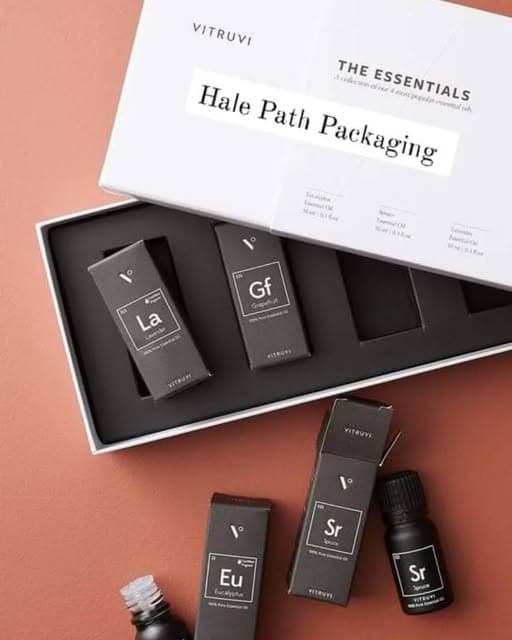
Corrugated cardboard dividers, a common form of shipping impact protection, are flat sheets of corrugated board, slotted together to create a grid of compartments inside a box. This is the most common insert style for candles and glassware shipped in multiples, since the grid keeps each item in its own cell and prevents contact between products — the same divider logic behind most Cardboard Insert Rigid Boxes builds.
Die-cut cardboard trays are a single molded piece, cut and folded to fit one specific product shape. They suit single-item shipments well, particularly when the shape’s irregular enough that a plain grid divider won’t hold it in place.
Molded pulp inserts work a lot like an egg carton, except the mold is shaped around your product rather than a dozen eggs: pressed, recycled paper fiber formed to fit. It cushions better than flat cardboard and breaks down fully in a compost pile, which is likely why so many candle brands reach for it when they want a sustainability claim actually to hold up — a common pairing with rigid candle boxes where the outer presentation is premium but the sustainability story still needs to hold up inside the box too.
Foam inserts take a few different forms. Die-cut foam sheets have cavities cut to match a product’s exact shape. Foam-in-place gets sprayed and expanded around the product right at the packing stage. Pre-formed foam trays come out of a mold much like molded pulp does, just with foam’s cushioning instead.
Each format is solving a different problem. The material, cardboard or foam, sits on top of that structural choice rather than replacing it.
Foam vs Cardboard Inserts for Fragile Cosmetic Products
Cosmetic brands shipping glass jars, bottles, and dropper vials face many of the same protection questions as candle and glassware sellers, and the comparison holds up the same way. Foam usually takes the win on cushioning when something’s genuinely fragile and oddly shaped. A cavity moulded right around a glass bottle absorbs impact in a way flat cardboard just can’t manage, since foam compresses and springs back instead of only blocking movement.
Cardboard, on the other hand, wins on cost and on the sustainability angle. A cosmetic brand marketing itself as clean or eco-conscious runs into an obvious contradiction shipping product in petroleum-based foam, and cardboard or moulded pulp inserts solve that positioning problem directly. The trade-off is that cardboard needs more precise engineering to match foam’s protection level, since it relies on structural fit rather than material cushioning to prevent movement.
For cosmetic brands specifically, the deciding factor usually comes down to unit value and breakage cost. A premium glass serum bottle retailing for $60, the kind typically shipped in cosmetic rigid boxes, justifies foam’s extra cost far more easily than a $12 bar of soap in cardboard packaging, where a single breakage doesn’t threaten the brand relationship the way a $60 replacement does.
Cardboard Inserts: Where They Actually Excel
Cardboard inserts perform best in a specific set of conditions, and understanding those conditions is more useful than treating cardboard divider inserts as simply the “cheaper” option.
- Multi-item shipments with rigid product shapes. A divider grid holding six uniform glass jars or a set of consistently shaped candles works well with cardboard, since the grid’s job is mainly separation rather than absorbing serious impact energy — the same logic behind most candle boxes with inserts built for multi-jar sets.
- Shorter shipping distances with fewer handling touchpoints. A product going through one or two courier handoffs faces less cumulative shock than one crossing the country through a busy sorting network, and cardboard holds up better under lighter handling conditions.
- Brands prioritising a sustainability story. Cardboard and moulded pulp inserts recycle or compost far more easily than foam, and for a candle or glassware brand building its identity around environmental responsibility, this matters as much as the raw protection numbers.
- Cost-sensitive operations at scale. Cardboard inserts typically run cheaper per unit than foam, especially die-cut foam requiring custom tooling, which matters significantly once a brand is shipping thousands of units monthly.
Foam Inserts: Where They Actually Excel
Foam earns its higher cost in situations where cardboard’s structural approach isn’t enough on its own, which is where custom foam inserts built around the exact product shape tend to take over.
- Genuinely fragile, high-value pieces. Think hand-blown glass ornaments, crystal candle holders, thin-walled premium glassware — items foam cushions in a way flat cardboard simply can’t.
- Foam-in-place and custom die-cut foam shape around a product’s exact contours, handles, curves, asymmetric edges, spots a plain cardboard divider would leave exposed.
- Multi-carrier or long-haul shipments. Every extra sorting stop adds more total shock, and foam holds that repeated hit better than cardboard’s stiffer frame, since it compresses and rebounds instead of just fighting it.
- Export and international shipping. Longer transit times, more handling points, and less predictable courier conditions all favour foam’s extra protection margin, especially for glassware brands shipping internationally.
Foam’s downside beyond cost is packaging recyclability. Standard polyurethane and polystyrene foams don’t recycle through normal municipal programs, which creates friction for any brand also trying to market sustainable packaging alongside foam protection — one reason more candle sellers weigh a candle box with a window build against a fully foam-lined case before committing.
Cost Comparison: What Inserts Actually Cost in the USA
- Basic corrugated cardboard dividers: $0.15 to $0.50 per unit at moderate volumes, depending on compartment count and board weight.
- Die-cut cardboard trays: $0.30 to $0.90 per unit, with tooling costs folded in and spread across the order size.
- Moulded pulp inserts: $0.40 to $1.20 per unit, with pricing improving meaningfully at higher volumes.
- Die-cut foam inserts: $0.60 to $2.50 per unit depending on foam density and cavity complexity, plus a separate one-time tooling cost for custom cavities.
Foam-in-place systems avoid custom tooling costs but require specific equipment at the packing stage, making them more common for larger operations already running automated packing lines than for smaller candle or glassware brands packing by hand.
Insert weight also feeds into freight cost calculation the same way box weight does, the kind of math walked through in Dimensional Weight Pricing Explained.
Custom Packaging Insert Specifications, Sizes, and Prices
Getting an accurate quote on inserts depends on packaging specification sheets with specific information upfront, rather than a general product description.
- Exact product sizes, including any irregular components, handles, lids, and labels that affect how the product actually sits inside a cavity.
- Product weight — heavier items call for denser foam or thicker cardboard so the insert itself doesn’t compress or collapse under the product’s own weight in transport.
- Quantity per box: multi-item inserts require compartment count and spacing specified, not just general box dimensions.
- Shipping distance and handling conditions, since a local delivery and a cross-country freight shipment justify different protection levels for the same product.
- Sustainability requirements — determining compostable or renewable materials upfront avoids a mismatch between the outer box’s sustainability claims and an insert that undermines them.
Matching Insert Choice to Product Type
Single candle jars generally do well with either a snug cardboard sleeve insert or a moulded pulp cradle, since a single jar shipped with adequate outer box protection doesn’t always need foam’s extra cushioning unless the glass is unusually thin or ornate.
Multi-candle gift sets benefit from cardboard divider grids in most cases, since the main risk is jar-to-jar contact rather than external impact, and a properly fitted divider solves that at lower cost than foam compartments, the same reasoning that shapes most Custom Candle Mailer Boxes gift set orders.
Drinking glassware and stemware with thin walls or delicate stems tend to need foam, particularly for sets shipped with pieces of varying height and shape that a flat cardboard grid struggles to accommodate uniformly, a common glassware shipping protection challenge for sellers moving beyond a single stock size.
Ornamental or decorative glass with irregular shapes, curves, or fine detail generally needs foam’s moldable cushioning, since a flat cardboard panel can’t wrap around complex contours the way foam does.
Premium or collector-tier products often justify foam even when the shape alone would suit cardboard fine, since brand experience and breakage-cost math both lean toward the extra protection at higher price points, a calculation that comes up just as often on a magnetic closure rigid box order as it does on a candle set.
How to Order Custom Packaging Inserts Wholesale in the USA
Ordering insert packaging at wholesale volume follows a slightly different process than a first small-batch order, and knowing the steps in advance speeds up the whole process, whether the outer case being paired with it is a shipper carton or a full custom printed corrugated display run.
- Start with a product audit. Gather exact dimensions, weights, and quantities for every product needing an insert before reaching out to a supplier, since quotes get built from this data, not general descriptions.
- Request samples before committing to volume. A physical sample, even a basic prototype, reveals fit issues a spec sheet can’t show, particularly for irregular shapes or multi-item configurations.
- Confirm tooling costs and amortisation upfront. Custom die-cut cardboard and foam both involve tooling costs that suppliers typically spread across the first order, so understanding how that’s structured avoids surprises on the first invoice.
- Ask about minimum order quantities separately for inserts and boxes. Insert MOQs sometimes differ from outer box MOQs, especially for foam requiring custom tooling, and confirming both prevents a mismatch that leaves a brand overstocked on one component.
- Plan lead time realistically. Custom insert tooling, particularly for foam, typically adds one to two weeks to a standard production timeline compared to a stock cardboard divider, worth factoring into any launch date.
- Test the full assembled package, not just the insert alone. An insert that fits well on its own can still perform poorly if the outer box, insert, and product combination hasn’t been tested together under real shipping conditions.
Questions Worth Asking a Supplier Before Choosing
- Does the quoted insert price include tooling costs, or is that a separate line item added to the first order?
- Has this insert design been tested against a real drop or vibration test, or only measured against the product’s static dimensions?
- What happens to lead time if the product sizes change slightly after the insert has already been developed?
- If sustainability counts, does the insert material match the recyclability or compostability claims made on the outer box?
Frequently Asked Questions
Can cardboard inserts protect glassware as well as foam? For rigid, evenly shaped items on short transport runs, yes — a nicely fitted cardboard insert can get close to foam’s protection. For thin-walled, irregular, or long-distance freight, foam still has a real edge.
Is moulded pulp a good middle ground between cardboard and foam? Moulded pulp delivers more cushioning than flat cardboard while staying compostable. It’s a solid option for brands that want some extra cushioning but want to stay away from foam altogether.
Do foam inserts always cost more than cardboard? Almost always, especially once custom die-cut cavities require tooling. That gap narrows a little at high volume, but foam seldom ends up cheaper than an equivalent cardboard option.
How do I know if my product needs foam instead of cardboard? Look at fragility, shape complexity, unit value, and transport distance together. A rigid, low-cost, short-distance shipment doesn’t require foam. A fragile, high-value, long-distance one does.
Can I switch from foam to cardboard later without redesigning the whole box? Sometimes, if the outer box dimensions stay the same and only the insert changes. Worth confirming with your supplier early, since some outer box specs are built around a specific insert thickness.
Making the Right Call
There’s no universal answer to cardboard versus foam; the right fragile-item packaging answer for a specific product, price point, and shipping profile depends on the specifics. Insert material selection starts with cost, sustainability, and multi-item divider applications where the main job is separation instead of heavy cushioning. Brands running seasonal insert swaps often hold spare sets on hand via a Custom Storage Boxes program instead of reordering from scratch each time.
Conclusion
Cardboard vs. foam inserts isn’t truthfully about which material is better. It comes down to matching the structure and cushioning to what’s actually shipping. Uniform, rigid products moving short distances hold up fine in cardboard, at a lower cost and a smaller environmental footprint. Fragile, irregular, or high-value items facing longer transit times still justify foam’s extra cushioning and cost. Testing the full assembled package — insert, product, and outer box together — before committing to a full production run is what actually confirms which choice is right, rather than assuming one material fits every product in a catalogue.
Written by the Hale Path Packaging team, packaging specialists with over a decade of experience supplying custom insert solutions to candle, glassware, and cosmetics brands across the United States, working directly with clients on structural testing and material selection ahead of full production runs.