Custom Packaging MOQ Explained: The Real Numbers by Box Type (2026 Update)
Ask five USA packaging suppliers for a selection of the same box, and you will likely obtain five distinct minimum order numbers back. One displays 100, another declares 500, and another refuses to speak to you below 1000. MOQ is the smallest number of boxes or bags a supplier will construct in one production run, and it changes with the box type, the print method, and the finish, so those five selections are truly replying to five separate questions. For kraft gable boxes, MOQ drops somewhere between 100 and 1000 units.
In 2026, two extra costs also develop on top of whatever number you land on: rising USA board and paper prices, and the updated Plastic Packaging Tax rate. This guide walks through both, box type by box type.
What Does MOQ Actually Mean in Custom Packaging?
MOQ is the floor, not the target. If a supplier quotes an MOQ of 300, that’s the least you can order at that price. You can order more, but never less.
Suppliers arrange this floor because every custom run carries fixed setup costs: artwork checks, plates or dies, and machine calibration. Those costs remain the same whether you order 100 boxes or 1,000, so the price per box starts to construct purpose once you clear a specific volume.
Suppliers land on their MOQ by working backwards from setup cost. Once the fixed cost per box drops low enough to make the run worth running, that number becomes the minimum.
What is a good MOQ for a first custom packaging order in the USA? For most first-time buyers, 100 to 500 units on custom lipstick boxes or aluminium foil ziplock pouches provides the best balance: low enough to test a product properly, high enough to obtain a fair unit price. Anything below that means paying a short run surcharge on top.
Why MOQ Changes So Much From Supplier to Supplier
There’s no single reason two quotes for the same box can look so different. A few things stack together to set the number:
- Print method. Offset printing needs a physical plate for every colour, so it only pays off at higher volumes. Cup printing skips the plate cost, which is why digital MOQs sit much lower.
- Board and material sourcing. Rigid board, custom kraft paper packaging in the USA, and film all come from mills with their own minimum runs. If your supplier has to hit a minimum first, that gets passed on to you.
- Tooling. A custom die-cut shape requires its own cutting boxes. That cost is fixed, so it counts a lot at 300 units and hardly at all at 3,000.
- Finishes. Foil stamping, spot UV, and embossing all add a layout step, which increases the drive MOQ.
- Supplier size. Larger factories constructed for volume runs often carry higher minimums. Smaller or digital-first suppliers can go lower, sometimes with no fixed minimum at all.
Custom Packaging MOQ by Box Type: What to Expect in 2026
MOQ isn’t one number across the board. It shifts a lot depending on structure and finish.
| Box Type | Typical USA MOQ | Typical Turnaround |
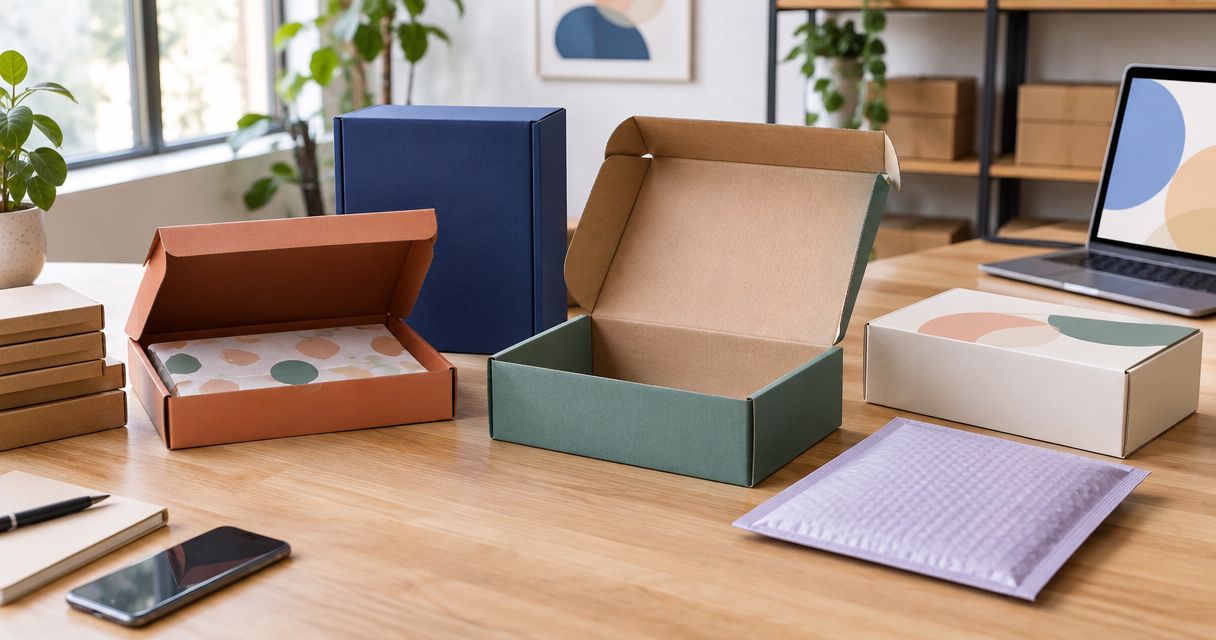
| Digital folding cartons & mailer boxes | 100–300 units | 7–14 working days |
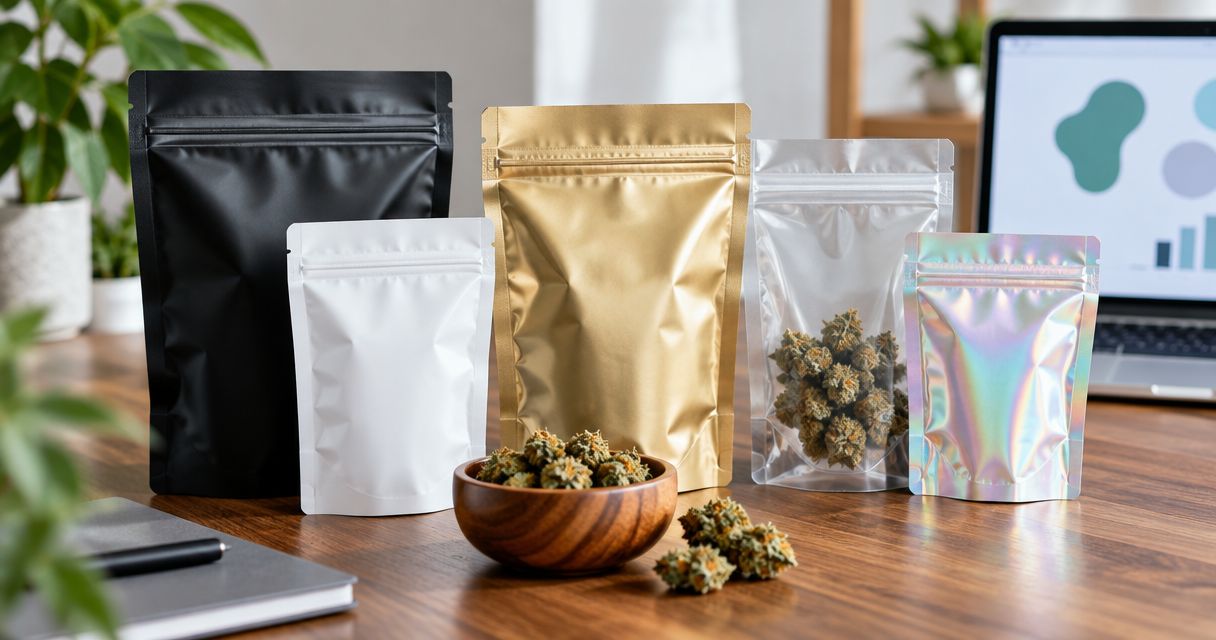
| Kraft paper bags & pouches | 100–500 units | 7–14 working days |
| Standard corrugated boxes | 100–500 units | 10–15 working days |
| Rigid & premium structural boxes | 300–1,000 units | 3–4 weeks |
| Offset-printed boxes, complex finishes | 1,000+ units | 4+ weeks |
| FSC-certified or specialty sustainable stock | 300+ units | Varies by material availability |
Which packaging type has the lowest MOQ in the USA? Custom paper bag printing and standard CBD child-resistant boxes carry the lowest MOQs, consistently starting around 100 units, because they skip the specialty tooling and minimums that white rigid gift boxes and offset printing require.
Why Rigid Boxes Hold a Higher MOQ Than Folding Cartons
Rigid boxes are constructed by hand, covered around a solid board seat instead of folded from a single sheet. That hand assembly step is the major reason their MOQ is higher, starting at 300 to 500 units. The board itself is also thicker and arrives from a smaller pool, which adds another floor on top.
The 2026 Cost Most Guides Leave Out: Rising USA Board Prices
This is the part that changes your real cost more than MOQ does right now.
USA paper raised prices on Corrugated Case Material by £80 to £85 per tonne from April 2026. That follows a longer movement: the ONS Producer Price Index for corrugated paper and boxes now stands over 30% above its 2015 level, and energy costs in the USA remain around 45% higher than they were in 2021 and 22. Regained fibre, the reclaimed material used, has also been trading between £50 and £120 per tonne, dragged up by export demand from Europe and Asia competing for the same supply.
None of that shows up in an MOQ number. It lands instead in your per-unit price, on top of whatever the MOQ already sets.
A lower MOQ doesn’t always mean a lower final cost. If board prices have moved since your last order, the same spec at the same quantity can land at a different price than it did a year ago.
Do rising board prices affect custom packaging MOQ? Not directly. MOQ is driven by setup costs, not raw material price. But rising board and paper costs do change your per-unit price at any given MOQ, so a spec that was affordable in 2025 may need re-costing in 2026.
The Other 2026 Update: Plastic Packaging Tax and EPR Fees
If any part of your packaging uses plastic, two separate cost lines apply, and neither is tied to your MOQ.
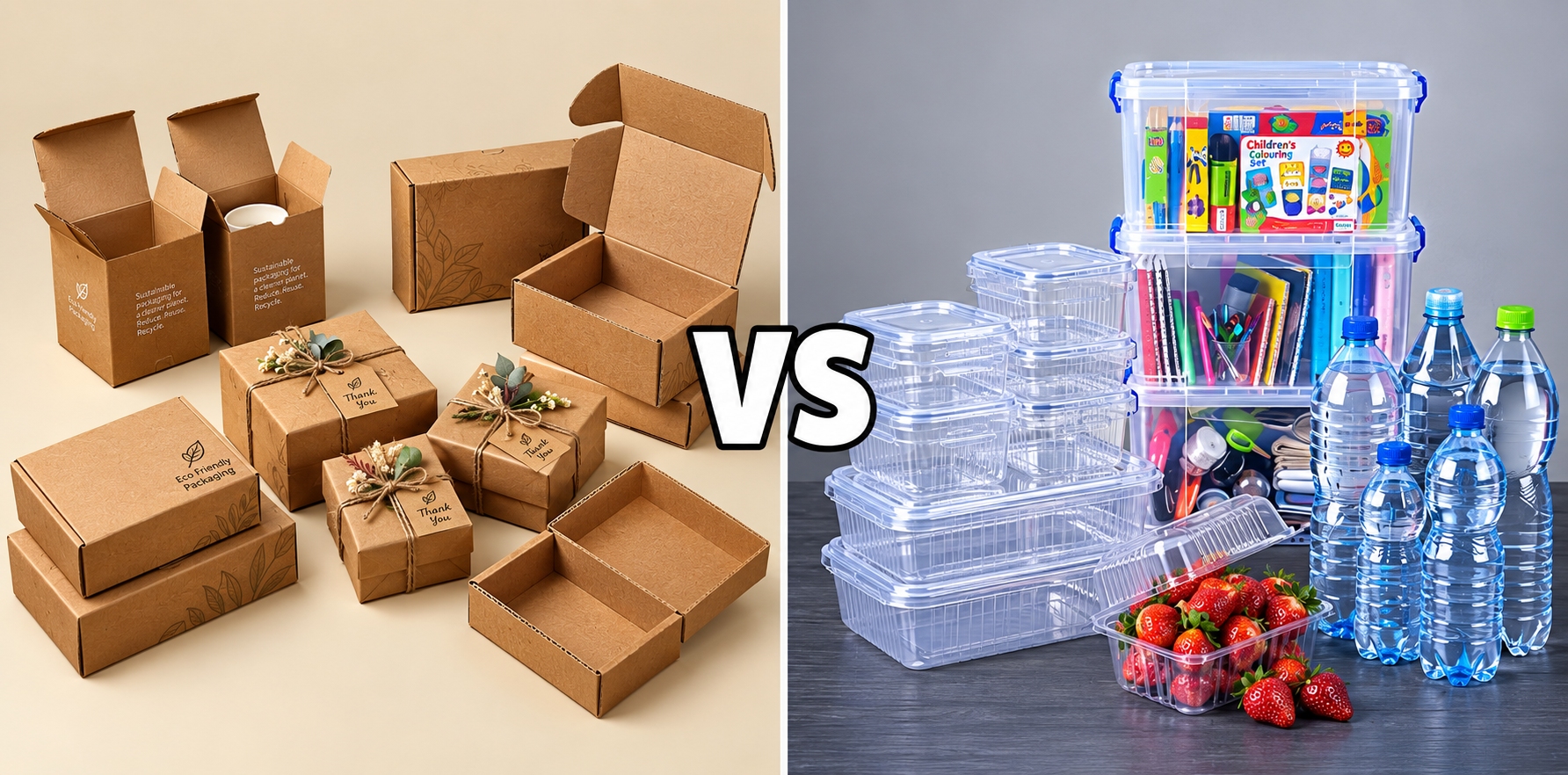
Plastic Packaging Tax (PPT) rose to £228.82 per tonne from April 2026, up from £223.69. It applies to plastic packaging with less than 30% reclaimed content, once a business brings in or manufactures over 10 tonnes in 12 months. Choosing recycled-content plastic, or changing to kraft or corrugated where the product allows it, keeps the spec below that threshold.
Alongside PPT, pEPR (extended producer responsibility) fees are shifting for 2026-27. The flat base fees used in 2025-26, roughly £423 per tonne for plastic and £192 per tonne for glass, are moving to a RAG-rated system, where fees are modulated by how recyclable the material honestly is. A widely reusable format, like FSC-certified sustainable packaging, costs less under the new fee bands than a hard-to-reclaim one, even at the same weight.
Does Plastic Packaging Tax apply to small businesses? Only if a business handles more than 10 tonnes of plastic packaging with under 30% recycled content in 12 months. Below that threshold, PPT doesn’t apply, though EPR reporting obligations may still apply.
How to Choose the Right MOQ for Where Your Business Actually Is
Getting this right protects cash flow and stops boxes sitting in storage. The right size depends on your stage, not your ambition.
- Just launching: size the first order around 3 to 6 months of scheduled sales, not a year.
- Growing steadily: start layering in larger, less regular demands as sales data comes up.
- Established with steady demand: bulk pricing becomes worth leaning into, since setup costs are already spread thin.
A few practical moves support at any stage: ask for a sample before saving to a full run, keep the first technique simple fewer colours, use standard dielines, and ask your supplier directly what’s actually pushing the MOQ up. Sometimes it is the finish, not the box itself, and dropping one add-on can bring the whole minimum down.
Domestic USA Manufacturing vs Importing: Does It Change MOQ?
Overseas suppliers, particularly in Asia, often quote lower MOQs and lower unit prices on paper. What that quote usually leaves out is shipping time, commonly 4 to 8 weeks by sea, and the customs handling that comes with it. A USA-based supplier’s MOQ might start slightly higher, but landed cost and lead time are both more predictable, which matters more once a launch date or reorder cycle is on the line.
Conclusions;
MOQ, board prices, and 2026’s tax and fee changes all feed into the same decision: what a USA brand actually pays for its first or next packaging run. MOQ itself comes down to setup costs spread across units — nothing more mysterious than that, and it shifts by box type, from around 100 units for kraft bags and folding cartons to 1,000+ for offset-printed or heavily finished rigid boxes. On top of that number, two 2026 changes now shape the real price: USA board and paper costs have moved up since April, and plastic-heavy specs carry a higher PPT rate plus pEPR fees that now reward recyclable materials over hard-to-recycle ones.
Put together, the smartest move isn’t chasing the lowest MOQ on paper. It’s sizing the order to where the business actually is, choosing a material that holds up against 2026’s fee structure, and checking current board pricing before a spec gets locked in, since all three shift the final number more than the MOQ alone ever will.
Hale Path Packaging works to a 100-unit minimum order across most body wax box formats, with a 7-14 working day turnaround, and can walk you through where your spec sits against 2026 material and compliance costs before you commit to a quantity.
After reading this blog, you should now have a better understanding of how to choose the right packaging for your business, including options available at low MOQs. For more information and custom packaging solutions, explore Hale Path Packaging.