When to Order Custom Christmas Gift Boxes in 2026 (So They Arrive on Time)
When to Order Custom Christmas Gift Boxes in 2026 (So They Arrive on Time)
Quick answer: Order 10–12 weeks before Christmas (early-to-mid October) if you want a fully custom rigid or printed box with every finish option available. Within 4 weeks, your options shrink to pre-manufactured blanks or a stock box dressed up with a custom sleeve – the production calendar closes off options well before the courier deadline does.
Here’s what this guide walks through for anyone ordering custom Christmas gift boxes this year:
- The full 2026 countdown, from 12+ weeks out down to the final week
- What actually causes packaging to miss Christmas (hint: it’s rarely the courier)
- Which box types are still realistic at each stage, with real production-day figures
The 2026 Christmas Packaging Countdown at a Glance
| Weeks before Christmas | What’s still possible | Typical box types | Risk level |
| 12+ weeks out | Full custom production: dielines, foil, embossing, matched inserts | Custom rigid boxes, custom corrugated, printed folding cartons | Low |
| 8-10 weeks out | Standard custom runs, simpler finishes | Digital-print rigid boxes, corrugated mailers | Low to moderate |
| 4-6 weeks out | Semi-custom: pre-manufactured blanks decorated post-production | Blank rigid boxes with foil or screen-print branding | Moderate |
| 2-3 weeks out | Stock boxes only, customization limited to sleeves or labels | Stock kraft or rigid boxes, printed wrap sleeves | High |
| Final week | Courier cutoff becomes the limiting factor, not production | In-stock only | Very high |
How Many Weeks Before Christmas Should You Order Custom Rigid Boxes?
Honestly, it depends on how much of the box is custom versus just printed – and it’s the single most common question we get about custom Christmas gift boxes each year.
How many weeks before Christmas should I order custom rigid boxes? For a fully custom rigid box built from the ground up, 12 or more weeks out. For a standard box shape with custom print only, 8-10 weeks is usually still workable.
12+ Weeks Out: Full Custom Production
At this point, a custom rigid box constructed from the ground up is a realistic ask. A fully custom rigid box usually takes 10 to 25 working days once the design proof gets approved, and that figure doesn’t include the design and dieline work that happens before it. Add in prepress, a physical prototype, and freight time, and 12 or more weeks gives you room for at least one revision without putting the delivery date at risk. Explore our full Christmas box range to see which structures are still open at this stage.
This is really the only stretch of the calendar where foil stamping, embossing, custom interior inserts, and a fully bespoke dieline are all still available without paying a rush surcharge for them.
8-10 Weeks Out: Standard Custom, Tighter Finish Options
Is 8 weeks still enough time to order custom Christmas boxes? Usually, yes – but you’ll be picking from a shorter finish list. Digitally printed rigid boxes and custom corrugated mailers can still be produced and shipped in this window, mostly because digital print skips the plate-making step that offset and foil finishes need. What tends to fall off the table here is a brand-new structural dieline. A standard box shape with a custom print job is the safer bet at 8-10 weeks, rather than a box shape nobody’s cut before. For cosmetics and beauty gift sets – among the top five most-requested holiday gift categories, at 23% of consumers according to the National Retail Federation’s 2025 holiday survey – this window is when the spec should be locked in, since these ranges usually carry inserts needing their own proofing pass separate from the outer box.
What Happens If You Order Within 6 Weeks?
This is where the real risk starts, and where most buyers underestimate how much has already closed off.
4-6 Weeks Out: Semi-Custom and Pre-Manufactured Blanks
At 4-6 weeks, a pre-manufactured blank is usually the better route. A supplier holding stock rigid boxes in neutral colors – white, cream, kraft, or eco-friendly recycled stock – can decorate them after the fact with foil stamping or screen printing, which turns a weeks-long timeline into a days-long one because the structural production step is already done. The catch is that your box shape and size are limited to whatever blanks are already sitting on the shelf. A faux leather or metallic finish is one of the quickest ways to make a stock-shaped box read as premium without a full custom dieline – handy specifically inside this window.
2-3 Weeks Out: Stock Boxes With Custom Sleeves Only
Once you’re down to 2-3 weeks, getting a from-scratch box – custom or blank – is a hard ask. At this stage, the realistic move is a stock box with a printed sleeve or wrap, since a sleeve can be printed and shipped far quicker than the box it wraps around.
A myth worth putting to rest: paying more doesn’t always buy back lost time. A rush fee can speed up printing and finishing, but it can’t skip mandatory steps like adhesive curing on a rigid box or cutting a new steel-rule die for a corrugated shape. Past a certain point in December, no surcharge fixes a calendar that’s already too short.
The Real Bottleneck Is Not Printing – It’s the Courier Cutoff, and Even That Isn’t Confirmed Yet for 2026
Most buyers worry about the shipping deadline. The packaging production window is usually the thing that actually runs out first.
An illustrative example (a composite of the pattern we see regularly, not a single named client): a mid-size gift retailer puts in a rush order for custom Christmas gift boxes in early December, expecting a paid rush fee to guarantee delivery before the 25th. The printing and finishing come in on schedule – what actually holds things up is the box’s structural tooling: a new corrugated die has to be cut before production can even begin, and die-cutting isn’t a step a rush fee can shorten. The boxes still ship, just a few days later than promised, which means they miss the retailer’s own in-store display date even though the parcels themselves beat Christmas.
Do UPS and FedEx shipping deadlines matter for packaging orders too? Yes, but only once the box itself is finished – and it’s worth knowing the specific 2026 dates aren’t confirmed yet. As of this writing, neither UPS nor FedEx has published official 2026 holiday cutoffs; both typically announce them each fall. Based on five consecutive years of consistent historical patterns, expedited services (2-day air, overnight) have landed around December 22-23, with USPS deadlines for standard and Priority Mail typically a few days earlier – but treat these as projections, not confirmed dates, until the carriers publish. Check UPS’s official holiday shipping schedule and FedEx’s official last-days-to-ship page directly once they’re live, typically in September or October.
None of those courier dates matter if the box hasn’t gone through the production line yet. If you’re budgeting time for a custom Christmas gift boxes order, count backwards from the packaging completion date first, then check the courier cutoff on its own – don’t treat the courier date as the limiting clock in the room, since production usually runs out first.
What Should You Order If Christmas Is Already Close?
If the calendar has already slipped past the safe custom window, the goal shifts from getting exactly what was planned to getting something that still looks intentional.
A stock rigid box or a standard corrugated mailer, paired with a custom-printed sleeve, ribbon, or cover, still carries the branded look without requiring a from-scratch production run. This is also where a supplier’s in-stock rigid gift box range matters more than its custom capability, since what’s honestly available now is the deciding factor this close to the date.
Choosing the Right Box Once the Timeline Is Set
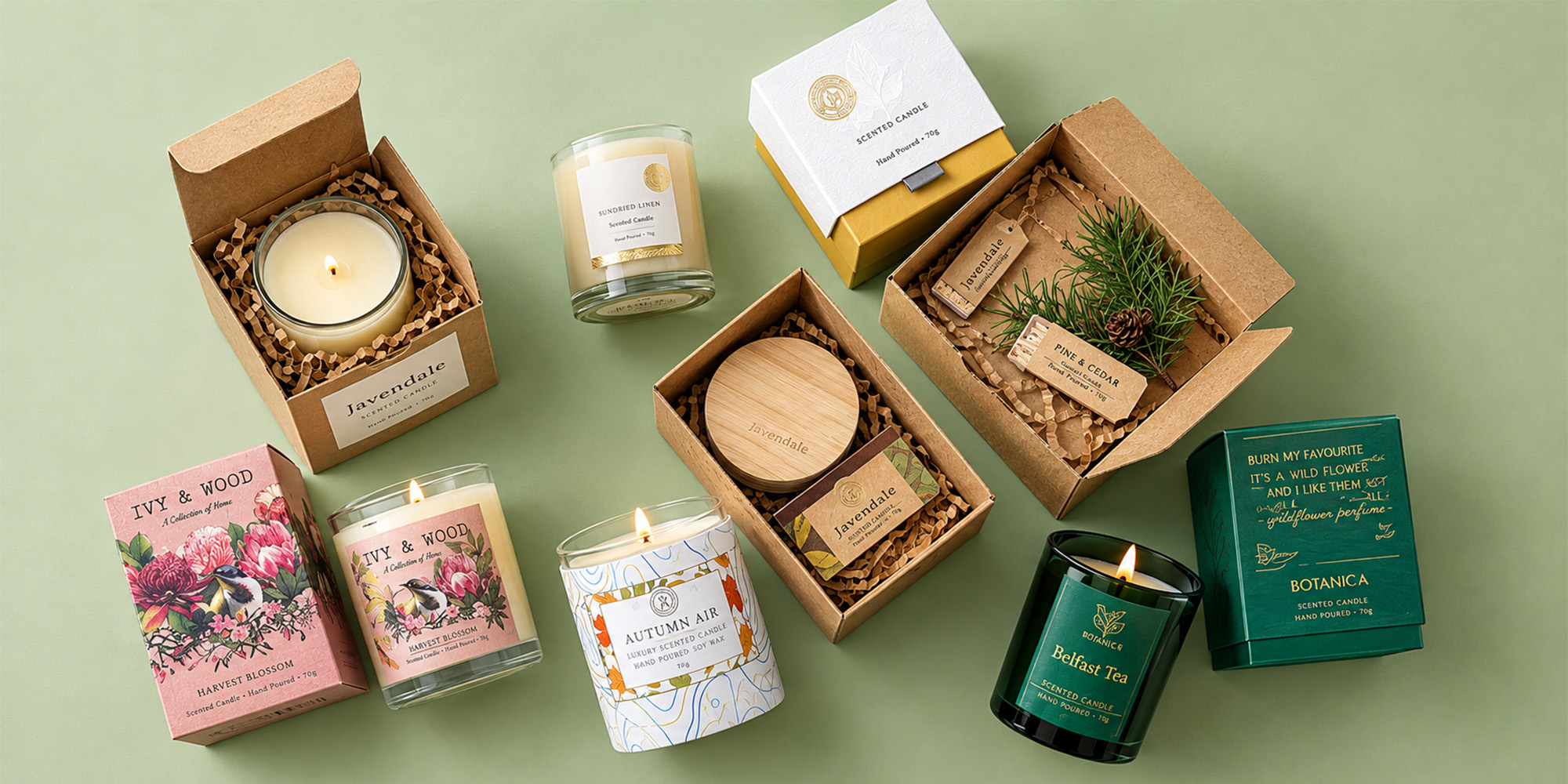
Once you know your production window, the box choice itself still matters. A custom storage-box-style base with a seasonal print works well for gift sets meant to be kept and reused after the holiday – a reusable jar candle box is a common example, since customers already tend to keep the jar after the candle’s gone. For anything glass, ceramic, or otherwise delicate, a divided-interior insert protects fragile pieces through the same carrier network handling every other holiday parcel that week.
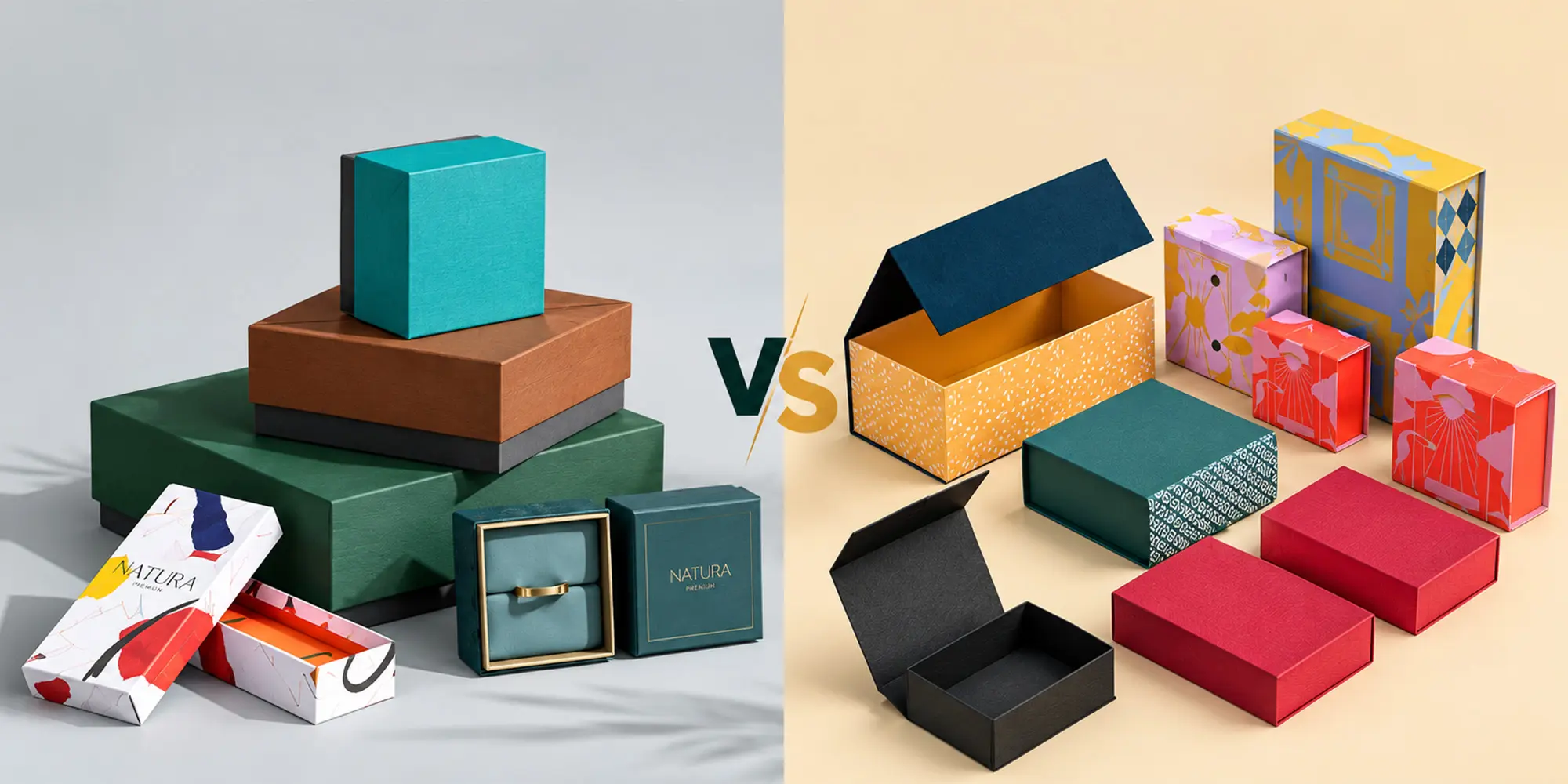
Retail-facing gifts do well in a drawer-style box with a magnetic or telescopic closure, since the unboxing moment matters just as much as the transport for anything bought as a gift instead of being shipped straight to the recipient.
For heavier or multi-item sets – a candle gift set paired with a diffuser, for instance, or a luxury chocolate gift box bundling several individually wrapped pieces – a corrugated candle box structure or reinforced corrugated outer often protects better through holiday-volume shipping than a lightweight folding carton would, even when the retail-facing layer is rigid. Individual chocolate bar packaging for stocking-stuffer-sized items follows a similar logic to the sleeve-and-stock-box route above once you’re inside the 2-3 week window.
Getting the Spec Confirmed Before the Clock Runs Out
Buyers ordering multiple SKUs for a Christmas range – a candle, a cosmetic set, a chocolate gift box, a coffee gift – commonly lose time reconciling mismatched specs late in the process, more often than in production itself. This is a pattern worth watching for regardless of your supplier: when a recycled-content board and a rigid outer wrap need to ship together, proof them together, not sign off on one SKU at a time.
Retailers running a holiday counter display alongside their gift boxes should check display lead times early, too; our counter display packaging guide covers how far ahead that piece needs to be locked in, since a display built around the wrong box dimension is a common last-minute fix that eats into the same production window.
If you’re stacking a Christmas coffee gift into the same range, our coffee bag packaging guide covers valve and zipper lead times on their own, since flexible packaging and rigid boxes rarely run on the same production schedule even when they ship out together.
What Slows Down a Christmas Box Order Beyond the Calendar
Production-day figures on a spec sheet assume the artwork side moves smoothly, which it often doesn’t.
Color Matching and Proof Rounds
Why do custom Christmas gift boxes orders get delayed even when production capacity is available? Most delays inside the safe window come from proofing, not the machinery. A Pantone reference that prints a shade differently on a rigid box’s wrap paper than it did on a digital proof means a second round of approvals – and that has to happen before the production clock even starts. A spot UV finish or foil detail adds its own extra proofing pass too, since those finishes go on after the base print and need their own sign-off.
Building in one buffer-proof round, instead of assuming the first proof gets approved as-is, is probably the easiest way to keep a 12-week timeline from sliding into the riskier 8-10-week bracket.
Quantity Changes Mid-Order
Bumping up the quantity after production has already started is one of the more common ways a good timeline goes bad, and it usually has nothing to do with the original estimate. Once a die is cut and a press run is scheduled, adding units often means waiting behind whatever job comes next, rather than simply stretching the current run. Locking in the final quantity before the production clock starts is a far more reliable way to protect your delivery date than paying for a rush service after the fact.
Which Box Finishes Take the Longest to Produce?
Not every finish costs the same amount of production time, and suppliers rarely spell this out before you order.
| Finish or feature | Added production time | Best ordered within |
| Digital print, standard shape | Minimal, often 3-5 business days after proof approval | Any window, including 4-6 weeks |
| Foil stamping | Extra tooling (foil die) plus a separate proofing pass | 8-10 weeks or earlier |
| Embossing or debossing | Needs a counter-die matched to the print registration | 10-12 weeks |
| Spot UV coating | Applied after base print, with its own drying and inspection step | 8-10 weeks |
| Custom structural dieline | Full engineering, sample, and approval cycle before mass production starts | 12+ weeks |
Is foil stamping realistic if you order 6 weeks out? Only on a pre-manufactured blank, not on a from-scratch custom shape. Foil stamping itself moves fast once the die exists, but cutting a brand-new foil die adds days that a 6-week window doesn’t really have. That’s the whole reason the semi-custom route (decorating a stock blank) sits as its own tier between full custom and stock-only.
Questions Worth Asking a Supplier Before Confirming a Christmas Box Order
Does the quoted turnaround time start from order confirmation or from proof approval? These are two distinct clocks, and a supplier quoting 10 days from the wrong starting point can eat up a week nobody accounted for.
Is the quoted timeline based on a standard box shape or the exact shape you’re ordering? A generic lead-time figure often assumes a simple, already-tooled shape. A custom dieline adds its own engineering and prototyping stage that a generic quote might not cover.
What happens if the first proof isn’t approved as-is? Every timeline above assumes at least one clean proofing pass. A supplier who can tell you exactly how many days a second round adds is one who has honestly mapped out their own production calendar, rather than guessing at it.
Is freight time to your warehouse included in the production estimate, or added on afterward? A 10-day production figure that leaves out 3-7 days of ground freight afterward is a common reason dates get missed, and it has nothing to do with the factory floor at all.
Conclusion
The safe window for custom Christmas gift boxes closes around 10-12 weeks before December 25, and every stage after that gives up one more layer of customization: first the structural dieline, then the finish options, then eventually the box shape itself. The courier cutoff in late December is real, but it’s rarely what actually causes a missed Christmas – the production calendar, especially anything involving tooling, foil stamping, or a new structural die, is the clock that runs out first.
Hale Path Packaging produces custom rigid boxes, corrugated mailers, candle gift boxes, and cosmetic gift packaging from the same production schedule, so a multi-SKU Christmas range can be proofed and confirmed together instead of piece by piece. Minimum order quantities start at 100 units with a 7-14 working day turnaround, and our team can tell you straight away whether a given order date still supports a fully custom spec or whether a semi-custom option is the safer call.
Written by the Hale Path Packaging team, packaging specialists with over a 10 years of experience producing custom and semi-custom holiday and gift packaging for small and independent brands across the USA. Shipping-deadline projections referenced above are based on five years of published UPS and FedEx historical patterns; holiday gift-category data is drawn from the National Retail Federation’s 2025 consumer holiday survey. This guide reflects production timelines and structural realities Hale Path controls directly.