Recycled Content Claims on Cardboard Packaging USA: What You Can Legally Print on the Box Without an FTC Problem
Recycled Content Claims on Cardboard Packaging USA: What You Can Legally Print on the Box Without an FTC Problem
A small candle brand signs off on 5,000 two-piece candle boxes. The lid displays 100% Recycled, and a chasing arrows symbol standard right under it. A few weeks after launch, a customer emails to ask what exactly is reclaimed. The landlord looks at the artwork and realizes there’s no good answer.
Was it the cardboard? The insert? The tape? Was any of it post-consumer? Nobody asked the supplier for paperwork, because the claim sounded harmless.
Under US rules, recycled on a box counts as a marketing claim, the same as any ad. If it fools a suitable buyer, the Federal Trade Commission can step in. The problem lands on the brand, not the printer. The same goes for candle brands choosing between corrugated and rigid, a decision we cover in our cardboard vs rigid candle boxes comparison.
This guide covers recycled content claims on cardboard packaging in plain terms. It shows what you can print, what needs a qualifier, and what paperwork to keep. It also points out where corrugated boxes cause trouble.
What the FTC’s Recycled Content Rule Says
The rule comes from the FTC’s Green Guides, found in 16 CFR Part 260. Section 260.13 covers recycled content. The Guides aren’t binding regulations on their own. The FTC uses them to show how it reads Section 5 of the FTC Act, which bans deceptive marketing.
States use them too. California’s Business and Professions Code 17580.5 treats any claim covered by the Guides as an environmental marketing claim. It also gives sellers a defence when their claims follow the Guides.
The FTC Green Guides recycled content rule covers four points:
- Recycled content means material recovered from the waste stream. That can happen during manufacturing pre-consumer or after use post-consumer.
- You can say recycled with no qualifier only if the whole box is recycled, apart from minor, incidental parts.
- If the box is only partly recycled, say so. State the percentage by weight, clearly and prominently.
- If you split pre-consumer from post-consumer, you need proof for those exact numbers.
These points apply to every format, from top and bottom corrugated boxes to small retail cartons.
Section 260.2 adds a proof requirement. Marketers must be able to support every reasonable reading of a claim. For environmental claims, that often means competent and reliable evidence, which means tests or analyses done objectively by qualified people. A supplier’s verbal assurance doesn’t meet that bar.
The FTC also looks at the net impression of the whole label. A green box, a leaf icon, and the word “recycled” can say more together than any one of them says alone. A leaf beside a recycled line can suggest the whole product is environmentally friendly. Formats like the ones compared in the cardboard counter display boxes vs rigid PDQ trays guide are read from a few feet away, so the artwork does most of the talking.
The difference between post-consumer vs pre-consumer recycled content matters here. Pre-consumer material needs proof too. The FTC expects evidence that the scrap would otherwise have gone to waste. Scrap a manufacturer feeds straight back into the same process usually doesn’t count.
Wording That Holds Up on a Box and Wording That Doesn’t
The FTC does not judge a claim by its literal words alone. It asks how a reasonable buyer reads it.
Section 260.3 adds two rules that matter on packaging. Qualifiers should use plain language and readable type, and they should sit close to the claim they qualify. The claim should also say whether it refers to the box, the product, or only a part of the package.
Small cartons make this hard. A mascara or small cosmetic box, like those in the mascara and small cosmetic boxes guide, leaves little room for a qualifier near the claim. The table below shows how common box lines hold up.
| What’s printed on the box | When it holds up | Where it goes wrong |
| Made from 100% reclaimed fibre | The whole box is reclaimed fibre, apart from minor parts like glue and ink, and mill records show it | The outer liner is virgin kraft, and only the inner layers are recycled |
| Contains 45% recycled fibre | The number comes from weight records or an annual weighted average that accounts for fibre loss | The number comes from a brochure, or from a different board grade than the one you bought |
| 30% post-consumer recycled fibre | You can show 30% came from material recovered after use | Plant trim or unsold overrun stock is counted as post-consumer |
| Recycled box on a package with a plastic window or sleeve | The claim is limited to the paperboard part | Shoppers read it as covering the plastic too |
| Chasing arrows with no words | You can back both messages: recyclable and made from recycled material | The symbol is added as decoration to a box with virgin fibre |
| Sustainable packaging | Rarely, because broad claims are hard to prove | Almost always |
| Forest certification logo | It’s shown with a valid license code as a forest sourcing claim | Buyers read it as a recycled percentage |
The chasing arrows row is the one many brands miss. The FTC’s own example says an unexplained symbol likely tells shoppers the package is both recyclable and made entirely from recycled material. Without proof for both messages, the claim needs a qualifier.
Once the proof is in hand, how to label recycled cardboard boxes gets easier. These lines follow the pattern of the FTC’s own examples. Use them only when the numbers match your records.
- Box contains 55% recycled fibre.
- Box contains 55% total recycled fibre, including 30% post-consumer fibre.
- Carton is made from recycled fibre. The plastic sleeve is not.
Your website and marketplace listings count too. If you repeat a supplier’s recycled claim in a product description, it becomes your claim. The Guides reach retailers and wholesalers who repeat a claim, not only manufacturers. The setting changes, as the Magnetic Closure vs Two-Piece Rigid Boxes guide explains for displays, but the rule doesn’t.

Where Corrugated Boxes Get Into Trouble?
Corrugated isn’t one uniform material. It’s layered board, and the layers can differ. The Fibre Box Association cites an average of 52% recycled content across corrugated boxes. That’s a useful benchmark for recycled content percentage on cardboard boxes, but it’s an industry average. It doesn’t describe the board on your purchase order.
Three problems show up most often.
Board grade
Some grades use virgin kraft on the outer liner. Others use reclaimed fibre throughout. Two boxes that look identical can hold very distinct reclaimed percentages, so what 100% recycled cardboard means depends on the grade.
Scrap that doesn’t qualify
Mill trim fed back into the same mill usually isn’t recycled content under the Guides. Scrap that leaves the plant and goes to another mill may count as pre-consumer, also called post-industrial recycled content. You’d still need to show it would otherwise have been thrown away.
Mixed components
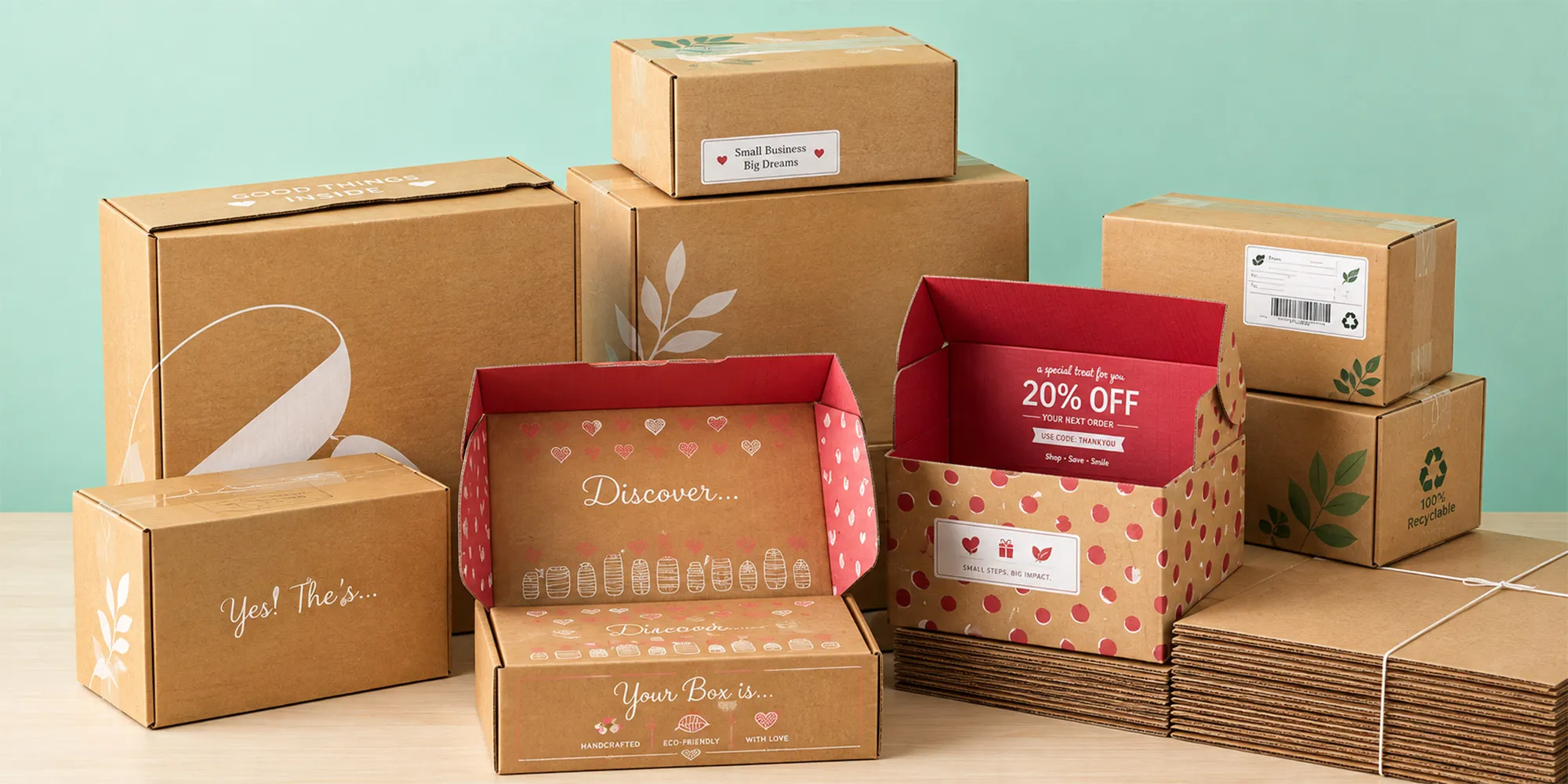
A window film as on a candle mailer box, a foam insert, a laminated finish, or a plastic sleeve complicates the claim. The FTC’s own example says a paperboard box inside a shrink-wrapped plastic cover can’t simply be called recycled packaging. The claim has to stay with the paperboard box. That rule drives most mixed-material packaging recycled claims.
Rigid formats add their own parts
A magnetic closure, as compared in the magnetic closure vs two-piece rigid boxes guide, brings metal magnets into the build. Custom sport card packaging adds a second piece with its own fibre content.
Inks, glue, and tape are a smaller issue
Some certification programs set adhesives and inks aside when they calculate the percentage. The FTC’s rule allows an unqualified claim when only minor, incidental components aren’t recycled. A full wrap laminate probably isn’t minor, so ask before you assume. A typical exchange with a supplier looks like this. A buyer asks whether the lid can say 100% Recycled. The medium is recycled, the supplier says. The outer liner is virgin kraft. Across the whole board, the mill reports about 55% recycled fibre.
So what can we print?
That the box contains 55% recycled fibre, if the mill certificate backs it up. If you want to split out post-consumer, I’ll need the breakdown in writing. The same questions apply whether the order is custom puzzle boxes for retail or custom model kit packaging for a store shelf.
Recycled Content and Recyclable Are Two Different Claims
The difference between recycled vs recyclable packaging is easy to state. Recycled content describes what the box is made from. Recyclable describes what can happen to it afterwards. A box can be made from 100% recycled fibre and still fail a recyclable claim if local systems can’t handle it.
Brands mix the two up because one symbol seems to cover both. In California, that confusion has become a legal issue. SB 343 restricts the chasing arrows symbol on cardboard boxes and other recyclability claims on packaging manufactured after October 4, 2026. To qualify, a material must be collected by programs serving at least 60% of Californians. It has to be sorted by facilities that meet the state’s threshold, and it has to end up as feedstock for new products or packaging.
So is cardboard recyclable in California under this test? Plain corrugated looks strong. CalRecycle published its findings in April 2025. In one supplier’s analysis of that data, plain uncoated corrugated board shows access of about 99%. Coated and composite fibre formats look weaker. Flexible formats such as stand-up pouches with zippers sit in a weaker spot still, since plastic film shows far lower recycling access in the state’s data. For that reason, California SB 343 corrugated boxes hold less worry than covered or laminated packaging.
Trade groups, containing the American Forest & Paper Association, have sued to contest SB 343. On July 14, 2026, a federal judge in San Diego barred the California attorney from enforcing the law while the case continues. The order is preliminary, and a request is expected. How far it protects companies outside the lawsuit is still an open question. Many brands are working to the October 4 date anyway.
Loose claims create real greenwashing risk in packaging. Plastic pods are not cardboard boxes, but a claim with no qualifier can cost real money either way.
Building the Paper Trail Before the Artwork Goes to Print
Write the claim last. Gather the proof first, then word the box to match it. This sequence works for recycled content substantiation:
- Get the exact board grade in writing, along with a mill certificate for recycled content that shows the mill’s recycled fibre percentage.
- Find out whether the percentage covers your order or is an annual weighted average. The Guides accept an average if it accounts for fibre loss during papermaking.
- Ask for the pre-consumer and post-consumer split. Also ask how the pre-consumer portion was shown to be true waste.
- Ask for a third-party certificate if you can get one. Two programs come up most often for recycled content certification for corrugated boxes: SCS Recycled Content certification and UL 2809 validation. A certificate doesn’t replace the FTC’s requirements, but it gives you stronger backup.
- Check what each logo actually says. Forest sourcing vs reclaimed content is an easy pair to twist. Some forest certificate logos speak to where the fibre came from, not how much of it is reclaimed.
- Save every record. In California, Business and Professions Code 17580 requires sellers who use the chasing hands symbol, or terms like environmentally friendly, to support reported proof of the claim.
- Recheck at every reorder. Mills change grades and sourcing. Last year’s number may not describe this year’s boxes.
The hard part is obtaining a trustworthy weight from the mill. The hard part is getting a trustworthy weight from the mill. If a supplier can’t provide the numbers, don’t guess. Print a narrower claim or skip the claim entirely.
A grade change can also move a box’s weight and size, which feeds into shipping cost, as the dimensional weight pricing guide explains.
Board grades and sourcing also move with market conditions and trade costs. breakdown of the 2027 US cardboard packaging market and its guide to cardboard shipping boxes and 2027 tariff exposure explain why supply can shift between orders.
Before You Approve the Artwork…
Prove the number first, then print it. With a mill record behind it, a recycled claim helps sell the box. Without one, every box you ship adds more risk. Nothing here is legal advice. For high-value claims or a large print run, have a lawyer who handles advertising law review the wording. These four questions come up often before a print run.
My supplier says the box is constructed from reclaimed cardboard. Can I print reclaimed on it? Not yet. Get the board grade and the recycled percentage in writing first. If the box is only partly recycled, print the percentage by weight. If the box is partly recycled, print the percentage by weight.
Do I need a third-party certificate to print a percentage? The Guides don’t name certification as a requirement. They ask for a reasonable basis, which often means competent and reliable evidence. A certificate is one strong way to have it.
Is it safe to add the chasing arrows symbol as a design element? Not without checking. Alone, it can tell shoppers the box is recyclable and made entirely from recycled material. Back both messages or add words that explain it.
Should I just print eco-friendly to keep things simple? Usually that adds risk. The Guides say broad claims like that are hard to interpret and can suggest wide-ranging benefits. A specific line you can prove works better.
Conclusion
A recycled content claim holds up when the proof comes first. The FTC’s rule is short. Print recycled alone only when the whole box is recycled, and give a percentage by weight when it is only partly recycled. Keep records behind every number.
Before approving artwork, clients of Hale Path Packaging can ask for the board grade and recycled fibre details. That is the easiest time to fix any wording, because nothing has been printed yet. The claim on the box then matches the proof behind it.