The 2027 US Cardboard Packaging Market Report: Tariffs, Sustainability Mandates, and What’s Actually Changing for Small Brands
The 2027 US Cardboard Packaging Market Report: Tariffs, Sustainability Mandates, and What’s Actually Changing for Small Brands
Heading into 2027, small cardboard packaging buyers face two confirmed, verifiable shifts: Section 301 tariffs of 10-12.5% now apply to imports from roughly 60 economies (replacing the expired Section 122 surcharge), and seven states – covering roughly one in five Americans – now enforce Extended Producer Responsibility (EPR) packaging fees. Neither requires an overnight overhaul, but both require knowing exactly where your product sells and what it’s made of.
Packaging news has been relentless this year. One week it’s a tariff ruling, the next a new state recycling law, and somewhere in between your box supplier raises prices again. Does any of this actually apply to a small brand, or is it just noise built for enterprise supply chain teams? Usually a bit of both, and knowing which is which is the whole point of this report. It breaks down what’s confirmed about tariffs, sustainability mandates, and material costs heading into 2027, and what a small brand sourcing anything from a mailer to Cardboard Pizza Boxes USA should do about each.
Where the Tariff Story Stands Right Now
The tariff situation on packaging materials has changed direction several times in eighteen months, and brands working off last year’s numbers are planning around outdated information.
The Legal Whiplash After the Headlines
What actually happened with packaging tariffs in 2026? A: The Supreme Court struck down the IEEPA-based tariffs on February 20, 2026, by a 6-3 vote, in the consolidated cases Learning Resources, Inc. v. Trump and Trump v. V.O.S. Selections, Inc. Within hours, the administration invoked Section 122 of the Trade Act of 1974 – a temporary 10% global surcharge that began February 24. Capped at 150 days by statute, it expired on schedule on July 24, 2026, and was replaced the same day by Section 301 duties of roughly 10 to 12.5% on approximately 60 economies, alongside the separate, untouched Section 232 metal tariffs. Budget for 2027 around Section 301 and Section 232 – the old 10% Section 122 rate no longer exists. A mid-2026 USMCA review adds further uncertainty for goods crossing the Canadian or Mexican border, where a good share of US corrugated capacity sits.
What Is Costing More
- Section 232 tariffs: 50% on steel, aluminum, and copper, now assessed on customs value, restructured April 2026
- Containerboard pricing: up around $100/ton across 2026
- Diesel costs: up close to 50% year over year at points this summer
- Resin prices: a strong spring spike, flat afterward
This remains unsettled. Plan around the uncertainty, not around any single rate as fixed.
Why Small Brands Feel This More
Large packaging companies shift production between plants when a tariff hits one lane. Most small brands can’t. One tariff change on a single imported component – a foil finish, hardware, a printed insert – can eat the margin on a whole product line. Brands using rigid boxes with inserts, like Cardboard Insert Rigid Boxes USA, carry more component-level tariff exposure than a plain corrugated box simply because there’s more to price out. Our costing analysts map this exposure by Harmonized Tariff Schedule code on every component before quoting – the practical answer to how small brands can prepare for 2027 packaging tariffs – so it’s accounted for while there’s still time to adjust the quote, ahead of any rate change.
What a New Global Industry Forecast Projects
How much is the global packaging market expected to grow by 2030? A: Smithers, widely regarded as a leading authority on the packaging industry, projects in its white paper “Impact of Tariffs on Packaging” that global packaging demand will reach $1.52 trillion by 2030, growing 3.8% under its baseline scenario.
| Scenario | Global Growth Rate to 2030 | What Drives It |
| Optimistic | 3.9% | Tariff tensions ease, trade flows normalize |
| Baseline | 3.8% | The current tariff structure largely holds |
| Pessimistic | 3.3% | Escalating tariffs, slower global trade |
US packaging consumption in 2030 could land between $255.4B and $279.6B, a swing of over $24B depending on tariff policy. Tariffs weigh on US growth more than global growth in the short term, with recovery expected later. Rigid plastics and flexible packaging, both import-reliant, face the sharpest cost increases, though demand stays resilient in food and healthcare. Healthcare packaging keeps growing at a 3.1% CAGR, and cosmetics packaging holds up on the “lipstick effect”: people keep spending on small affordable luxuries even while cutting back elsewhere.
Smithers calls the emerging response the Plus One strategy: instead of abandoning existing suppliers, brands add a second sourcing partner alongside China, typically in Southeast Asia or Latin America. A small brand can borrow the idea at a smaller scale: keep a primary supplier, but line up one backup outside the same tariff exposure zone.
The Sustainability Mandate Wave: State EPR Laws Hitting in 2027
Extended producer responsibility, or EPR, is the mandate that changes how small brands budget for packaging. Seven states have enacted packaging EPR laws – Maine, Oregon, Colorado, California, Minnesota, Maryland, and Washington – together covering roughly one in five Americans. A brand doesn’t need to be headquartered in any of them to be affected.
The producer – generally the brand owner or first importer – registers with a Producer Responsibility Organization and reports how much packaging it places on the market each year. Fees are assessed by material type, weight, and recyclability, shifting end-of-life packaging costs onto the companies that create the packaging rather than local governments.
Being small doesn’t automatically mean an EPR small-business exemption applies. Thresholds vary by state, and a brand can clear the bar in one state while staying under it in another. Several states are still finalizing exact cutoffs, so confirm the current number with each state’s Producer Responsibility Organization before budgeting around it.
| State | EPR Fee Status | Small Producer Exemption | Key 2027 Milestone |
| Oregon | Fees active | Based on revenue and packaging weight | Base rates continue to adjust |
| Colorado | Fees active since Jan 2026 | Tied to packaging weight and global revenue | The de minimis threshold adjusts each July |
| California | Early fees start in 2026 | Small-producer revenue threshold applies | Full fee schedule expected in 2027 |
| Minnesota | Phasing in | Revenue-based threshold | Registration deadlines advancing |
| Maryland | Phasing in | Revenue-based threshold | Covered materials list due mid-2027 |
| Maine | Fees underway | Revenue and volume-based | Continued phase-in of funding |
| Washington | Phasing in | Revenue and volume-based | Program details are still being finalized |
A brand exempt everywhere it sells may still need to register and document that status. Skipping registration on the assumption of exemption is a common, avoidable mistake.
Shipping materials count as covered packaging in most of these states: mailers, void fill, tape, the shipping box itself – not just retail product packaging. Brands already using recyclable options like cardboard candle boxes tend to have an easier time, since the material documentation already exists.
What Small Brands Need to Watch, Not the Noise
Which of the seven EPR states does your product reach through direct sales, wholesale, or marketplace fulfillment? Brands are assessed by where the product sells, not where the company is headquartered, which catches brands running low-MOQ SKUs across several states without anyone noticing the exemption threshold has been crossed. Our regulatory advisors walk new clients through this state-by-state mapping – the core of small-brand EPR compliance – before recommending any material change.
Treat registration as separate from payment. Several states still require exempt producers to file a report anyway. Documenting exempt status protects a brand if thresholds shift or a state later audits compliance.
Build a volatility buffer into packaging budgets. Cost consultants recommend a 10-15% buffer built directly into packaging cost models. In practice: map every product’s Harmonized Tariff Schedule code and country of origin, keep USMCA documentation current, and trim the number of separate packaging components per product, since each one is another line item exposed to price volatility.
Material Costs and Sourcing Shifts Small Brands Are Feeling
Even brands that never touch a metal closure or imported component feel this indirectly, since fiber pricing and freight costs move across the whole packaging category together – the heart of the broader corrugated packaging cost increases small brands keep running into.
Domestic sourcing removes the tariff layer entirely, along with currency risk and long lead times. Small brands that diversified across North America and Europe before recent tariff announcements have generally landed in a steadier pricing position, mainly by avoiding a single point of failure tied to one country’s trade policy.
- Old corrugated container recycled fiber, the backbone of most cardboard, is up as export demand pulls fiber overseas
- Polyethylene film/lamination is up roughly 45 cents/lb over four months, then flat
- Plastic additives are up by as much as 25% in some formulations
Capacity reductions across containerboard mills have tightened certain board grades right as seasonal demand climbs. Orders placed two to three weeks out are increasingly too tight, especially for custom printed runs. A standing order ahead of a busy season has gone from nice-to-have to basic planning. Brands shipping heavier or bulkier products, like Heavy Duty Shipping Cardboard Boxes, tend to feel this first since they run on longer production schedules than a standard mailer.
What’s Actually Changing for Small Brands in 2027
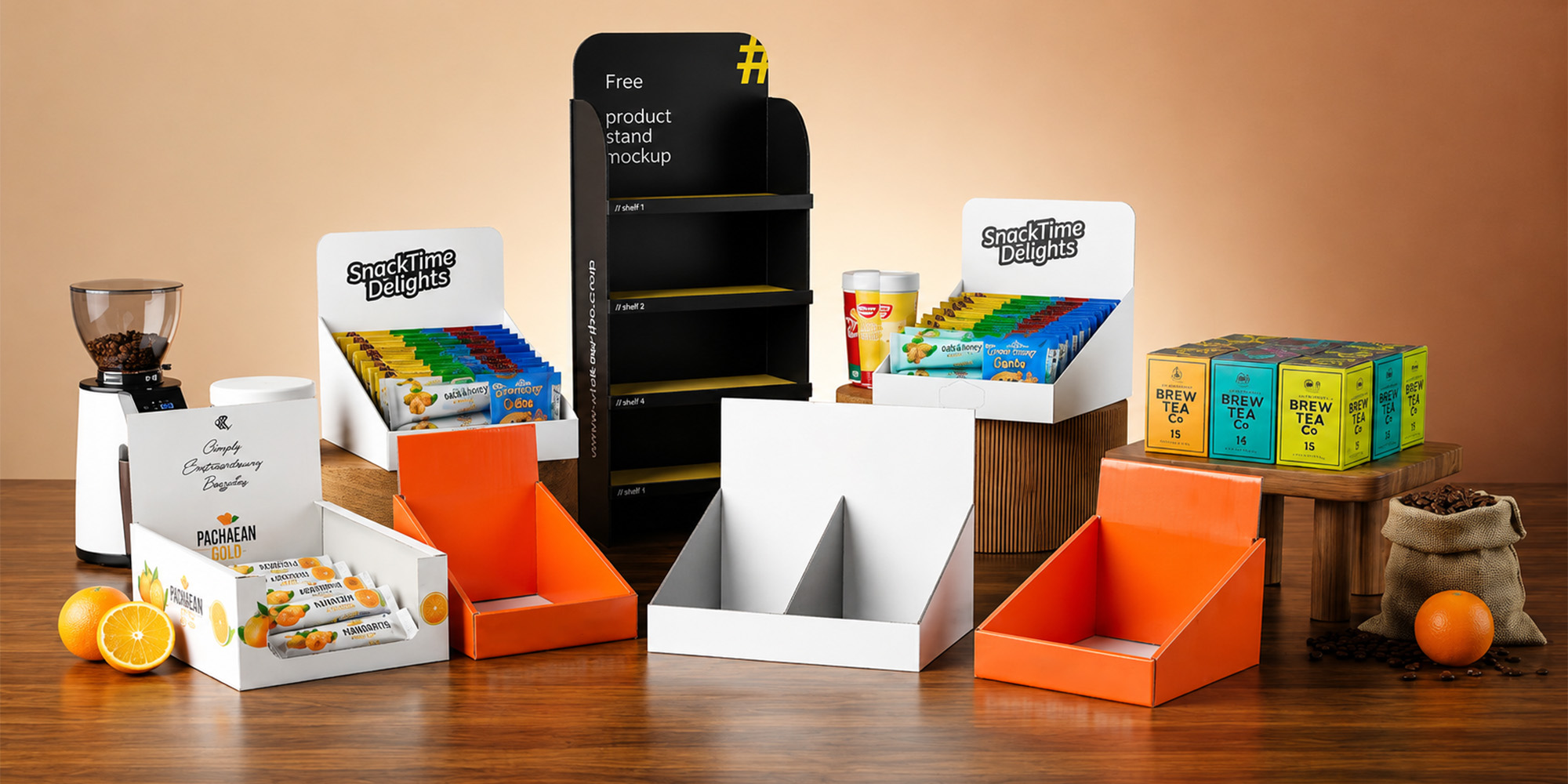
Right-sizing packaging does double duty. It lowers freight cost, is exposed to tariff-driven fuel and material pricing, and lowers packaging weight reported under EPR programs that assess fees by weight. Few other moves address both at once. Comparing Cardboard Display Boxes USA against a heavier fixture can trim freight weight and material cost without losing shelf impact.
PFAS-free, repulpable materials are becoming the default. State chemical restrictions and retailer requirements are both pushing this. Switching now beats a rushed, pricier switch later. Our board specification group has already moved several standard specs in this direction ahead of it becoming a hard requirement.
Supplier diversification is no longer optional. Spreading orders across suppliers, including ones in Canada or Mexico that qualify for preferential USMCA treatment, limits how much damage any single country-specific tariff change can do. Our procurement partners already keep qualified backups in place for exactly this reason – a basic form of cardboard packaging supply chain risk management -, and it costs almost nothing to start doing before a crisis forces the issue.
The supplier you pick does some of this work for you. A supplier who already tracks both the tariff landscape and EPR reporting takes a real burden off a small team. Die-Cut Cardboard Boxes offer a domestically produced, tariff-insulated choice, while Cardboard Counter Display Boxes and Top and Bottom Corrugated Boxes offer right-sizing flexibility that helps with both freight and EPR.
Frequently Asked Questions
Is my small brand automatically exempt from state EPR laws? Not necessarily – the most common misunderstanding small brands carry into 2027. Thresholds aren’t consistent across states, and a brand exempt in one can be over the line in another once wholesale and marketplace sales count alongside direct sales. Confirm current thresholds directly with each state’s Producer Responsibility Organization, since several are still being finalized. Registration still matters even when exempt; several states require exempt producers to file a report anyway.
Will tariffs on packaging materials keep changing through 2027? Almost certainly. The Section 122 surcharge already expired and was replaced by Section 301 duties within the same year, and those investigations are still producing new recommendations. Treat any current rate as temporary.
Does switching to domestic suppliers save money? Not always on sticker price, but it removes tariff exposure, currency risk, and long lead times – a trade many brands find worth a slightly higher per-unit cost.
What counts as covered packaging under EPR laws? Retail product packaging plus shipping materials – boxes, mailers, void fill, tape. E-commerce brands are producers responsible for their shipping materials too, not just their retail packaging.
Should a small brand wait until fees start before addressing EPR compliance? No. Registration deadlines in several states arrive well before fees are assessed, and penalties for missing registration can apply regardless of whether fees are ultimately owed.
The Bottom Line
The 2027 outlook comes down to three moving parts: tariff policy still being litigated and replaced mid-year, seven states enforcing EPR laws with mismatched thresholds, and material costs climbing regardless of what happens in Washington. None of that means overhauling everything overnight. It means knowing where a product sells, documenting compliance even when nothing is owed, and working with suppliers who already track both the tariff landscape and the sustainability mandates on top of it.
Hale Path Packaging has watched enough of these swings to build them into the quote itself, not just the finished box. Custom orders on Custom Cardboard Boxes USA and related lines start at a 100-unit minimum with a 7- to 14-working-day turnaround, and tariff and EPR exposure get factored into the material and sizing recommendation from the first conversation, well before any rate change forces the issue.
Written by the Hale Path Packaging team, packaging specialists with over a decade of experience tracking tariff policy and packaging regulation for small brands across the USA. Legal and regulatory information referenced above is drawn from Congress.gov’s Congressional Research Service summary of the Supreme Court’s February 2026 IEEPA ruling and Smithers’ “Impact of Tariffs on Packaging” white paper. This report reflects publicly confirmed policy as of publication – tariff rates and state EPR thresholds are both still moving and should be reverified against current sources before budgeting decisions.