Custom Packaging MOQ Explained: Why US Brands Overpay in 2026 (And How to Stop)
MOQ (Minimum Order Quantity) is the smallest number of units a packaging supplier will produce in one run — usually 100 to 500 pieces for digitally printed custom boxes, higher for offset or rigid formats. But Custom Packaging MOQ isn’t the only thing driving your packaging bill in 2026. New import tariffs and state recycling fees now add real cost on top of it, and almost nobody explains that part. This guide covers both.
What Is MOQ in Custom Packaging?
MOQ stands for Minimum Order Quantity – the smallest batch a supplier will produce in a single run. If a supplier quotes an MOQ of 500, that’s the floor. You can order more, but not fewer, at that price.
Here’s the part most guides skip: your quote barely moves whether you order 500 boxes or 5,000. That’s MOQ quietly at work in the background, and understanding it is what separates a brand that gets a fair packaging price from one that’s quietly overpaying – either by over-ordering stock they don’t need, or by picking a supplier whose MOQ structure doesn’t fit their stage.
Custom packaging itself is simple to define: it’s packaging built to your brand’s own specs – your size, your print, your material, your finish – instead of a generic box pulled off a shelf. The MOQ is what decides whether getting that custom packaging actually saves you money or slowly drains your budget.
What does Custom Packaging MOQ mean in packaging? MOQ means Minimum Order Quantity – the lowest number of units a packaging manufacturer will produce per order. It exists because setup costs (plates, dies, machine calibration) are fixed regardless of order size, so suppliers set a floor where those costs still make sense to absorb.
Why Custom Packaging MOQ Actually Matters
A lot of brands hear “low MOQ” and assume that’s automatically the better deal. It isn’t always. What actually helps is understanding why the number exists, instead of just chasing the lowest one you can find.
Here’s what a well-matched MOQ does for you:
- Keeps cash from getting tied up in boxes sitting in a storage unit
- Protects you from paying inflated setup costs on a tiny run
- Lets you plan packaging around real sales data, not guesses
- Gives you actual leverage when negotiating with a supplier
- Cuts wasted storage space and warehousing costs
If you’ve ever gotten a 500-unit quote from one supplier and a 5,000-unit quote from another for what looks like the same box, you’re not imagining things — and you’re not alone. Most brands never get a straight answer for why the numbers are so different. Here’s what’s actually behind it.
The Real Factors That Drive MOQ
There’s no single reason Custom Packaging MOQs exist — a handful of cost drivers stack together to produce the number you get quoted.
Print method. Offset printing needs a physical plate made for every design, which costs more upfront than digital. That’s why offset jobs usually carry a higher MOQ, while digital runs can start much smaller.
Material sourcing. Board, paper, and film all come from mills with their own minimum order rules. If your supplier needs rigid board or a speciality kraft stock, they may need to hit their mill’s minimum before your order can even start.
Tooling and die costs. Custom shapes need a die cut specifically for that box. That cost is the same whether you order 300 units or 3,000 — it just gets spread thinner (and matters less per unit) as your volume climbs.
Finishes and add-ons. Foil stamping, embossing, soft-touch lamination, spot UV – each one adds a setup step, and each one tends to push MOQ up.
Supplier type. Large factories built for mass production usually carry higher minimums. Smaller shops or digital-first suppliers can often go lower — sometimes with no real minimum at all.
The 2026 Cost Most Brands Miss: Tariffs on Top of MOQ
This is the part that actually explains why brands are overpaying right now, and it has nothing to do with MOQ.
Since February 24, 2026, a 10% baseline surcharge under Section 122 has applied to most imports into the US. On top of that, Section 301 duties add up to 50% on some Chinese-made plastics and packaging materials specifically. If your supplier sources overseas — which a lot of “low-cost” packaging quotes still do – that cost is either already baked into your unit price or about to hit your next reorder.
Run the math on a real order: a $10 landed cost per unit at a 10% tariff adds $1 per box. On a 5,000-unit order, that’s $5,000 you weren’t budgeting for — before you’ve even factored in the setup costs that drove your MOQ in the first place.
This is why “cheapest overseas quote” and “actual lowest cost” aren’t the same thing anymore in 2026. A domestic US manufacturer’s MOQ might look higher on paper, but once tariffs are added to an overseas quote, the gap often closes — or flips.
Do 2026 tariffs affect custom packaging prices? Yes. A 10% baseline tariff has applied to most US imports since February 2026, and some Chinese-made packaging materials carry additional Section 301 duties of up to 50%. If your packaging is sourced overseas, this is added on top of your unit price and MOQ-driven setup costs — it’s a separate, and often larger, line item.
The Other Hidden Cost: State Packaging Fees (EPR)
If your brand ships to California, Colorado, Maine, Maryland, Minnesota, Oregon, or Washington, there’s a second cost layer that has nothing to do with your supplier’s MOQ: Extended Producer Responsibility (EPR) fees. These seven states now require producers to report the packaging they put on the market and pay fees toward recycling programs — and several more states have EPR bills moving through 2026 legislative sessions.
The fee amount typically depends on the material your packaging is made from – recyclable formats like corrugated and kraft paper are usually charged less than mixed-material or hard-to-recycle plastics. That means the material decision you make to hit a lower MOQ can also affect an ongoing fee you’ll owe later. Choosing recyclable formats up front isn’t just a sustainability move — it’s a cost-control move.
What is packaging EPR, and does it apply to my small business? EPR (Extended Producer Responsibility) laws require companies that put packaging on the market in certain states to report their packaging materials and pay fees that fund recycling. Seven states have active programs as of 2026: California, Colorado, Maine, Maryland, Minnesota, Oregon, and Washington. Whether it applies to you depends on your revenue and packaging volume in each state – smaller producers are often exempt, but thresholds vary by state, so it’s worth checking your specific numbers against each program’s rules.
How to Navigate MOQ as a Small Brand
Get this right, and you protect your cash flow, avoid sitting on boxes you don’t need, and still end up with packaging that looks the way you want. The right approach depends on where your product’s at right now — not where you hope it’ll be in a year.
Be honest about where your business actually is. Size your first order around your near-term sales, not your long-term goals. Ordering a year’s worth of inventory when you can barely forecast the next quarter usually backfires.
- Early-stage brands: size orders around 3-6 months of expected sales
- Growing brands: start layering in larger, less frequent orders
- Established brands with steady sales: bulk pricing becomes safe to lean into
Choose the right print method. Digital printing keeps low-MOQ custom boxes accessible, even if the per-unit price looks slightly higher on paper. Offset only pays off once your volume is high enough to offset the plate cost.
Get a sample before committing. A sample kit catches sizing and finish problems while the fix only costs a few boxes — not a few thousand.
Keep the early design simple. Fewer colours and standard die-lines keep pricing predictable and stop your MOQ from creeping higher than it needs to.
Separate the box from the branding early on. A plain stock box with a custom sticker can bridge the gap while your design is still being finalised, without triggering a full custom-MOQ order.
Reorder in smaller batches. Ordering smaller and more often usually beats one big upfront commitment — especially while there’s a real chance your product or design will still change.
Just ask what’s driving the number. Not every part of an order needs to hit the highest MOQ in the mix. Asking “what’s actually pushing this minimum up?” often opens room to negotiate the parts that matter less.
Watch for compliance requirements before they catch you off guard. US packaging rules touch more than most brands expect — food-contact material rules from the FDA, child-safety requirements under CPSIA if your product reaches kids, and the state EPR fees covered above. Raise these with your supplier before the artwork is approved, not after.
FSC-certified materials are worth a look. Yes, traceable sourcing costs a little more. But enough suppliers now offer it at near-standard pricing that it’s less of a trade-off than it used to be — and it can help on the EPR side too.
MOQ by Packaging Type: What to Actually Expect
MOQ isn’t consistent across formats. These ranges should set realistic expectations before a quote lands in your inbox:
| Packaging Type | Typical MOQ | Typical Turnaround |
| Digital folding cartons & mailers | 50–250 units | 10-15 business days |
| Standard custom boxes, simple finishes | 300–500 units | 2-3 weeks |
| Rigid boxes & premium structural formats | 500–1,000 units | 3-4 weeks |
| Offset-printed boxes, complex finishes | 1,000+ units | 4+ weeks |
| FSC-certified / specialty sustainable material | 300+ units | Varies by material availability |
What’s a good MOQ for a first custom packaging order? For most first-time brands, 300–500 units on digitally printed folding cartons or mailer boxes is the sweet spot — low enough to avoid overordering, high enough to get a reasonable per-unit price. If even that feels like too much commitment, ask about sample runs or stock-box-plus-custom-sticker options first.
Domestic vs. Overseas Suppliers: The MOQ Trade-Off
Overseas factories, especially in China, often advertise lower MOQs and lower unit prices on paper. Two things change that math in 2026: the tariffs covered above and lead time. Overseas orders typically add 4-8 weeks of shipping on top of production, plus the customs delays that have become more common under the tightened import rules in effect this year. A US-based supplier’s MOQ might start a little higher, but you’re not stacking a tariff surcharge and a six-week ocean freight wait on top of it — which matters if you’re managing a launch date or a reorder cycle.
Material Comparison: Kraft vs. Rigid vs. Corrugated
Your material choice affects MOQ, cost, and how the box performs once it leaves the warehouse:
- Kraft — natural look, lower cost, suited to everyday retail and food packaging. Also tends to be the cheapest tier on state EPR fee schedules, since it’s widely recyclable.
- Rigid board — the heaviest, most premium feel. Best for gifting, cosmetics, and jewellery, where unboxing experience matters as much as protection.
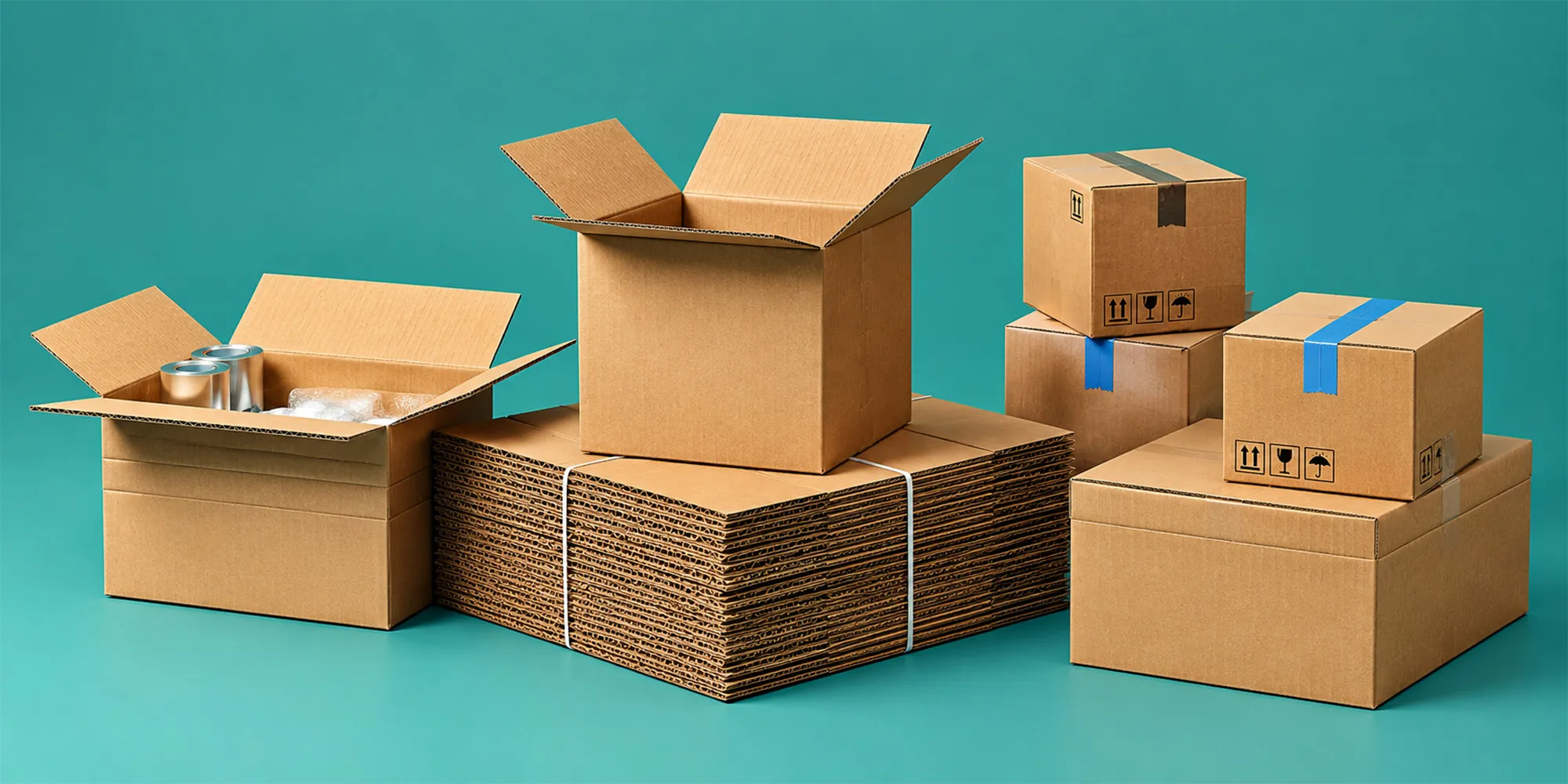
- Corrugated — built for strength. The right call for shipping and anything that needs to survive transit.
Which packaging material has the lowest MOQ? Kraft paper and standard corrugated typically carry the lowest MOQs, often starting around 100-300 units, because they don’t require the speciality tooling or mill minimums that rigid board and offset-printed formats do.
Custom Boxes vs. Stock Boxes: Which Should a New Brand Choose?
A stock box with a simple sticker or stamp used to be the default way to keep costs low while testing a market — and it’s still a reasonable path if you’re not ready to commit. But genuinely low-MOQ (and even no-minimum) custom box options are widely available now, so plenty of newer brands skip the stock-box step entirely and go fully branded from day one.
The right choice comes down to how settled your product and design actually are — not just which option looks cheaper on the spreadsheet in front of you.
The Bottom Line
Custom Packaging MOQ isn’t something to fear or route around – it’s a number that makes a lot more sense once you know what’s behind it. Sizing your first order to where your business actually is, instead of chasing the lowest unit price on paper, is what saves the most money over time in 2026. Factor in the two costs most guides leave out — import tariffs if you’re sourcing overseas, and state EPR fees if you’re shipping into CA, CO, ME, MD, MN, OR, or WA — and you’re pricing your packaging the way it actually works this year, not the way it worked two years ago.
Ready to size your first order, right? Get a free custom quote, and we’ll walk you through Custom Packaging MOQ, material, and turnaround for your specific product – no minimum-order surprises.